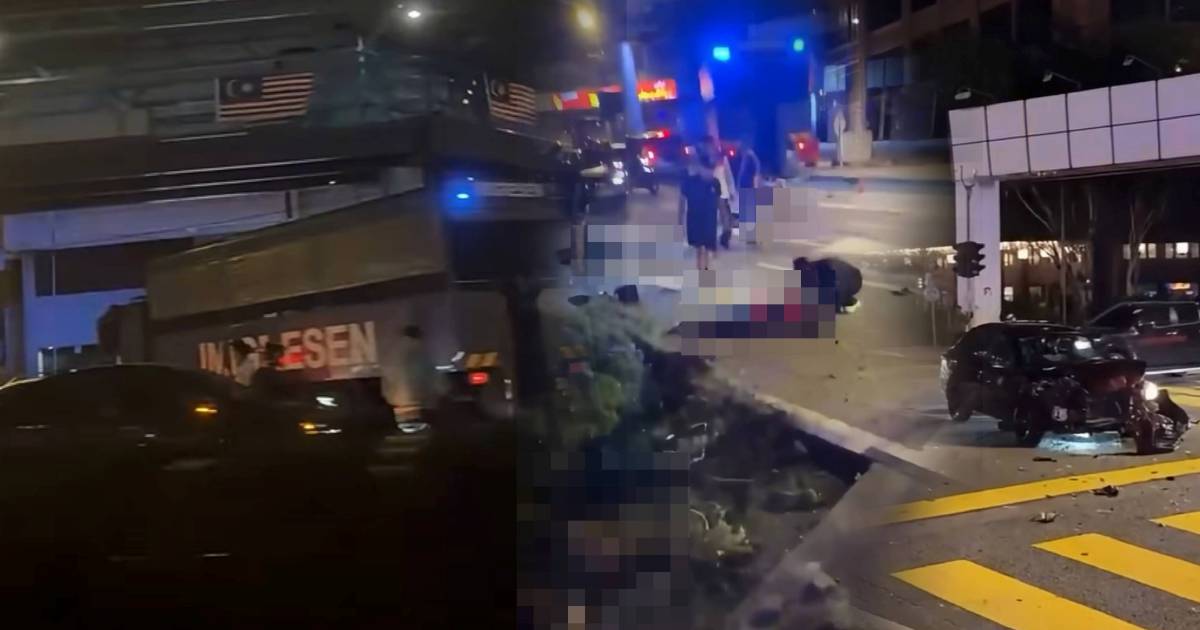
Prime Minister Datuk Seri Anwar Ibrahim has mandated the Immigration Department to initiate a comprehensive and urgent investigation into the deadly collision involving one of its transport vehicles on Jalan Sultan Ismail in the early hours of today. The directive underscores the government's commitment to understanding the circumstances surrounding the incident and ensuring accountability in the matter.
The crash, which resulted in loss of life, has raised immediate questions about vehicle safety standards, driver conduct, and road conditions on one of Kuala Lumpur's major arterial routes. Jalan Sultan Ismail, a critical thoroughfare linking the city's commercial and residential districts, frequently experiences high traffic volumes and serves as a key access point to numerous institutions and offices. The incident occurring during early morning hours suggests particular attention may be warranted regarding visibility, fatigue factors, and traffic management during non-peak periods.
The Immigration Department's involvement in transport operations extends across multiple functions including personnel movement, logistics, and operational deliveries. This incident raises broader questions about departmental vehicle maintenance protocols, driver training standards, and compliance with road safety regulations. As a government agency responsible for critical border and national security functions, the department's operational efficiency depends on reliable and safe infrastructure and personnel systems.
Immediate investigations into such incidents typically examine multiple dimensions including mechanical condition of the vehicle, driver qualifications and medical status, road and weather conditions at the time, and adherence to traffic regulations. The thoroughness of such inquiries often influences future policy adjustments affecting government fleet management across Malaysian agencies. Evidence collection at the scene becomes critical within hours of such incidents, particularly regarding vehicle positioning, debris patterns, and witness accounts.
The Prime Minister's direct instruction reflects the gravity with which serious vehicular incidents are now being viewed at the highest levels of government. This level of intervention signals expectations that departmental heads will prioritize safety and transparency, and that comprehensive findings will be submitted for official review. Such top-level directives often catalyze faster administrative responses and resource allocation than standard procedures would typically enable.
For the Immigration Department specifically, the incident may prompt reviews of its vehicle fleet maintenance schedules, driver certification processes, and operational safety guidelines. Malaysian government agencies have increasingly adopted international best practices in fleet management, yet fatal incidents suggest gaps may still exist in implementation or compliance. The investigation's scope will likely determine whether systemic issues require broader departmental reforms or if this represents an isolated incident involving specific operational lapses.
From a road safety perspective, the crash on Jalan Sultan Ismail highlights persistent concerns about traffic safety on Kuala Lumpur's main roads despite ongoing urban planning and infrastructure improvements. The location's significance as a major route means the incident has immediate implications for public confidence in road safety and government fleet management standards. Commuters and residents in the area may face temporary disruptions, though specific details regarding road closures and traffic management remain to be clarified by authorities.
The investigation will necessarily involve collaboration between the Immigration Department's internal safety division, traffic authorities including the Royal Malaysia Police, and potentially the Road Transport Department which oversees commercial and government vehicle compliance. This multi-agency approach ensures findings reflect comprehensive expert assessment rather than departmental self-review alone. Public reporting of investigation conclusions is typically expected given the fatality and public interest involved.
Beyond the immediate incident, the accident serves as a reminder of the human cost associated with road safety lapses and the importance of rigorous oversight of government fleet operations. Malaysian authorities have been working to reduce fatalities on the nation's roads through various initiatives, and government agencies are expected to lead by example in maintaining high safety standards. The incident underscores that even within organized bureaucratic structures, preventive measures require continuous reinforcement and monitoring.
The Immigration Department's response to the Prime Minister's instruction will likely set a precedent for how other government agencies approach similar investigations. Transparency in findings and willingness to implement corrective measures based on investigation conclusions will reflect institutional commitment to public safety. Given Malaysia's regional responsibilities and international partnerships in immigration and border management, operational integrity remains crucial to departmental credibility and effectiveness.
For Malaysian businesses and civil servants relying on government transport services, the incident raises natural questions about fleet reliability and safety protocols. While individual incidents should not be generalized across entire systems, the investigation's findings may inform broader policy discussions about resource allocation toward vehicle maintenance and driver training within government departments. The Immigration Department's handling of this crisis will influence public perception of governmental responsiveness to operational emergencies.

