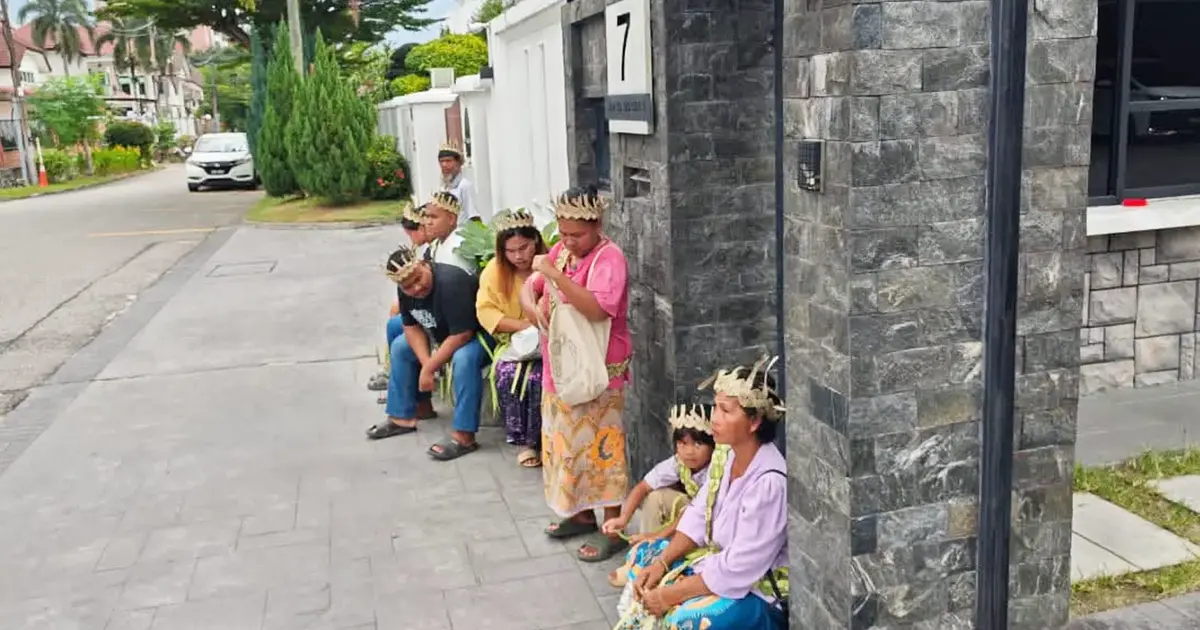
Prime Minister Anwar Ibrahim has announced the release of three Orang Asli who were detained amid a complex land dispute, marking a significant intervention by the federal government in a case that highlights the ongoing vulnerability of Malaysia's indigenous populations in property and land ownership matters. The detention and subsequent release underscore mounting pressure on authorities to address grievances within indigenous communities, particularly in resource-rich states like Pahang where competing land claims frequently pit traditional users against commercial or governmental interests.
The matter represents a delicate constitutional question in Malaysia's federal framework. Although the Prime Minister has secured the individuals' freedom, Anwar acknowledged that land affairs remain constitutionally under state jurisdiction, requiring coordination with the Pahang government to achieve a sustainable resolution. This jurisdictional reality reflects Malaysia's federal structure, wherein states retain significant autonomy over land administration, creating both opportunities and complications for nationally coordinated policy responses to indigenous rights questions.
Orang Asli communities have long occupied a precarious position within Malaysia's land ownership system. Unlike Bumiputera protections afforded to Malays and other indigenous groups in Peninsular Malaysia, Orang Asli face systemic barriers in asserting customary land rights, particularly when their traditional territories overlap with state-designated development zones, logging concessions, or agricultural projects. The detention of these three individuals suggests that land disputes in Pahang escalated to the point of criminal intervention, likely prompted by actions the detainees undertook to defend or reclaim their ancestral lands.
Pahang, as the largest state on the peninsula, has witnessed recurring tensions over indigenous land rights. The state's vast forests and mineral resources have long attracted commercial exploitation, generating conflicts with Orang Asli communities whose subsistence and cultural practices depend on forest access. Previous disputes have involved logging operations, hydroelectric schemes, and plantation expansion, each generating its own cycle of resistance, legal action, and sporadic government intervention. The current case fits a familiar pattern wherein indigenous protesters face legal consequences whilst underlying grievances remain unresolved.
Anwar's commitment to raise the matter with the Pahang government signals federal willingness to engage with state authorities on behalf of marginalized communities. However, the efficacy of such engagement depends heavily on whether Pahang officials view indigenous land rights as a policy priority or as an obstacle to development ambitions. The Prime Minister's leverage derives partly from his administration's broader reform agenda and partly from growing international scrutiny of indigenous rights compliance, particularly given Malaysia's obligations under various UN conventions and regional human rights frameworks.
The detention itself raises questions about the legal basis and procedural fairness of the original arrests. Whether charges related to trespass, illegal assembly, or resource extraction were involved remains unclear from public statements, yet such charges typically advantage land claim holders with formal documentation over communities asserting customary or ancestral rights. The detained individuals' release without apparent formal resolution of the underlying dispute suggests either prosecutorial discretion or political intervention—both outcomes that underscore how power dynamics shape legal outcomes for indigenous Malaysians.
For Malaysian civil society and human rights observers, the case illustrates a persistent governance challenge. Formal legal systems and constitutional frameworks, whilst theoretically neutral, often operate in ways that disadvantage communities lacking documentary proof of ownership in the modern administrative sense. Orang Asli oral histories and customary tenure systems, though legitimate and deeply rooted, rarely match the evidentiary weight accorded to government surveys, title deeds, and corporate concession agreements. Resolving such conflicts requires not merely releasing detainees but fundamentally revisiting how Malaysian law recognizes and protects indigenous land relationships.
Regionally, Malaysia's handling of indigenous land disputes carries implications for how Southeast Asian democracies approach similar tensions. Countries including Thailand, Indonesia, and the Philippines grapple with comparable challenges involving indigenous minorities, land rights, and development pressures. Malaysia's approach—mixing federal intervention, state coordination, and (implicitly) negotiation—offers a model that other nations may observe, though outcomes remain uncertain and patterns of marginalisation persist across the region.
Moving forward, meaningful resolution requires more than administrative goodwill. The Pahang government must engage substantively with affected Orang Asli communities, potentially involving land surveys that recognize customary territories, legal reforms that strengthen indigenous tenure protections, and development frameworks that prioritize community consent and benefit-sharing. Without such structural changes, future detentions appear likely whenever land disputes intensify.
Anwar's intervention demonstrates that federal leadership can influence outcomes for vulnerable populations, yet also reveals the limits of executive action within Malaysia's federal system. Sustainable protection of indigenous land rights ultimately requires legislative reform, judicial courage in interpreting constitutional provisions generously toward indigenous interests, and state-level political commitment to rebalancing land distribution in favour of communities whose historical claims predate modern administration.

