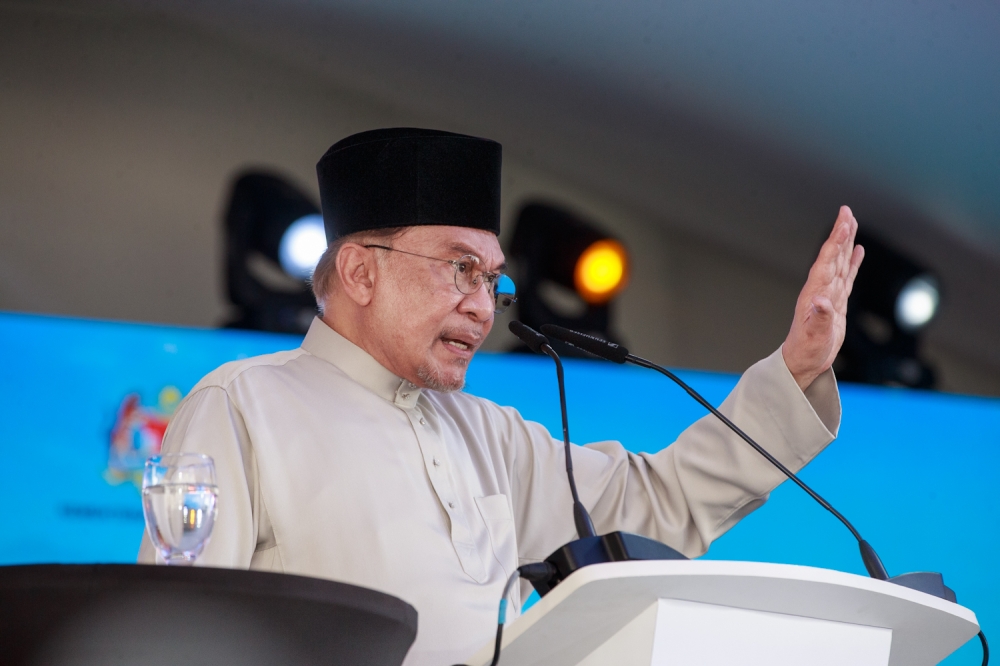
Prime Minister Datuk Seri Anwar Ibrahim has moved to address a longstanding grievance within Malaysia's civil service, instructing the Chief Secretary to the Government to undertake an immediate and thorough review of the promotion system that has left thousands of officers in career stasis. The directive, issued during an official engagement in Kajang, reflects growing concern within government circles that career stagnation poses a significant risk to the morale, productivity, and retention of skilled public sector professionals.
The promotion bottleneck represents a critical institutional challenge. Officers in various grades and classifications have endured waits extending to eight years for advancement, a timeframe that far exceeds international best practices and reasonable expectations for career progression. This prolonged stagnation creates a demoralizing environment where merit-based advancement becomes theoretical rather than real, eroding the incentive structures that historically motivated Malaysian civil servants. The backlog affects personnel across multiple tiers of the bureaucracy, from lower-level administrative officers to mid-management professionals seeking elevation to senior positions.
The timing of this directive carries particular significance given Malaysia's ongoing administrative modernization efforts. The civil service remains fundamental to implementing government policy, delivering public services, and maintaining institutional continuity. When promotion pathways become clogged, the systemic consequences ripple outward: younger officers become discouraged and seek private sector opportunities, experienced mid-career professionals stall in their professional development, and organisational knowledge accumulates among people unable to assume the senior roles where their expertise could have maximum impact. For a nation competing within a global economy increasingly dominated by knowledge work and digital transformation, this represents a competitive disadvantage.
The Chief Secretary's office will need to examine multiple dimensions of the promotion framework. This includes assessing whether current vacancy rates justify such extended waiting periods, whether the criteria for advancement remain relevant to contemporary civil service needs, and whether the appeal and grievance mechanisms for promotion decisions function adequately. The review must also consider whether structural factors—such as compressed pyramidal hierarchies where senior positions vastly outnumber mid-level openings—require fundamental redesign rather than marginal adjustment.
Anwar's intervention underscores the government's recognition that civil service reform extends beyond administrative efficiency into matters of social contract and institutional legitimacy. Public servants accept modest compensation partly through the implicit promise of stable, predictable career pathways. When those pathways become blocked indefinitely, the psychological contract fractures, affecting not merely individuals but the collective morale and performance of entire agencies.
For Malaysian readers, this development has broader implications for public service quality. Schools depend on competent administrators progressing through the education ministry hierarchy; healthcare facilities require skilled managers advancing through the health bureaucracy; infrastructure projects need experienced engineers moving upward through the works ministry. When talented individuals become trapped in their career levels, the entire institutional ecosystem suffers from diminished leadership capacity at critical junctures.
The Chief Secretary's office faces substantial work in conducting a meaningful review. Officials will need to gather comprehensive data on promotion timelines across all civil service categories, identify the specific bottlenecks causing delays, and consult with affected officers and their unions regarding the most pressing concerns. The exercise becomes more complex given the constitutional and statutory frameworks governing civil service administration, which require careful navigation to implement genuine reform.
Regional context matters here as well. Neighbouring countries including Singapore, Thailand, and Indonesia have undertaken their own civil service reforms in recent years, some with considerable success in streamlining career progression. Malaysia's approach to this challenge will be observed by other Southeast Asian governments grappling with similar institutional pressures. A successful resolution could position Malaysia as a constructive reformer within the region, while prolonged inaction risks further talent exodus to nations with more dynamic career environments.
The review also touches on issues of equity and demographic representation. If promotion delays affect certain categories of civil servants disproportionately—whether by gender, ethnicity, geographic origin, or educational background—the review provides an opportunity to identify and address such imbalances. Transparent promotion systems with clear advancement criteria serve not only individual fairness but also broader national cohesion objectives.
Stakeholder engagement will prove essential to any successful implementation of findings. Civil service unions, the Public Service Commission, and individual ministries each bring distinct perspectives on the challenges. Anwar's directive suggests a commitment to meaningful consultation rather than top-down prescription, though the substantive outcomes remain dependent on the Chief Secretary's approach to synthesis and recommendation.
Ultimately, this initiative reflects an emerging awareness within government that talent management in the civil service requires active attention and periodic recalibration. The eight-year waiting periods that prompted this review represent not merely individual frustrations but accumulated institutional losses—skills underutilised, motivation dissipated, and organisational vitality diminished. Whether the review translates into concrete reforms affecting the daily career expectations of tens of thousands of Malaysian public servants will determine whether this represents genuine institutional reform or merely another consultation exercise.

