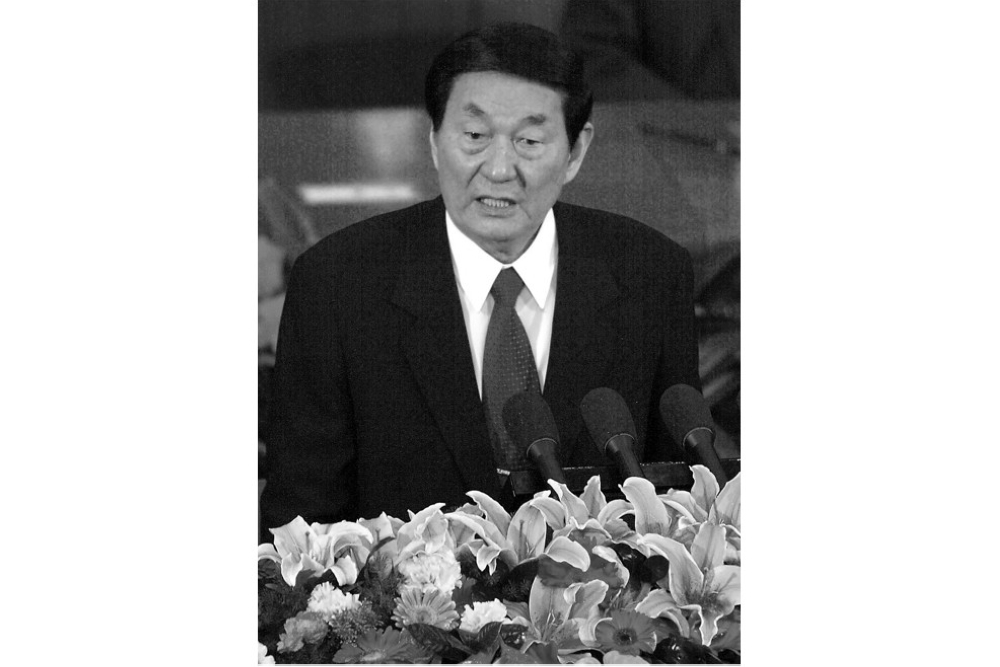
Prime Minister Datuk Seri Anwar Ibrahim has expressed deep sorrow at the death of former Chinese Premier Zhu Rongji, describing the late statesman as a trusted ally who fundamentally reshaped the trajectory of Malaysia-China relations during a transformative period in both nations' development. In a statement released on Tuesday, Anwar underscored Zhu's instrumental contributions to bilateral cooperation, portraying him as an architect of sustained economic engagement that continues to benefit Malaysia decades after his tenure concluded.
Zhu Rongji, who served as China's Premier from 1998 to 2003 during a crucial phase of China's economic liberalisation and World Trade Organization accession, wielded considerable influence over Beijing's approach to regional partnerships. His tenure coincided with Malaysia's own repositioning within the global economy following the 1997 Asian financial crisis, a period when both nations recognised mutual advantages in deepening trade, investment, and infrastructure ties. The timing of these overlapping transformations created what many analysts view as a foundational moment for contemporary Malaysia-China relations.
Anwar's characterisation of Zhu as a "good friend" reflects more than ceremonial diplomacy. During the late 1990s and early 2000s, when Malaysia was recalibrating its regional role under Prime Minister Mahathir Mohamad, Zhu championed Chinese investment in Malaysian manufacturing and participated in high-level visits that established personal relationships between Beijing's economic policymakers and Kuala Lumpur's leadership. These connections transcended the formal mechanics of state-to-state engagement, creating networks of trust that facilitated smoother negotiations on trade disputes and infrastructure projects.
The economic architecture that Zhu helped construct with Malaysian counterparts remains visible in contemporary bilateral commerce. Malaysian manufacturers benefited from access to Chinese markets and capital during the post-crisis reconstruction period, while Chinese businesses gained strategic footholds in Southeast Asia through Malaysian ports, industrial zones, and trading hubs. The Port Klang Free Zone and manufacturing clusters in the Klang Valley became increasingly integrated into Chinese-led supply chains under conditions negotiated during Zhu's premiership, creating interdependencies that persist in today's commercial landscape.
Beyond commercial dimensions, Zhu's tenure witnessed the elevation of Malaysia-China diplomatic representation and the formalisation of consultation mechanisms that persist today. State visits and economic delegations became regularised, establishing protocols that subsequent administrations in both capitals inherited and expanded. These institutional frameworks, though often invisible to ordinary citizens, have provided stability and predictability to a relationship that spans vast cultural, political, and geographical differences.
Zhu's death comes at a moment when Malaysia is navigating complex questions about the appropriate balance in its economic partnerships, particularly concerning Chinese investment in critical sectors and infrastructure megaprojects. Some of the contemporary Belt and Road Initiative undertakings that shape Malaysian development patterns trace their intellectual and diplomatic origins to the cooperative framework Zhu helped establish. Understanding his role offers perspective on how Malaysia's current strategic choices reflect historical trajectories set during his premiership.
The late premier was also known for advocating pragmatic, market-oriented reforms within China's economic system, positions that resonated with Malaysian policymakers who similarly embraced selective liberalisation. This philosophical alignment between Zhu's vision of China's economic role and Malaysia's appetite for market-driven development created convergence points that extended beyond commercial transactions into shared understandings about growth models and regional integration.
Anwar's tribute acknowledges not merely personal rapport but recognition of Zhu's strategic vision and its enduring consequences for Malaysia's position within Asia's evolving economic hierarchy. The former premier's influence over Chinese policy toward Southeast Asia during his tenure helped prevent Beijing from viewing the region primarily through a security or geopolitical lens, instead emphasising economic complementarity and mutual prosperity. This orientation, while certainly advancing Chinese interests, also created space for Malaysian agencies to engage Beijing as a development partner rather than merely as a strategic counterweight or rival.
For contemporary Malaysian policymakers, Zhu's legacy presents both opportunity and caution. The prosperity that flowed from Malaysia-China cooperation during his era resulted partly from his commitment to rule-based international commerce and multilateral institutions, orientations increasingly tested in current great-power competition. Whether future Malaysia-China engagement can replicate the mutual-benefit framework Zhu championed, amid more polarised regional geopolitics, remains an open question for Malaysian strategists contemplating the nation's economic future and regional alignment.

