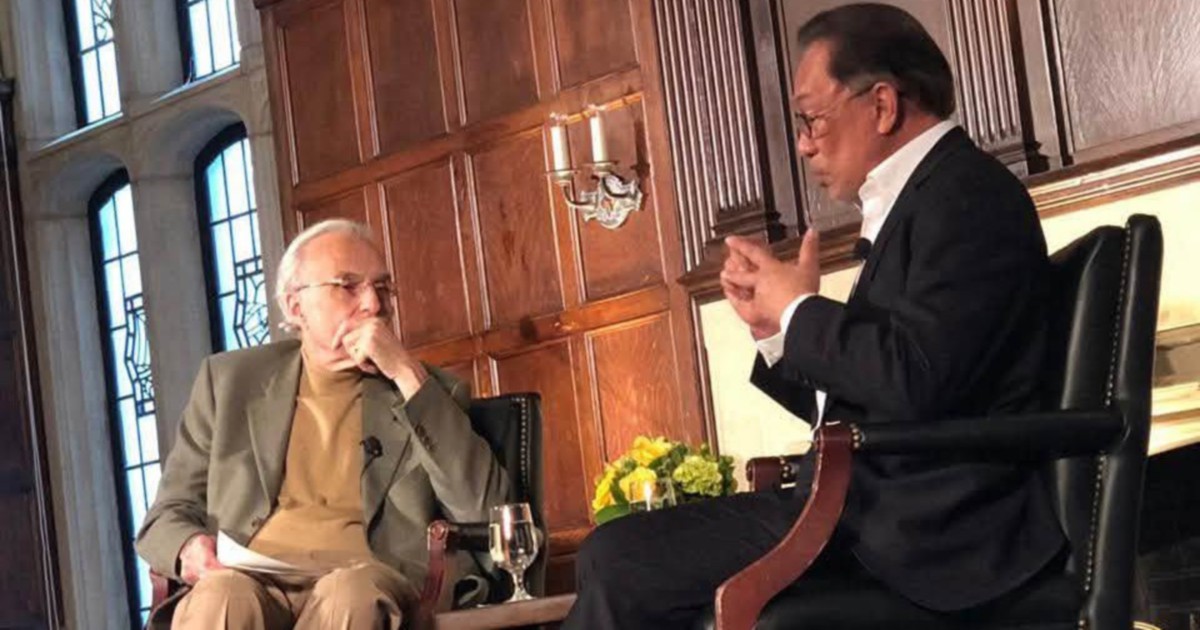
Prime Minister Datuk Seri Anwar Ibrahim today offered his condolences to the family and colleagues of Professor John L. Esposito, marking the passing of one of the world's foremost authorities on Islamic studies and interfaith relations. The announcement underscores the considerable influence Esposito's scholarly contributions held not just in academic circles but also among political leaders across the Muslim world.
Esposito's career spanned several decades and established him as a transformative figure in how Islam and Muslim societies have been understood and analysed in the Western academy. His work moved beyond orientalist frameworks to present more nuanced, contextualised explorations of Islamic history, theology, politics, and contemporary Muslim communities. For Malaysian policymakers and intellectuals, Esposito's scholarship provided intellectual credibility when Malaysia sought to position itself as a moderate Islamic nation engaging constructively with the West.
The Georgetown University professor authored or edited numerous influential texts that became standard references in universities worldwide. His books helped establish the field of Islamic studies as a rigorous academic discipline rather than a peripheral specialisation. This intellectual infrastructure proved particularly valuable during periods when misunderstandings between Islam and the West threatened regional stability, offering evidence-based counters to inflammatory rhetoric and stereotypes.
Esposito's methodological approach emphasised listening to Muslim voices themselves rather than imposing external interpretative frameworks. This principle aligned with Malaysia's own diplomatic philosophy of promoting dialogue between civilisations and religions. His scholarship frequently appeared in discussions among Malaysian academics and government advisers seeking to articulate the country's vision of Islam as compatible with pluralism, democracy, and modernity.
Beyond scholarly output, Esposito established important institutional platforms for interfaith engagement and mutual understanding. The Prince Alwaleed Bin Talal Center for Muslim-Christian Understanding at Georgetown became a hub for serious intellectual exchange, hosting scholars and practitioners from across the Muslim world. Malaysian academics and officials have participated in and benefited from such forums, gaining platforms to articulate their own perspectives on Islamic governance and modernisation.
The timing of Esposito's death comes as Southeast Asia and the world grapple with continued polarisation around questions of religious identity, governance, and coexistence. His life's work demonstrated that sophisticated scholarly engagement with Islam could counter extremist narratives while respecting Muslim agency and diversity. For Malaysia, which has invested considerable effort in promoting interfaith harmony and positioning itself as a bridge between Islamic and Western civilisation, Esposito's intellectual legacy provided valuable validation.
Esposito's influence extended into policy discussions around counter-extremism, radicalisation prevention, and religious education. His insistence on understanding Islamic movements within their social, political, and historical contexts rather than dismissing them outright shaped how governments and civil society organisations approach these sensitive areas. Malaysia's own approaches to understanding religious movements have benefited from frameworks Esposito helped develop.
Among Malaysian scholars of Islam, religion, and politics, Esposito's work represented a standard of rigorous, respectful engagement that elevated the entire field. His recognition by world-class institutions validated similar scholarly work being conducted in Malaysia and across Southeast Asia, helping create international networks of Muslim and non-Muslim academics committed to advancing knowledge rather than polemics.
The scholar's passing also marks the end of a particular generation of Western scholars who were committed to humanising Islam and Muslims in Western discourse. Many contemporary Western intellectuals and policymakers were trained by or directly influenced by Esposito and his contemporaries. This generational transition occurs as new challenges around Islamic thought, governance, and integration emerge globally.
For Prime Minister Anwar, whose own intellectual formation has engaged substantially with Islamic modernist thought and cross-cultural dialogue, Esposito's work represented an important conversation partner. Both the Malaysian leader and the deceased scholar shared commitments to demonstrating that Islam could be fully compatible with democratic governance, human rights, and cosmopolitan engagement.
Esposito's legacy will likely endure through the countless scholars he mentored, the institutions he built, and the intellectual frameworks he established. His passing prompts reflection on the continuing importance of such bridge-building work, particularly in an era when misrepresentation and polarisation remain persistent challenges in international relations and interfaith contexts.

