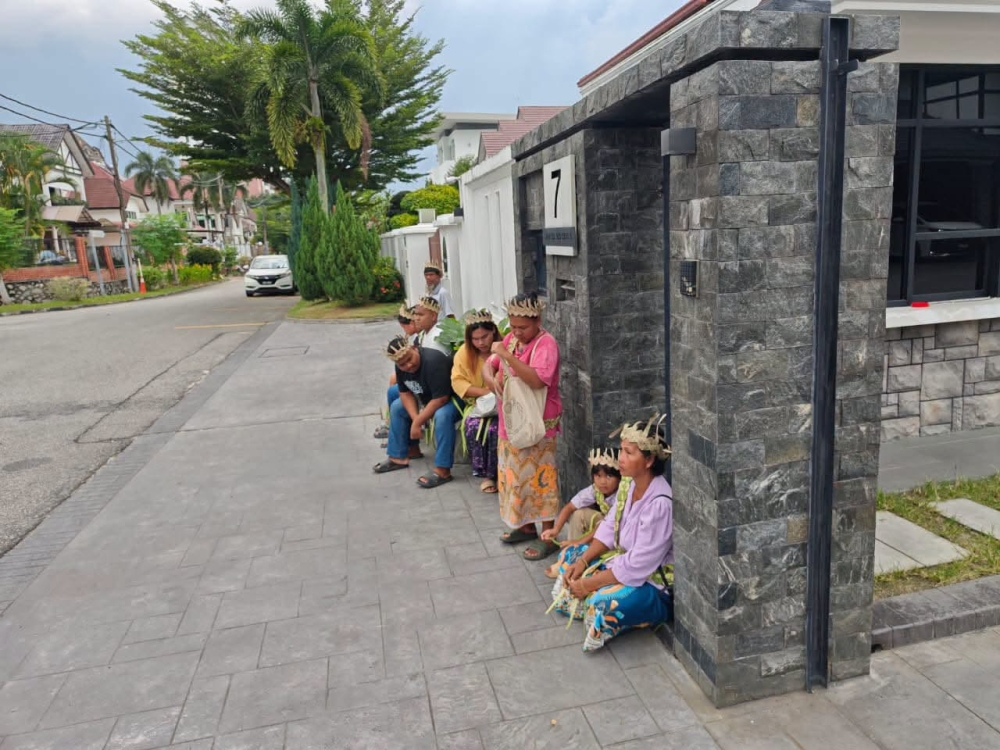
Prime Minister Datuk Seri Anwar Ibrahim has committed himself to addressing a longstanding land dispute involving indigenous Orang Asli communities in Maran after conducting on-ground consultations with affected residents. The premier's pledge marks a significant intervention at the federal level in what has become an increasingly pressing concern for indigenous land rights advocates across the East Coast.
The commitment to escalate the matter at state level reflects the growing attention that indigenous land issues are receiving within government circles. Anwar's decision to engage directly with villagers in Maran demonstrates a shift towards more personalised approaches to addressing rural grievances, particularly those affecting marginalised communities whose concerns might otherwise remain peripheral to mainstream policy discussions.
Orang Asli communities in Maran have long contended with competing claims over their ancestral lands, with disputes frequently arising from overlapping tenure systems, development pressures, and unclear demarcation of traditional territories. These conflicts often pit indigenous customary rights against state land classifications and commercial interests, creating legal and social complexities that demand careful negotiation.
The Maran situation exemplifies broader challenges facing Orang Asli populations across Peninsular Malaysia. Indigenous groups constitute approximately 0.5 per cent of the national population but occupy significant portions of forested areas crucial for both ecological preservation and cultural continuity. Land security remains fundamental to their livelihoods, food systems, and cultural practices, yet formal recognition and protection of indigenous territorial rights remain inconsistent across states.
Pahang, as the largest state by land area and a region with substantial Orang Asli populations, has historically witnessed numerous such disputes. The state's governance of indigenous land matters has been subject to varying approaches, and federal-state coordination on these issues has not always been seamless. Anwar's intervention signals potential frustration with the pace or adequacy of existing state-level mechanisms in resolving such claims.
The prime minister's engagement with villagers directly is noteworthy for establishing a personal connection to their grievances. This approach bypasses formal bureaucratic channels that indigenous communities often find slow-moving or unresponsive. By listening to residents' accounts firsthand, Anwar has gathered ground-level intelligence that may inform a more sophisticated federal intervention strategy.
Raising the matter with Pahang authorities carries multiple implications. It signals federal-level interest and potential willingness to invest political capital in the resolution process, which could expedite negotiations. Simultaneously, it creates a platform for dialogue between state government, federal representatives, and indigenous stakeholders, potentially breaking deadlocks that emerge when bilateral state-community discussions stall.
The timing of this intervention occurs within a broader context of heightened attention to indigenous rights globally and within Southeast Asia. International frameworks emphasising free, prior, and informed consent for projects affecting indigenous lands have influenced discourse within the region. Malaysia's position as a developing nation seeking international investment makes balancing indigenous rights protection with economic development a perpetual tension, one that careful handling can help navigate.
Successful resolution of the Maran dispute could establish precedent for addressing similar land conflicts elsewhere. It might also demonstrate to other Orang Asli communities that federal government engagement can produce tangible outcomes, potentially encouraging more communities to bring their grievances forward. Conversely, if the matter languishes without substantive progress, it could deepen scepticism about government commitment to indigenous issues despite high-profile political engagement.
For Pahang state government, Anwar's promised escalation represents both opportunity and pressure. It creates a chance to demonstrate commitment to indigenous welfare while coordinating with federal authorities on complex land governance matters. However, it also places scrutiny on how comprehensively state authorities address root causes of the dispute rather than seeking temporary compromises.
The dispute also underscores the need for clearer national frameworks governing Orang Asli land rights. While the Aboriginal Peoples Act 1954 provides some protection, its implementation remains inconsistent, and it does not fully align with contemporary understandings of indigenous rights. Comprehensive land mapping, formal recognition of traditional territories, and streamlined dispute resolution mechanisms could prevent such conflicts from becoming protracted standoffs.
Anwar's commitment will ultimately be measured by concrete actions: whether the federal government actively facilitates negotiations, provides resources for equitable solutions, and follows through on promises made to residents. The credibility of higher-level political engagement rests on delivering visible improvements in indigenous communities' land security and decision-making authority.
As Malaysia continues developing economically while pledging commitment to inclusive growth, how effectively the government resolves indigenous land disputes will signal whether these commitments extend meaningfully to marginalised populations who have historically borne disproportionate costs of national development.

