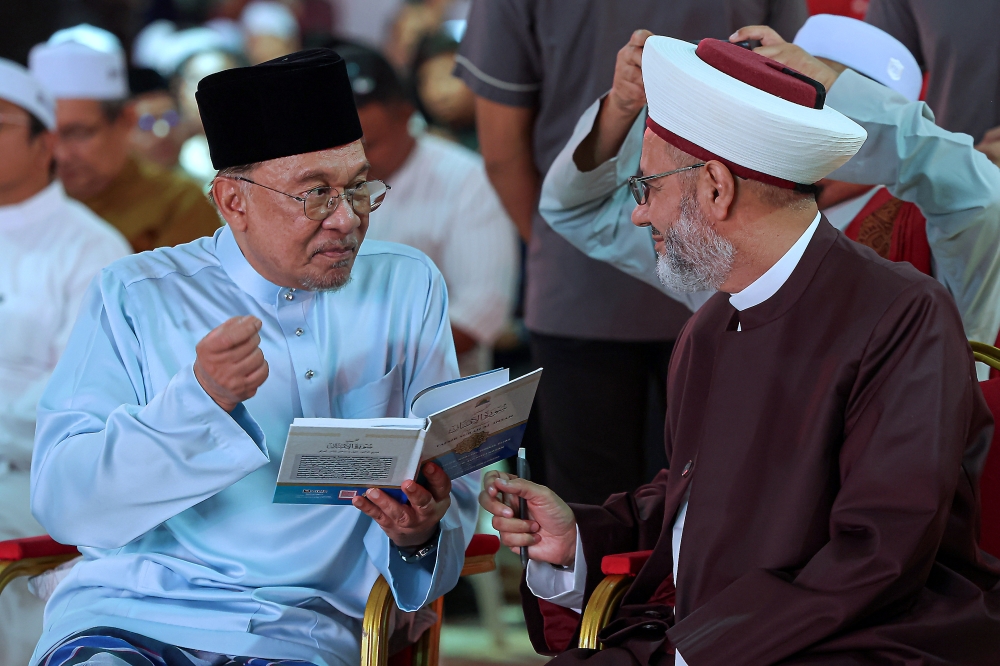
Prime Minister Datuk Seri Anwar Ibrahim has singled out Ahmed Al-Tayyeb, the Grand Imam of Egypt's prestigious Al-Azhar institution, as a pivotal figure in promoting balanced, moderate interpretations of Islam across the globe. Speaking in Kuala Lumpur on July 31, Anwar acknowledged the religious leader's sustained efforts to position Islam as a faith compatible with pluralism, scientific progress, and coexistence among diverse communities. The recognition underscores Malaysia's alignment with international voices advocating for tolerance and reasoned religious discourse at a time when extremism and sectarian tensions continue to destabilise regions from the Middle East to South Asia.
Al-Tayyeb's influence extends well beyond Egypt's borders, cementing his position as one of Sunni Islam's most authoritative contemporary scholars. As custodian of Al-Azhar, a beacon of Islamic learning for over a thousand years, the Grand Imam carries responsibility for shaping theological narratives that ripple through Muslim-majority nations and diaspora communities worldwide. His teachings frequently emphasise the compatibility of Islamic principles with modern democratic governance, human rights frameworks, and scientific inquiry—positions that resonate with reformist movements and progressive Islamic thought across Southeast Asia, including Malaysia's own ongoing debates over Islam's role in a multicultural democracy.
Anwar's commendation reflects a deliberate diplomatic positioning. Malaysia's Prime Minister has consistently advocated for moderate Islam as a counterweight to fundamentalist interpretations that fuel conflict and isolate Muslim societies from global development. By publicly endorsing Al-Tayyeb's vision, Anwar signals Malaysia's commitment to a particular brand of Islamic thought that privileges dialogue over confrontation, evidence-based reasoning over literalist dogmatism, and inclusive governance over theocratic exclusivity. This messaging carries domestic resonance, as Malaysia grapples with competing visions of Islamic governance and occasional flare-ups of religious conservatism that challenge the country's constitutional secular framework and its delicate Hindu-Muslim-Christian-Buddhist equilibrium.
Interfaith engagement has become a cornerstone of Al-Tayyeb's public ministry. The Grand Imam has participated in high-profile dialogues with Christian leaders, including Pope Francis, and has issued public statements condemning religious extremism in all forms. These initiatives address a critical gap: while many Western voices call for Muslim leaders to denounce terrorism, few possess the religious authority and institutional standing that Al-Tayyeb commands. His willingness to meet across religious lines and articulate inclusive interpretations of Islamic theology carries weight precisely because his credentials as a classical Islamic scholar remain unimpeachable, making him difficult for hardliners to dismiss as a Western stooge or apostate. For Malaysia, where tensions between conservative and progressive camps within Islam occasionally erupt into public controversy, such a model of authoritative yet accommodating religious leadership offers a template.
The timing of Anwar's remarks also matters. In the context of current Middle Eastern instability, rising anti-Muslim sentiment in Western democracies, and the ongoing struggle against militant groups claiming Islamic legitimacy, prominent figures like Anwar publicly aligning themselves with Al-Tayyeb's moderation platform serve a stabilising diplomatic function. They validate the notion that authentic Islam—rooted in centuries of scholarship and jurisprudential depth—need not conflict with secular governance, minority rights, or scientific progress. For Malaysian policymakers and civil society, this international validation of moderate Islam provides political cover to resist pressure from domestic actors seeking to narrow religious interpretation or subordinate civil law to religious authority.
Al-Azhar itself occupies a unique institutional space within Islamic civilisation. Unlike decentralised Protestant Christianity or the Catholic Church's hierarchical structure, Islamic religious authority historically remained dispersed among scholars and institutions. Yet Al-Azhar's longevity, prestige, and formal governmental status in Egypt have granted it outsized influence. Generations of Islamic leaders, judges, and intellectuals trained within its walls carry its imprint wherever they work. By honouring the Grand Imam, Anwar taps into this deep-rooted institutional credibility, suggesting that Malaysia's own approach to Islam derives from legitimate classical sources rather than Western-imposed secularism—a crucial rhetorical move in contexts where authenticity and continuity matter profoundly.
The distinction between moderation and progressive reform deserves examination here. Al-Tayyeb frequently avoids the label "progressive," instead rooting his positions in classical Islamic jurisprudence and the reasoning methods of medieval scholars. This conservative-sounding framing proves strategically valuable: it allows religious modernisation to proceed without opponents claiming Islam is being dismantled or surrendered to foreign values. For Malaysian audiences, many of whom navigate complex identity claims, such framing offers reassurance that religious evolution need not entail cultural loss or spiritual compromise. One can embrace scientific medicine, democratic institutions, and interfaith respect while remaining authentically Muslim—a proposition Al-Tayyeb embodies and Anwar now endorses.
Regionally, Anwar's comments reflect Southeast Asia's particular stakes in global Islamic discourse. With more than 250 million Muslims across Indonesia, Malaysia, Brunei, and parts of the Philippines, the region represents Islam's demographic centre and economic significance. Yet it remains geographically distant from Al-Azhar's traditional sphere of influence, which emphasises Arab and African contexts. By invoking Al-Tayyeb, Anwar seeks to draw Southeast Asian Islam into conversation with global centres of religious authority, thereby elevating Malaysia's voice within international Islamic networks while simultaneously claiming that regional Islamic moderatism reflects wider scholarly consensus rather than parochial compromise.
The Grand Imam's educational mission also merits attention. Al-Azhar operates one of the world's largest Islamic university systems, training thousands of scholars, preachers, and judges annually. These graduates disperse throughout the Muslim world, carrying Al-Tayyeb's theological and methodological imprint into courtrooms, pulpits, and classrooms. By lauding this institutional work, Anwar implicitly endorses the production of a globally connected cadre of moderate Islamic intellectuals—figures capable of outcompeting extremist narratives through superior learning, rhetorical skill, and institutional legitimacy. This vision of religious competition based on intellectual merit rather than organisational muscle appeals to Malaysia's educated urban constituencies who favour expertise and evidence-based argument.
Looking forward, Anwar's public praise of Al-Tayyeb likely presages deeper institutional cooperation between Malaysia and Egypt in Islamic education, theological exchange, and interfaith initiatives. Such partnerships carry tangible consequences: they shape seminary curricula, influence judicial training programmes, and eventually filter into government policy on religious affairs. For Malaysian observers concerned about the trajectory of Islamic governance in their country, Anwar's international networking within moderate Islamic circles signals strategic commitment to that orientation, even as domestic religious bureaucracies occasionally tilt toward more conservative positions.
The broader context matters too. In an era when populist and fundamentalist movements worldwide mobilise religious sentiment for political gain, figures like Anwar and Al-Tayyeb occupy crucial space, demonstrating that Islam's intellectual and spiritual traditions can sustain democratic politics, pluralistic societies, and human flourishing. Their mutual recognition validates this possibility across borders, offering hope and concrete models to communities navigating similar tensions between religious identity and modern governance. For Malaysia specifically, caught perpetually between competing visions of its own Islamic role, such international affirmation of moderate theology provides ballast against extremism while protecting space for continued constitutional secularism, minority protection, and democratic development.

