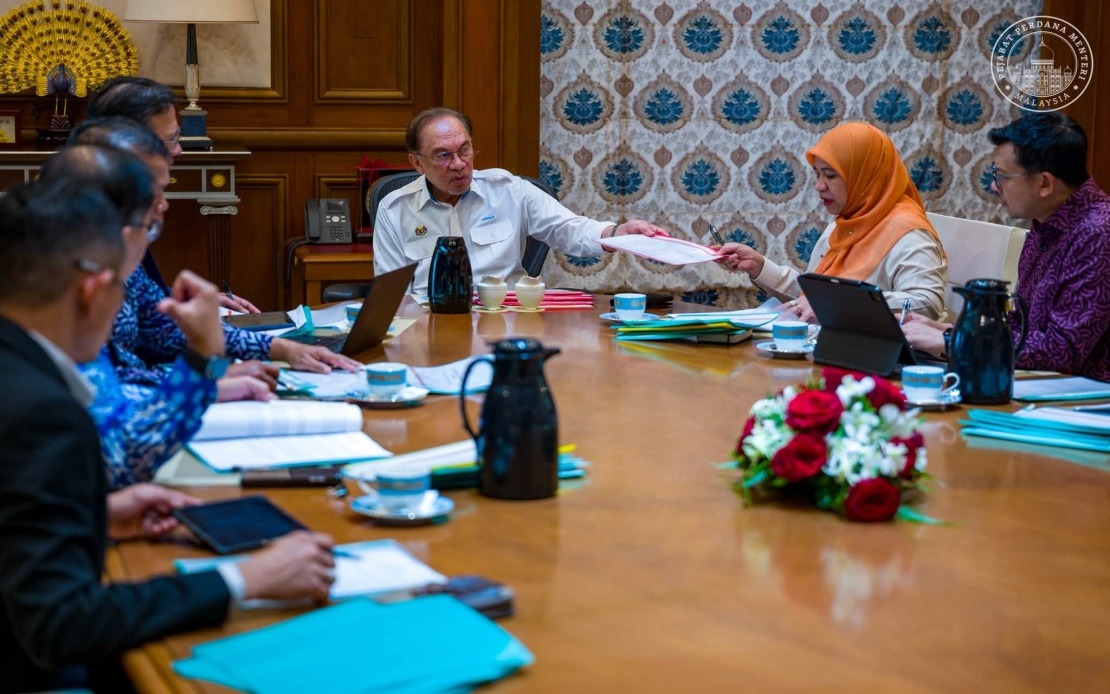
Prime Minister Datuk Seri Anwar Ibrahim has demanded that the Federal Land Development Authority move swiftly to tackle entrenched problems affecting FELDA settlers, with particular emphasis on second-generation housing and land ownership complications that have festered for decades. In remarks posted on social media, Anwar stressed that these longstanding grievances cannot continue to languish without concrete intervention, underscoring the MADANI Government's commitment to prioritising rural communities at the heart of the nation's agricultural heritage.
The intervention reflects growing recognition within federal leadership that FELDA, established as a flagship poverty-alleviation and rural development scheme, has accumulated unresolved structural issues that now threaten social stability in settler communities. Second-generation FELDA residents—children of original settlers who inherited plots or sought to establish their own holdings—have encountered persistent barriers in securing formal land titles, accessing housing finance, and navigating bureaucratic pathways to property ownership. These challenges represent a critical blind spot in Malaysia's social contract, as settlers who were promised prosperity through agricultural schemes now confront intergenerational disadvantage.
Anwar's emphasis on methodical problem-solving reflects a pragmatic approach to addressing what has become a complex governance challenge spanning multiple portfolios. The prime minister explicitly called for granular examination of each grievance category followed by transparent, action-oriented remediation plans. This framing acknowledges that generic policy responses have proven inadequate, and that settler concerns demand tailored interventions grounded in the specific circumstances of individual cases and regional variations across FELDA schemes nationwide.
The FELDA landscape encompasses approximately 400,000 settler families across numerous schemes established over five decades, creating considerable institutional complexity. Land titles, agricultural licensing, intergenerational inheritance protocols, and housing development standards have evolved inconsistently across different schemes and administrative periods. This fragmentation has generated a labyrinthine environment where settlers struggle to navigate competing claims, unclear ownership documentation, and ambiguous developmental rights—challenges that disproportionately affect younger-generation residents lacking the institutional knowledge their parents accumulated.
Second-generation housing constraints merit particular urgency given demographic pressures and rural-urban migration dynamics. Many FELDA schemes were designed in earlier decades with settlement patterns and family structures that no longer reflect contemporary realities. Young settler families seeking to establish separate households within their parent's plots or in adjacent areas encounter zoning restrictions, subdivision prohibitions, and financing barriers that render property ownership effectively inaccessible. This housing squeeze has accelerated outmigration to urban centres, draining human capital and reducing agricultural productivity in schemes increasingly populated by ageing first-generation settlers.
The land ownership dimension operates along similarly problematic lines. While original settlers received allocations through formal channels, formal title transfer to heirs has proceeded unevenly, leaving many second-generation residents in precarious legal positions regarding inheritance claims and collateral value. Banking institutions remain hesitant to advance agricultural credit against unclear FELDA land titles, further constraining capital access for young farmers attempting to modernise operations or diversify income sources. This structural credit gap places FELDA residents at systematic disadvantage relative to smallholders in neighbouring regions with clearer titling frameworks.
Anwar's mandate for action carries particular weight given the government's broader rural development agenda and the political salience of FELDA constituencies. FELDA settlements constitute discrete demographic blocs with distinct electoral characteristics and concentrated advocacy potential. Settlers experiencing prolonged frustration with land and housing access represent a constituency increasingly vulnerable to disaffection, creating political incentives for rapid remediation alongside legitimate governance imperatives. The prime minister's public intervention signals that FELDA reform has ascended ministerial priority rankings and will receive resource allocation commensurate with scale of the underlying challenge.
Implementing solutions will require inter-agency coordination spanning land administration, agriculture, housing development, and financial regulation portfolios. Streamlining title transfer procedures demands coordination between state land offices and federal authorities, clarifying inheritance protocols requires legislative refinement, and enabling second-generation housing development necessitates zoning flexibility from local planning authorities. The complexity of this coordination explains why issues have persisted despite earlier reform attempts—siloed departmental mandates have impeded holistic problem-solving approaches.
For Malaysian and Southeast Asian observers, FELDA's challenges illuminate broader tensions in rural development models constructed during earlier development phases. Land-based poverty alleviation schemes deployed extensively across the region rest on assumptions about agricultural viability and intergenerational land transmission that contemporary economic realities have substantially undermined. As rural populations increasingly diversify income sources and younger cohorts pursue off-farm employment, schemes designed around agricultural monoculture and parental succession face legitimacy crises. Effective FELDA restructuring could yield valuable precedents for regional peers grappling with analogous rural development legacies.
The government's response will require balancing competing interests: protecting original settlers' interests and inheritance expectations, enabling younger residents to access housing and ownership pathways, maintaining scheme viability in an evolving agricultural landscape, and ensuring fiscal sustainability of remediation initiatives. Achieving these objectives demands phased interventions, transparent communication with affected communities, and genuine power-sharing in policy design rather than top-down directive implementation. Anwar's insistence on rapid resolution coupled with careful examination suggests institutional capacity to navigate these tensions, contingent on political will and adequate resource commitment materialising through implementation phases ahead.

