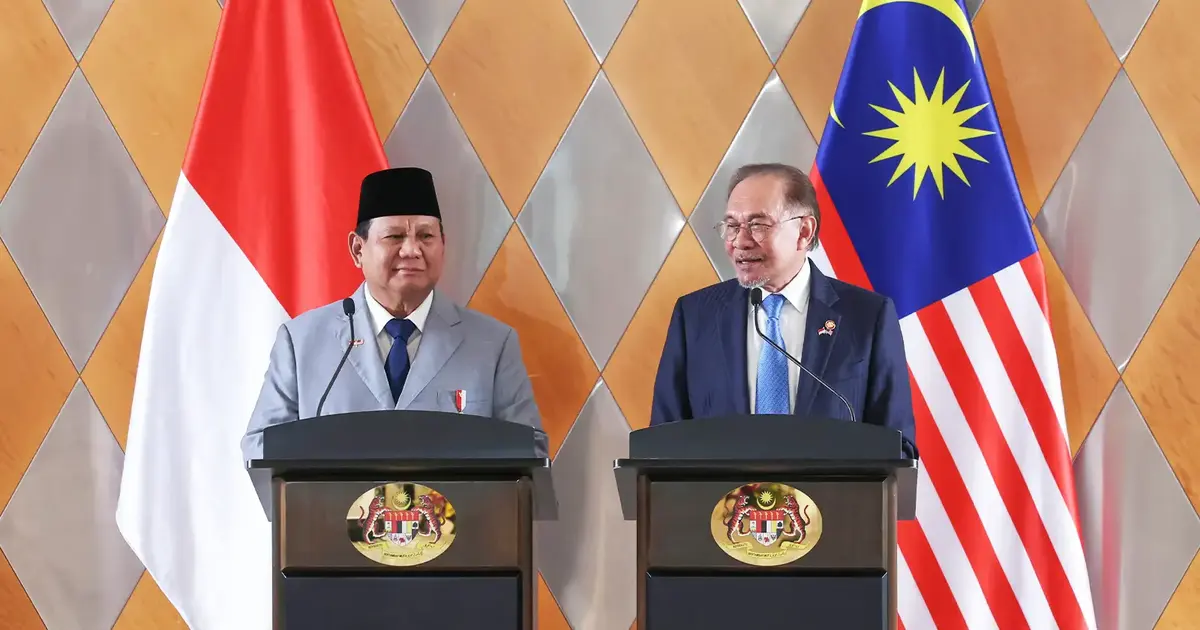
Prime Minister Anwar Ibrahim has escalated concerns about the Federal Land Development Authority's troubled Eagle High venture by directly engaging with Indonesian President Prabowo Subianto, signalling the gravity of what officials describe as a potentially catastrophic cross-border investment loss. The matter has become pressing enough to warrant high-level diplomatic correspondence, reflecting the scale of financial exposure facing Malaysia's largest land settlement agency.
According to Anwar's assessment, Felda faces the prospect of losing more than RM2 billion in the Eagle High project unless decisive intervention occurs. The Prime Minister has articulated a grim financial scenario: without proper management and resolution, the agency could recover a mere RM200 million from its total investment, representing a recovery rate of just ten percent. This stark disparity underscores how severely mismanaged or deteriorating assets could erode value for an institution that affects hundreds of thousands of settler families across Malaysia.
The Eagle High venture represents a significant chapter in Felda's international expansion strategy, particularly its involvement in cross-border agricultural and resource development initiatives. The project's mounting troubles highlight the operational and financial risks that emerge when Malaysian entities conduct large-scale business activities in neighbouring jurisdictions, where regulatory oversight, political stability, and contractual enforcement can differ markedly from domestic arrangements. Such ventures are designed to generate returns that enhance dividend payments and infrastructure improvements for Felda settlers, making their failure particularly consequential for rural Malaysian communities.
Anwar's decision to communicate directly with Prabowo suggests that bilateral cooperation may be essential to resolving the impasse. Indonesia's new leadership, having assumed office recently, represents a potential avenue for fresh approaches to longstanding commercial disputes that may have festered under previous administrations. Presidential-level engagement indicates that Malaysian officials view this not merely as a corporate problem but as a matter requiring state-level intervention and diplomatic goodwill.
The financial projections outlined by the Prime Minister reflect the wide spectrum of possible outcomes depending on how comprehensively the issues are addressed. The difference between losing RM2 billion and recovering RM200 million versus achieving better terms underscores how critical negotiating positions and management decisions have become. Even modest improvements in recovery rates could translate to hundreds of millions of ringgit, resources that would otherwise be unavailable for Felda's core operations and settler welfare programmes.
Felda's international ventures have periodically attracted scrutiny from Malaysian policymakers and parliament members concerned about governance standards and fiduciary responsibility. As the organisation manages considerable assets on behalf of settler families, any major losses carry implications beyond corporate balance sheets, affecting land improvement projects, educational scholarships, and income supplementation programmes that depend on healthy financial returns. The Eagle High situation exemplifies how global investment exposure can amplify these pressures.
The timing of Anwar's intervention coincides with a broader reassessment of Malaysia's approach to managing state-linked enterprises and their cross-border commitments. Economic headwinds, currency fluctuations, and commodity price volatility have tested many such ventures, but deliberate poor management or inadequate oversight compounds these external pressures. The Prime Minister's public articulation of potential losses signals his administration's intent to prioritise accountability and loss mitigation.
Indonesia's role as a key stakeholder in resolving the Eagle High situation underscores regional economic interdependencies and the importance of maintaining functional diplomatic channels for commercial disputes. Both nations benefit from stable business relationships and predictable frameworks for resolving conflicts. Prabowo's response to Anwar's correspondence could set a tone for how future bilateral commercial disagreements are addressed, potentially establishing precedents for executive-level intervention in state enterprise matters.
The RM2 billion exposure represents not merely a historical mistake but a live issue demanding resolution. Whether through asset restructuring, negotiated settlements, operational improvements, or other mechanisms, stakeholders are evidently focused on minimising ultimate losses. The gap between potential total loss and the RM200 million recovery floor suggests considerable room for negotiation and problem-solving, assuming relevant parties engage constructively.
Felda's settler communities, numbering in the hundreds of thousands, remain the ultimate stakeholders in how this situation concludes. Any substantial loss would constrain the organisation's capacity to invest in agricultural modernisation, manage estate rehabilitation, and provide competitive dividend distributions. These ripple effects extend through rural economies dependent on Felda's presence and financial health, making the Prime Minister's engagement with President Prabowo not simply a diplomatic courtesy but a necessary action to protect vulnerable constituencies dependent on the agency's viability.

