Prime Minister Datuk Seri Anwar Ibrahim has launched a sharp rebuke against the opposition parties, accusing them of weaponising the Tabung Haji controversy as a means of political distraction rather than engaging substantively with the institution's governance failures. In a Facebook statement released on August 11, the Prime Minister contended that opposition lawmakers are deliberately shifting focus away from those he termed "traitors" to Tabung Haji and its depositors, choosing instead to make him a target of parliamentary posturing.
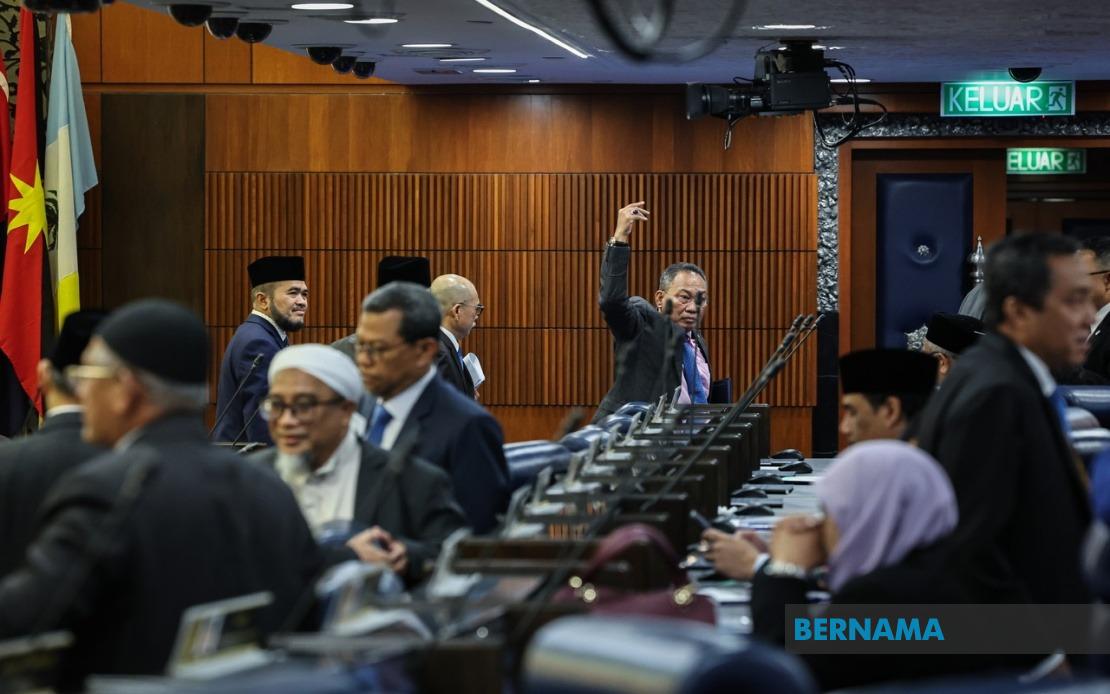
The confrontation emerged following a special Dewan Rakyat sitting convened to discuss the long-awaited Royal Commission of Inquiry report into Tabung Haji's management. Several opposition MPs walked out in protest, objecting to Speaker Tan Sri Johari Abdul's decision to proceed with ministerial briefings despite Anwar's absence. The Prime Minister, recuperating from elective surgery to treat a para-umbilical hernia, had sent his apologies and was undergoing physiotherapy at the time of the session. Perikatan Nasional's chief whip, Datuk Seri Takiyuddin Hassan, had proposed adjourning the sitting until Anwar could attend, but the Speaker rejected the motion, prompting the opposition's boycott.
Anwar's response frames the dispute as a fundamental question of priorities and political integrity. He posed a direct challenge to the opposition, asking whether their real concern is scrutinising his government or protecting the interests of Tabung Haji's millions of depositors. The Prime Minister pointedly questioned whether the PAS-led Perikatan Nasional coalition genuinely cares about the welfare of ordinary Malaysians who depend on the institution—fishermen, farmers, teachers, police personnel, soldiers, and retirees whose life savings have been entrusted to Tabung Haji for decades. This framing transforms the parliamentary disagreement from a procedural dispute into a question of whose interests the opposition truly serves.
The underlying catalyst for this clash is the 211-page RCI report, released publicly on July 29 after months of anticipation. The commission's investigation, which examined Tabung Haji's management and operations spanning 2014 to 2020, documented significant governance weaknesses and structural failings within the institution. The report presented 25 specific recommendations for remedial action, of which three-quarters had already been implemented by Tabung Haji as of late July. This implementation rate suggests the government has moved swiftly to address the commission's concerns, though questions remain about whether deeper systemic reforms are sufficient.
The establishment of the RCI itself represents a response to long-standing concerns about Tabung Haji's financial deterioration and mismanagement allegations. The government announced the inquiry in 2021, formally appointed commission members in January 2022, and received the final report in August 2022. The timeline reflects both the complexity of investigating an institution managing billions of ringgit on behalf of Muslim Malaysians and the political sensitivity surrounding any findings that could suggest government negligence or previous administrations' accountability. For ordinary Malaysians relying on Tabung Haji for pilgrimage financing and retirement security, the months of waiting have underscored broader anxieties about institutional integrity and wealth preservation.
Anwar's invocation of betrayal carries particular weight in Malaysian Muslim political discourse. The Prime Minister's assertion that "Muslim Malays have been betrayed" reframes the Tabung Haji crisis not merely as a governance failure but as a breach of trust affecting a specific demographic group whose savings are religiously motivated. This rhetorical positioning aims to neutralise opposition criticism by suggesting that opposing the government's handling of Tabung Haji is tantamount to indifference toward Muslim welfare. The strategy attempts to convert what could be legitimate parliamentary oversight into perceived political opportunism.
Yet the opposition's decision to boycott the special sitting, rather than remaining to scrutinise the ministerial briefing, presents its own interpretive challenge. Parliamentary walkouts are typically deployed as high-impact protest tactics when lawmakers believe procedural injustices have occurred. The opposition's argument—that discussing Tabung Haji without the Prime Minister present undermines the integrity of the special sitting—contains procedural logic, particularly given Anwar's central role in government policy. However, the walkout simultaneously denied the opposition an opportunity to interrogate the government's responses to the RCI findings directly, potentially weakening their overall position on an issue of demonstrated public concern.
The Tabung Haji issue itself remains deeply consequential for Malaysian society. As a pillar institution serving over 8.7 million depositors managing approximately RM70 billion in assets, the institution touches the lives of ordinary families across Malaysia. Its financial distress over the past decade has meant frozen withdrawals, delayed pilgrimage placements, and erosion of public confidence in financial institutions specifically designed to serve Muslim Malaysians. The RCI's identification of management weaknesses between 2014 and 2020 raises questions about accountability for prior administrations and officials who oversaw the institution during its deterioration.
The political calculus surrounding Tabung Haji's crisis reflects broader tensions within Malaysia's opposition landscape. Perikatan Nasional, comprising PAS and smaller partners, has historically positioned itself as champion of Malay-Muslim interests against the government. Yet on Tabung Haji, the opposition faces a strategic dilemma: aggressive attacks on government handling risk appearing dismissive of the institution itself and those who depend on it, while cooperative engagement risks legitimising government claims that reforms are adequate. Anwar's rhetorical challenge—essentially asking whether the opposition prioritises political advantage over depositor welfare—exploits precisely this tension.
Looking forward, the true measure of government commitment to Tabung Haji recovery will extend beyond parliamentary debate. Implementation of the remaining 25 percent of RCI recommendations, restoration of financial stability, and rebuilding public confidence among depositors will require sustained institutional reform transcending electoral cycles. Whether the opposition chooses re-engagement with parliamentary processes or continues boycott tactics will shape how effectively legislative scrutiny can complement executive action. For Malaysian families whose hajj aspirations and retirement security depend on Tabung Haji's recovery, the resolution of this political dispute matters far less than tangible restoration of institutional integrity and financial health.
The controversy also highlights the persistent challenge of depoliticising sensitive national institutions in Malaysia's polarised political environment. Tabung Haji's fundamental purpose—facilitating Islamic pilgrimage and financial security for Muslim Malaysians—transcends partisan interests. Yet its crisis and recovery have inevitably become contested political terrain, where government and opposition both deploy institutional failures for rhetorical advantage. Anwar's public challenge to the opposition reflects this reality: in Malaysia's current political context, even efforts to redirect focus toward institutional interests become themselves vehicles for political messaging.

