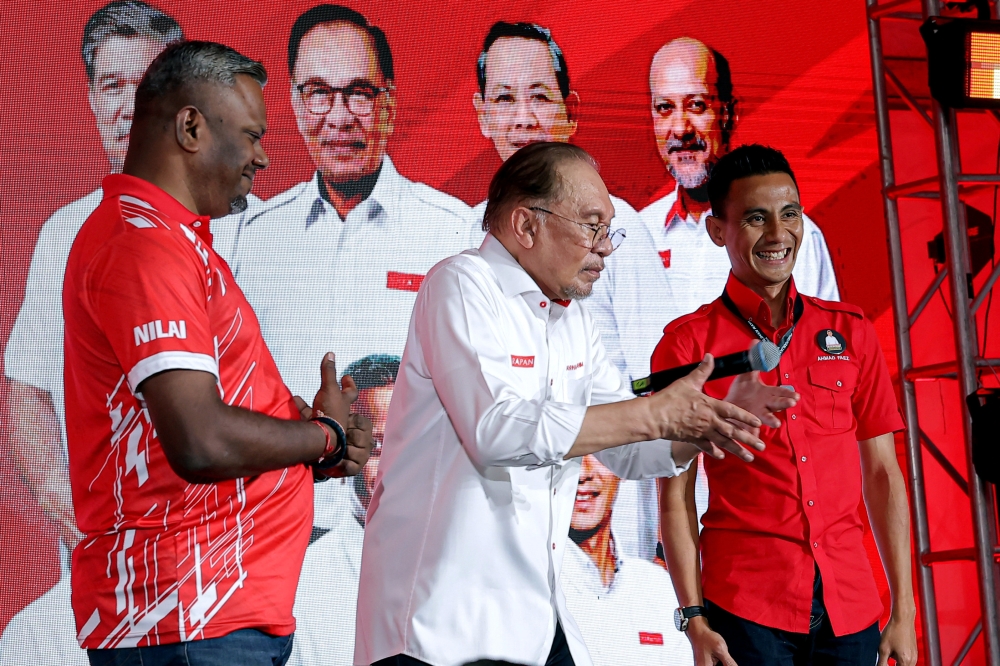
Prime Minister Datuk Seri Anwar Ibrahim has doubled down on his apology to Malaysia's Indian community following statements that triggered considerable discontent among community leaders and civil society groups. Speaking in Seremban, the premier reinforced his commitment to inclusivity and reaffirmed that the country's identity encompasses the diverse backgrounds of all its inhabitants, signalling a broader effort to heal any rifts created by his earlier remarks.
The incident underscores the delicate political terrain surrounding identity and representation in Malaysia, where communal sensitivities remain potent factors in national discourse. Anwar's decision to revisit the apology rather than allow the matter to fade suggests his administration recognises the importance of managing intercommunal relations, particularly as the government navigates competing demands from various demographic groups. For Indian Malaysians—who comprise roughly 1.2 million people or around 3.6 per cent of the population—such acknowledgments carry symbolic weight in asserting their stake in the nation's future.
The broader context of Anwar's leadership reveals an attempt to position himself as a unifying figure capable of transcending Malaysia's historically fractious identity politics. Since assuming office, he has emphasised meritocracy, economic performance, and shared prosperity as mobilising themes rather than communal appeals. However, the controversy illustrates how quickly missteps in rhetoric can undermine such positioning, particularly when they touch on matters of cultural recognition and belonging that resonate deeply within minority communities.
Indian Malaysians have long grappled with questions of visibility and representation within a political system traditionally dominated by Bumiputera frameworks that privilege Malay-Muslim interests. While these constitutional arrangements reflect Malaysia's post-independence social contract, they have occasionally created perceptions of marginalisation among non-Bumiputera groups. Anwar's repeated emphasis that Malaysia belongs to all Malaysians thus addresses not merely an isolated controversy but a persistent underlying anxiety about inclusion and dignity within the national project.
The incident also carries implications for Anwar's broader political coalition. His government depends on support from multiple parties representing diverse constituencies, including Indian-focused political formations and broader multi-ethnic groupings. Erosion of confidence among any constituent community could destabilise the delicate parliamentary arithmetic that sustains his administration. By prioritising reconciliation, Anwar signals that no demographic group can be taken for granted, despite their current alignment with his coalition.
From a Southeast Asian perspective, Malaysia's approach to managing ethnic and religious diversity offers lessons—and cautionary tales—for regional neighbours. Thailand, Myanmar, and the Philippines all navigate their own intercommunal tensions, and Malaysia's relatively peaceful track record in this area, despite persistent structural inequalities, reflects hard-won institutional experience. When political leaders demonstrate willingness to acknowledge missteps and reaffirm inclusive principles, they reinforce democratic norms that serve the entire region's stability.
The apology also reflects evolving expectations about political communication in Malaysia's increasingly digitally connected society. Comments that might once have remained within confined circles now circulate rapidly across social media, amplifying their reach and impact. Political leaders must now account for this instantaneous dissemination when crafting their public statements. Anwar's administrative experience and relative comfort with public engagement suggest he understands this new media environment, yet the incident demonstrates that navigating it remains challenging even for seasoned practitioners.
Economically, social cohesion carries tangible benefits. Foreign investors and multinational corporations often cite political stability and intercommunal harmony as factors influencing their confidence in Malaysia as an investment destination. Conversely, perceptions of communal friction can undermine investor sentiment and economic growth prospects. By reaffirming unity, Anwar effectively signals that his government views social peace not as a side effect of good governance but as integral to economic performance and prosperity.
The Indian Malaysian community itself presents diverse interests and perspectives that defy monolithic characterisation. While some community leaders prioritised immediate apologies, others emphasised the need for substantive policy measures addressing longstanding concerns—from education and employment representation to cultural heritage preservation and economic opportunities. Anwar's statements, while important symbolically, will ultimately be evaluated against concrete administrative actions and resource allocation decisions his government implements across multiple portfolios.
Moving forward, managing such situations will require Anwar's administration to balance competing demands while maintaining policy coherence. The challenge extends beyond ceremonial acknowledgments to encompassing genuine engagement with community concerns and demonstrable commitment to equitable development across all demographic groups. The outcome of this approach will significantly shape perceptions of his leadership and the viability of his coalition governance model in Malaysia's increasingly complex political landscape.

