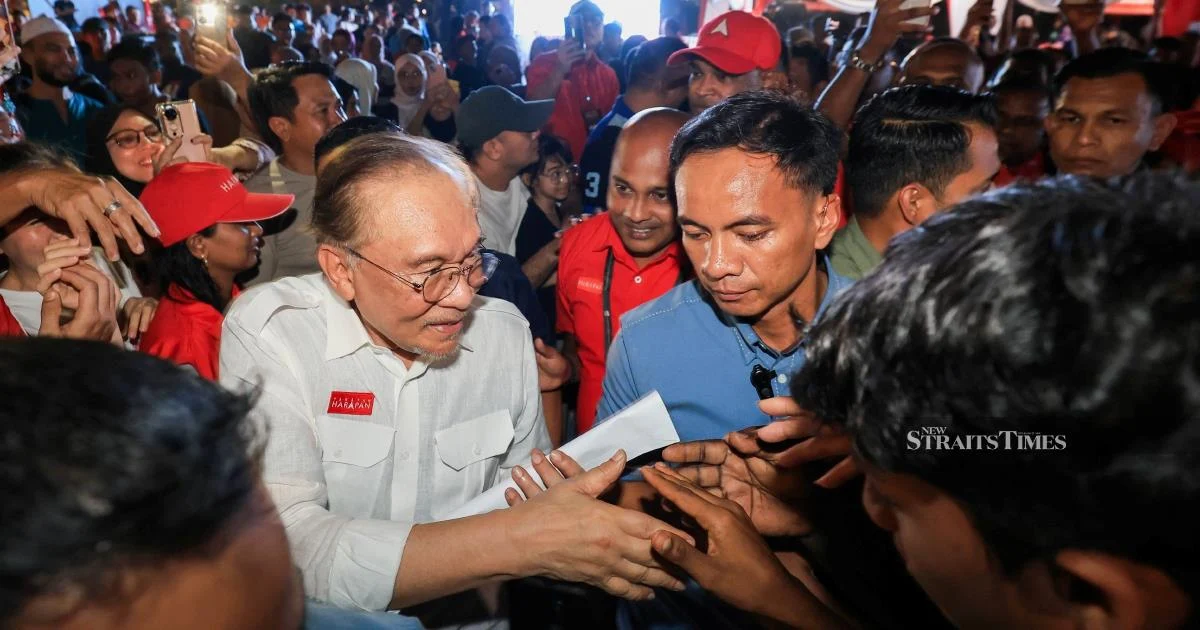
Prime Minister Datuk Seri Anwar Ibrahim has firmly rejected recent demands that Parliament be dissolved to trigger early elections, maintaining that Malaysia's current unity government possesses a valid mandate from voters to govern the nation. His statement comes amid periodic speculation about the political stability of the coalition and renewed discussion in certain quarters about the merits of holding fresh polls before the constitutional deadline.
The unity government, which took shape following the 2022 general election, has faced intermittent questions about its durability and the underlying commitment of coalition partners to sustain the arrangement through to the next scheduled polls. Anwar's comments directly address these concerns by asserting that the electorate's decision in 2022 remains legally and morally binding, and that early dissolution would constitute an unnecessary departure from the democratic process that voters participated in fewer than two years prior.
The Prime Minister's position reflects a pragmatic political calculation. An early election would carry substantial administrative and financial costs while introducing significant uncertainty into Malaysia's governance and economic agenda. The unity coalition, comprising Pakatan Harapan, Barisan Nasional, and several smaller parties, has managed to govern despite the inherent tensions that arise when ideologically diverse parties share executive power. Anwar's assertion that the government retains its mandate serves as both a rebuttal to critics and a signal of confidence to international investors and Malaysia's domestic business community that political continuity remains intact.
The coalitional nature of Malaysia's current government has long been a subject of intense scrutiny. Unlike single-party majority governments that rest on clearer numerical foundations, multiparty arrangements require constant negotiation, compromise, and the management of competing interests. Each coalition partner brings distinct constituencies, policy preferences, and internal factional dynamics to the arrangement. The unity government's longevity has already outlasted initial scepticism from observers who predicted its swift collapse, yet periodic defections, shifts in regional political alignments, and disagreements over policy direction continue to generate questions about its resilience.
Anwar's refusal to countenance early elections also carries implications for his broader political agenda. The government has initiated substantial reforms in education, healthcare, and economic management, alongside efforts to address institutional accountability following the political turmoil of preceding years. A full parliamentary term allows more time to embed these initiatives and demonstrate tangible results to voters. Premature dissolution would interrupt momentum on these programmes and force all political energy into a renewed electoral campaign, potentially at the cost of implementation.
The question of electoral mandates in Malaysian politics operates within a particular constitutional framework. The Parliament may be dissolved by the Prime Minister, triggering a general election within 60 days, or it automatically dissolves seven years after the most recent election. The 2022 election, held on November 19, means automatic dissolution would occur in November 2029 unless dissolved earlier. Anwar's assertion that the current government retains its mandate is technically accurate in the strict sense that voters elected representatives who subsequently formed the unity coalition. However, this glosses over the contentious question of whether voters endorsed the coalition arrangement specifically, given that coalition formation occurred after polling day.
Regional and international observers regard Malaysia's political management as a significant factor in broader Southeast Asian stability. The nation's economy remains integrated with regional supply chains, and any extended period of governmental instability could reverberate across the region. Anwar's emphasis on continuity and mandate reassures neighbouring countries and international trading partners that Malaysia remains capable of predictable policymaking and reliable partnership on regional initiatives ranging from trade to security cooperation.
The broader context for Anwar's statement includes ongoing economic challenges, including inflation pressures, labour market adjustments, and the imperative to position Malaysia competitively within the rapid technological and economic transformations reshaping Asia. These demands require sustained governmental attention and cannot easily be addressed amidst electoral campaigning. The unity government's longevity, despite scepticism, has allowed it to address several pressing issues without the electoral distraction that an early dissolution would create.
Domestically, Anwar's firmness on this matter also serves to stabilise his own position within the coalition. By definitively rejecting early election speculation, he removes one source of uncertainty that coalition partners might exploit for factional advantage. His statement essentially tells potential dissenters that they should either commit to the coalition's stated trajectory or face the consequences of destabilising the government, knowing that voters will ultimately judge whether such actions were justified.
The dismissal of early election calls represents Anwar's assertion of control over Malaysia's political timeline and agenda. It signals to his coalition partners, to opposition forces, and to the Malaysian public that the government intends to complete its term and deliver on its promises before facing renewed electoral judgment. Whether this confidence proves warranted will depend on the coalition's capacity to manage internal differences, deliver policy outcomes, and maintain public support as economic conditions and voter sentiment inevitably shift across the remaining years of the current parliamentary term.

