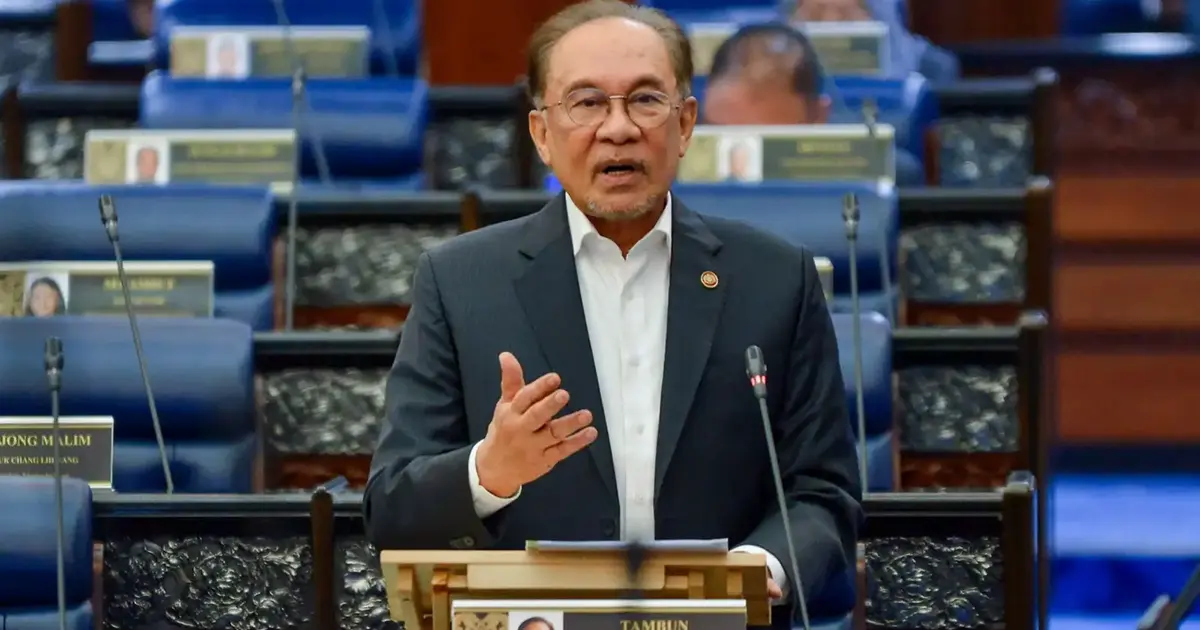
Prime Minister Anwar Ibrahim has once more pushed back against mounting pressure to dissolve Parliament prematurely, reiterating that the electorate would rather see sustained governance focused on economic prosperity than be thrust into another election campaign. His position reflects a deliberate strategy to consolidate the federal coalition's agenda without the constant disruption of electoral cycles, even as his administration navigates complex coalition dynamics and occasional restlessness from various political quarters.
The repeated nature of Anwar's rebuttals underscores the ongoing tension within Malaysia's political landscape, where certain factions continue to advocate for fresh polls despite the government's insistence that there remains unfinished business requiring completion within the current parliamentary term. This recurring friction demonstrates the inherent instability that characterises multi-coalition governments dependent on narrow majorities and competing interests, a challenge that Malaysia has grappled with repeatedly over the past decade.
Anwar's argument centres on a fundamental premise about voter priorities. He contends that after years of political turbulence and economic headwinds, ordinary Malaysians have signalled through their behaviour and sentiment that they value predictability and the space for coherent policy implementation. Constant electoral contests, he implies, distract from the incremental but necessary work of structural economic reform, managing inflation, and rebuilding public sector confidence—tasks that require sustained focus rather than intermittent campaign blitzes.
The government's economic narrative carries particular weight in Southeast Asia's current environment. With regional peers facing inflation pressures, slowing growth, and currency volatility, Malaysia's administration has positioned itself as committed to long-term stabilisation rather than short-term political advantage. Anwar's repeated insistence on completing the current mandate aligns with this framing, positioning his coalition as mature and results-oriented compared to alternatives that might destabilise ongoing initiatives.
However, Anwar's position also reveals the fundamental fragility of his governing coalition. The fact that he must repeatedly and publicly reject early election speculation suggests that such calls carry genuine political weight within Parliament. This points to latent instability among coalition partners or opposition figures testing the waters of public opinion, probing whether circumstances might favour a recalibration of parliamentary alignments. Each reiteration, while intended as reassurance, inadvertently acknowledges that the government's majority remains somewhat contingent.
The psychological dimension of Anwar's messaging warrants attention. By consistently framing election calls as economically irresponsible and contrary to voter wishes, he attempts to inoculate his coalition against the charge that postponement serves merely the government's self-interest. Instead, he recasts rejection of early polls as a principled stand aligned with national economic imperatives and public sentiment—a reframing that carries credibility among swing voters and middle-class constituencies anxious about financial stability.
From a regional perspective, Malaysia's political stability carries implications beyond its borders. International investors monitoring Southeast Asian governance quality view predictable institutional environments as attractive. Anwar's insistence on completing the parliamentary term without disruption sends signal to foreign capital that Malaysia offers relatively steady political conditions compared to some neighbours experiencing more acute instability. This calculus influences foreign direct investment flows and Malaysia's competitive positioning within the region.
The opposition's positioning in response to these statements reflects broader strategic considerations. Whether opposition parties amplify or downplay calls for early elections depends partly on their assessment of current polling trends and their readiness for contest. Anwar's repeated rejections may have the unintended effect of dampening opposition enthusiasm for forcing a crisis if such efforts appear futile or likely to provoke public backlash for political opportunism.
Within the ruling coalition itself, Anwar's public stands serve disciplinary and reassurance functions simultaneously. Coalition partners contemplating defection or renegotiation of terms receive a signal that the Prime Minister retains both confidence in the government's stability and the political capital to insist upon it. Simultaneously, the repeated nature of these statements suggests that private conversations within the coalition may be more contested, with various factions pressing their particular concerns about the government's direction or pace of reform.
Looking forward, the sustainability of Anwar's position depends upon tangible economic delivery. If inflation moderates, employment figures improve, and household spending power expands, his argument that patience yields dividends gains practical force. Conversely, if economic indicators deteriorate materially or remain stagnant, pressure for early elections will likely intensify, as voters and political actors recalculate their strategic interests. The correlation between economic conditions and political stability in Malaysian parliamentary governance remains direct and consequential.
The broader lesson embedded in Anwar's repeated rejections concerns the nature of modern Malaysian governance. Commanding a working majority proves insufficient; sustaining public confidence in the coalition's viability and economic competence becomes equally essential. These twin requirements—parliamentary arithmetic and public perception—force Anwar into a continuous balancing act, requiring him to project both firmness about the government's mandate and responsiveness to legitimate concerns. How successfully he maintains this equilibrium will determine not only whether the current government completes its term, but also the shape of Malaysian politics through the next electoral cycle.

