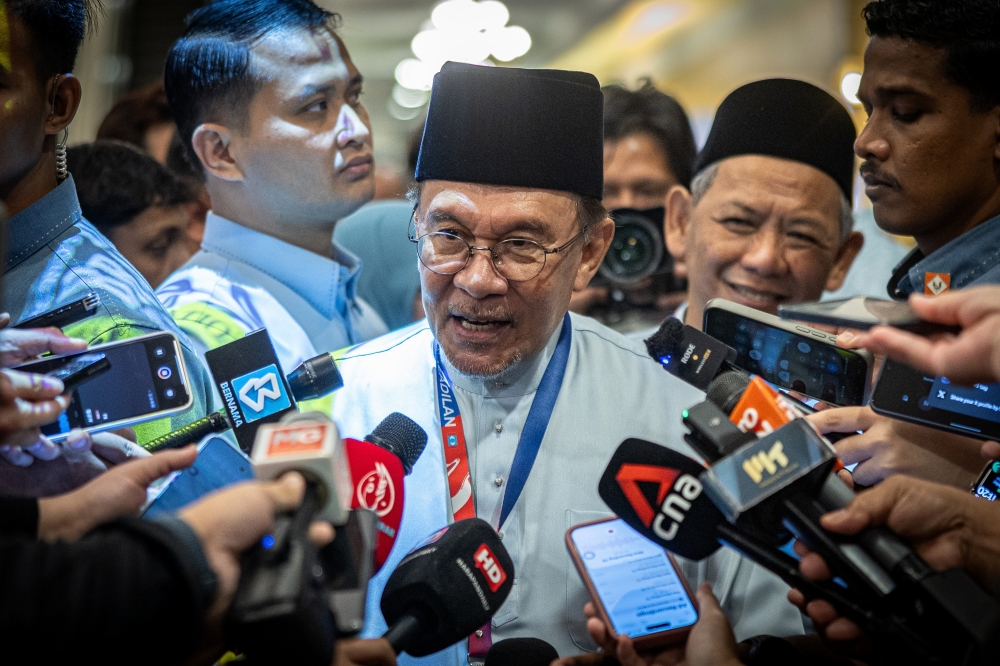
Prime Minister Datuk Seri Anwar Ibrahim has firmly rejected insinuations that his working relationship with Deputy Prime Minister Datuk Seri Zahid Hamidi is fractured, reaffirming his dedication to maintaining harmony across the coalition government. Speaking in Melaka on August 15, Anwar moved to counter recent claims by party figure Khairy Jamaluddin that discord existed at the highest levels of Malaysia's leadership, characterizing his approach to governance as rooted in dialogue rather than confrontation.
The Prime Minister's intervention comes at a sensitive moment in Malaysia's political landscape, where speculation about tensions between different factions within the ruling coalition has periodically surfaced. By publicly endorsing peaceful collaboration, Anwar sought to project an image of stability and reinforce confidence among both coalition partners and the broader electorate that internal differences are manageable through established channels rather than public disputes.
Khairy's earlier statements had suggested underlying strains between Anwar's PKR-led faction and the UMNO leadership represented by Zahid, particularly regarding policy direction and resource allocation within government. Such assertions, whether accurate or speculative, carry weight in Malaysian politics given the coalition's relatively narrow parliamentary majority and the history of tensions between UMNO and PKR. Anwar's swift and public denial signals the administration's preference for controlling the narrative around coalition stability rather than allowing external commentators to shape perceptions.
The commitment to a "peaceful path" reflects Anwar's broader political philosophy since assuming the premiership, emphasizing consensus-building over decisive action or confrontation. This approach has proven effective in maintaining the Pakatan Harapan-UMNO coalition despite their considerable ideological differences and competing interests. However, it also creates space for observers to question whether critical decisions are being delayed or compromised by the need for extensive consensus-seeking.
Zahid's position as Deputy Prime Minister gives him significant influence over government operations and UMNO's strategic direction, making his relationship with Anwar crucial to coalition cohesion. Any genuine rupture between them could trigger cascading political consequences, from ministerial reshuffles to broader policy gridlock. By emphasizing harmony, Anwar provides reassurance that the partnership remains functional and that disagreements, if they occur, are resolved through private channels rather than becoming public spectacles.
For Malaysian stakeholders—businesses, civil society organizations, and ordinary citizens—political stability at the executive level directly impacts government effectiveness. A Prime Minister and Deputy Prime Minister working in genuine accord can shepherd legislation through parliament more efficiently and present a unified front on major policy questions. Conversely, visible rifts invite backbencher dissent and create opportunities for minor coalition partners to extract concessions by threatening to destabilize the government.
The broader Southeast Asian context adds another layer to these dynamics. Malaysia's regional role in economic cooperation, security matters, and diplomatic initiatives depends partly on having a stable government capable of making binding commitments. Regional partners from Singapore to Indonesia monitor Malaysian political developments closely, as instability can affect trade relationships, border security, and multilateral forum participation.
Khairy's role in raising these allegations warrants examination as well. As a prominent UMNO figure with his own political ambitions, his public commentary may reflect genuine concerns about intra-coalition dynamics or strategic positioning ahead of potential leadership contests within UMNO itself. By attributing tensions to Khairy's statements rather than engaging substantively with the underlying issues, Anwar effectively dismisses the substance while maintaining his public posture of unity.
The timing of Anwar's remarks in Melaka, a state with significant political importance to UMNO, also carries symbolic weight. By choosing to make his statement in UMNO-heartland territory rather than in Kuala Lumpur or a PKR stronghold, he demonstrated willingness to directly address coalition concerns on their home ground, a gesture that may help reinforce confidence among UMNO members and supporters.
Looking forward, the coalition's sustainability depends on multiple factors beyond Anwar and Zahid's personal rapport: economic performance, the government's ability to deliver on election promises, and the appetite of component parties to remain aligned despite competing institutional interests. As Malaysia approaches mid-term government milestones and begins laying groundwork for the next general election cycle, managing internal coalition narrative will become increasingly important.
Anwar's characterization of his governance style as peaceful and collaborative frames political management as an exercise in mature leadership rather than power politics. Whether this framing reflects genuine operational practice or serves primarily as public relations messaging will likely become clearer as the government faces the inevitable policy disagreements and budgetary constraints that test any coalition's unity.

