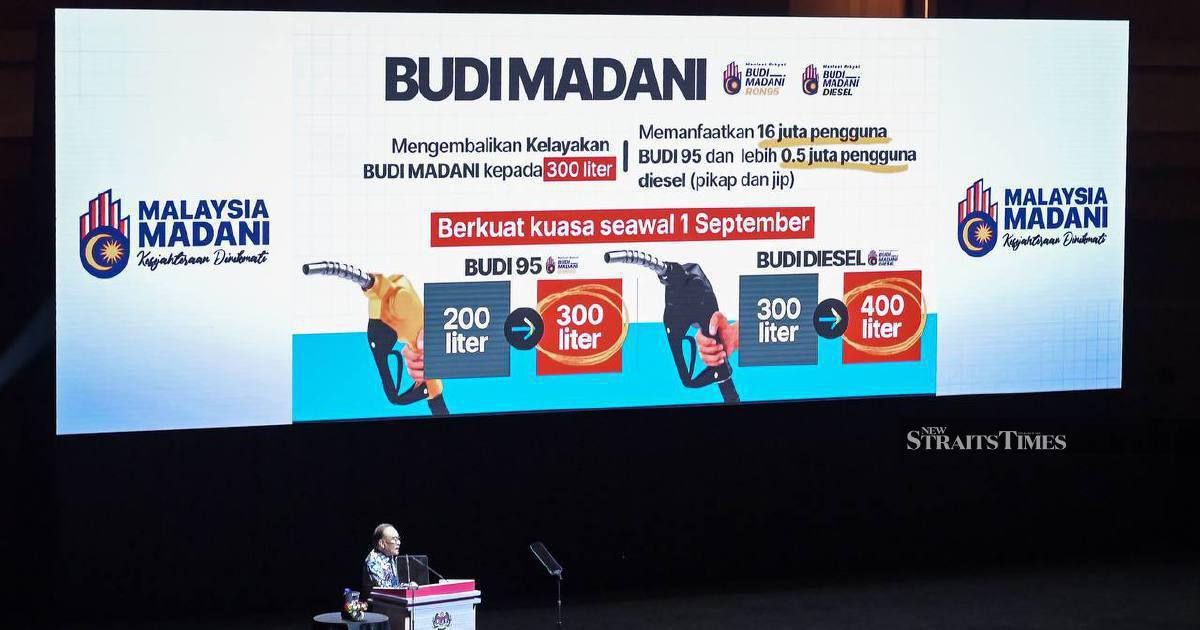
Prime Minister Datuk Seri Anwar Ibrahim has announced a six-point relief package aimed at easing cost-of-living pressures facing Malaysian households and businesses, signalling the government's commitment to addressing affordability concerns ahead of the formal tabling of the 2027 Budget in October. The announcement comes at a critical juncture when Malaysians continue to grapple with rising expenses across essential services, from utilities to transportation, creating mounting pressure on household budgets across income levels. The measures represent the administration's attempt to provide immediate respite while longer-term fiscal measures are prepared for parliamentary deliberation.
The timing of these announcements during National Day Eve carries symbolic weight, framing economic relief as a matter of national priority and public welfare. By positioning these measures as urgent interventions rather than election-year populism, the government seeks to demonstrate proactive governance on an issue that consistently dominates public conversation and sentiment surveys. The phased approach—with immediate actions now and comprehensive budget provisions in October—allows the administration to show tangible commitment without depleting fiscal resources prematurely. This dual-track strategy reflects the complexities of managing Malaysia's public finances while responding to genuine hardship among voters.
Cost-of-living pressures have intensified across Southeast Asia, with Malaysia experiencing particular strain in urban centres where property costs, transport, and food prices have climbed steadily. Professionals earning middle incomes report difficulty sustaining previous living standards, while lower-income households have curtailed discretionary spending significantly. For businesses, rising operational costs have compressed profit margins, forcing difficult choices between maintaining workforce levels and containing expenses. The government's intervention acknowledges these cross-cutting pressures affecting both consumer spending and business investment, two pillars necessary for sustained economic growth.
The package's focus on supporting businesses alongside household relief reflects an understanding that economic resilience depends on commercial viability. When enterprises struggle under cost burdens, they reduce hiring, freeze wages, and defer expansion plans—consequences that ripple through employment and income stability. By providing targeted support to business operations, the government aims to create conditions where employment growth can continue and wage pressures ease organically. This approach contrasts with purely consumption-side subsidies, which address symptoms without necessarily strengthening underlying economic structures.
Public services enhancement forms a third pillar of the announced measures, signalling that government efficiency and quality directly impact household costs. When public healthcare, education, and transportation function effectively, private expenditure on alternatives diminishes, freeing household resources for other needs. Conversely, deteriorating public services force citizens toward expensive private options, effectively imposing hidden taxes on consumers. Investment in service delivery thus operates as an indirect cost-of-living measure, particularly benefiting lower-income households that depend most heavily on public provision.
The October 2027 Budget will provide the detailed fiscal architecture underpinning these immediate measures. Budget deliberations typically involve trade-offs between revenue enhancement, expenditure priorities, and fiscal deficit targets. The government must balance desires for expanded support against concerns about sovereign debt sustainability and development financing. Malaysia's debt-to-GDP ratio, while manageable, constrains fiscal space for indefinite spending increases. The October timeline allows for parliamentary scrutiny, public consultation, and refinement of measures based on implementation feedback during the interim period.
Regional context suggests Malaysian policymakers are watching approaches adopted by neighbouring governments. Singapore has emphasised targeted assistance through revised subsidies and direct transfers to qualifying households. Indonesia has managed inflation through monetary policy coordination alongside supply-side interventions. The Philippines has debated subsidy rationalisation versus expansion. Malaysia's six-point approach appears to reflect lessons from this regional experience, combining immediate relief with structural measures rather than relying solely on temporary subsidies that consume budget space without addressing root causes.
Private sector responses will prove crucial to measuring these measures' ultimate effectiveness. If businesses interpret support packages as temporary relief rather than genuine structural reform, investment and hiring decisions may remain subdued. Conversely, if measures instil confidence in economic management and medium-term stability, business sentiment could catalyse private investment that compounds government efforts. Market reactions in coming weeks will indicate whether financial communities view the announcements as sufficient and credible.
For ordinary Malaysians, the real test lies in tangible relief at household level. Prices at wet markets, utility bills, and transport fares constitute the lived experience of affordability. Government measures succeed only insofar as they translate into actual cost reductions or income support perceptible to families managing tight budgets. The six measures therefore require clear implementation mechanics, transparent delivery channels, and mechanisms preventing leakage or corruption that undermines intended beneficiaries.
Longer-term implications extend beyond immediate financial relief. How effectively the government manages this cost-of-living episode will shape public confidence in institutional competence and economic stewardship. Successful implementation demonstrates that governance can address pressing citizen concerns through coherent policy design. Conversely, implementation failures or perceived inequity in benefit distribution could deepen public cynicism about government effectiveness. The October 2027 Budget announcement thus carries significance extending far beyond numerical allocations, touching foundational questions about state capacity and political legitimacy in contemporary Malaysia.

