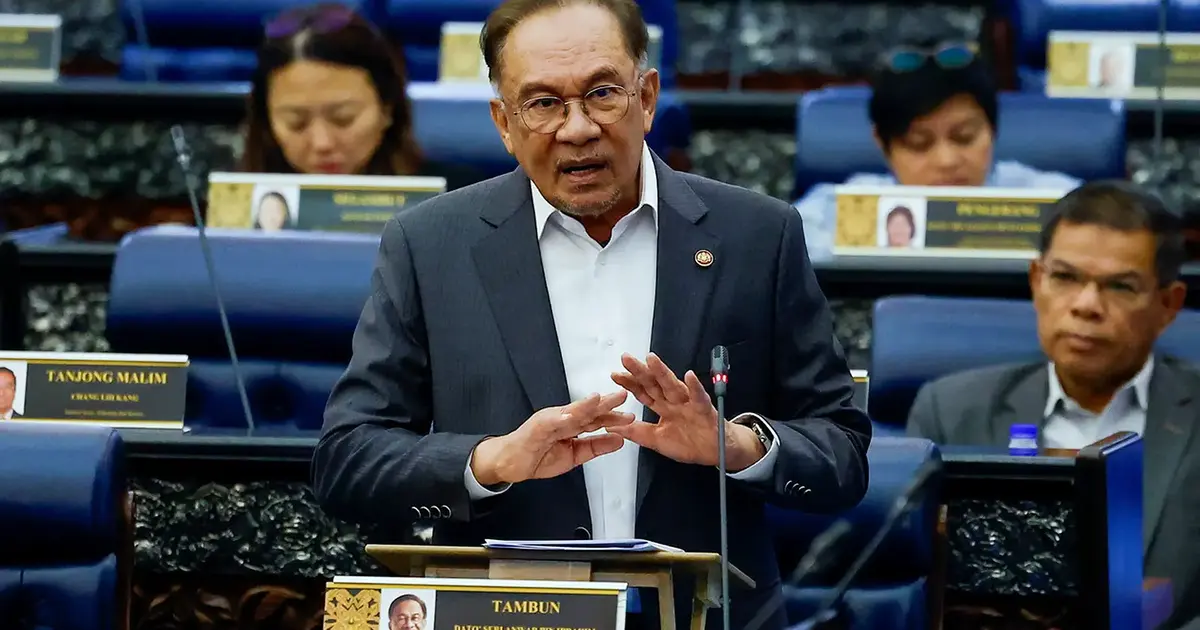
Prime Minister Anwar Ibrahim has clarified that the escalating special grant payments directed to Sabah were not unilateral decisions by the federal government, but rather represented commitments that had secured backing from the state administration under the previous Warisan leadership. The disclosure addresses ongoing questions about the financial arrangement, suggesting continuity in inter-governmental fiscal agreements across different administrations in the state.
The financial trajectory of Sabah's special grants reveals a substantial expansion in federal allocation towards the state. Beginning at RM53.4 million during 2020 and 2021, the annual disbursement has grown substantially, reaching RM106.8 million by 2024. This doubling of the allocation over a four-year period underscores shifting federal priorities regarding Sabah's fiscal support, a matter of considerable significance given the state's strategic importance within Malaysian federalism and its historical grievances regarding resource distribution.
Anwar's statement serves to distribute political accountability for the grant increases across administrations, suggesting that the arrangement transcended partisan political divides. By asserting that the Warisan government—which governed Sabah until 2020 before the state shifted towards a different political coalition—had agreed to the escalating rates, the Prime Minister positions the grants as a continuation of pre-existing consensus rather than a novel initiative. This framing carries implications for how the current Sabah administration and federal government justify the allocation to taxpayers and other state governments that may view such grants as setting precedents.
For Malaysian observers, the significance of these grants extends beyond mere budgetary figures. Sabah occupies a peculiar position within the federation, having joined Malaysia in 1963 with specific constitutional protections and arrangements that differ from peninsular states. Federal grants and special allocations form part of the delicate political equilibrium that maintains Sabah's commitment to the Malaysian federation. The doubling of special grants thus reflects broader strategic considerations regarding federal unity and inter-state equity, particularly as Sabah's political dynamics remain volatile and subject to rapid shifts in party allegiances and governance coalitions.
The mention of the Warisan government's prior approval becomes particularly noteworthy because Warisan, which governed Sabah from 2018 to 2020, represented a significant departure from the federal government's political dominance at that time. The Democratic Action Party-led Pakatan Harapan coalition then governed Malaysia, while Warisan operated independently. That a state government operating outside the federal coalition's political structure would agree to escalating grant arrangements suggests the agreements were grounded in substantive fiscal reasoning rather than partisan alignment, though this interpretation remains contested depending on political perspective.
The progression of grant allocations also reflects changing economic circumstances and federal fiscal priorities. The period spanning 2020 to 2024 encompasses the COVID-19 pandemic, which substantially disrupted economic performance across Malaysia and necessitated significant government expenditure on relief and recovery measures. Within this context, the decision to double Sabah's special grants might be understood as part of broader federal efforts to support state economies during the crisis, though the specific targeting of Sabah warrants examination of whether similar provisions extended to other states or whether Sabah received preferential treatment.
For regional policymakers and analysts monitoring Malaysian federalism, Anwar's clarification about the Warisan government's prior agreement establishes an important precedent. When federal allocations to states increase substantially, the question of democratic accountability and inter-governmental consensus becomes central to their legitimacy. By emphasizing that the arrangement had cross-administration agreement, the Prime Minister attempts to insulate the grants from criticism that they represent ad hoc federal spending or politically motivated favouritism. However, this approach also raises questions about whether similar agreements exist with other states or whether Sabah's situation reflects unique considerations.
The timing of Anwar's statement suggests ongoing public or political scrutiny of the grant arrangement, indicating that the allocations remain contentious or require justification within broader national fiscal discourse. In Malaysia's competitive federal system, where multiple state governments vie for resources and negotiating leverage with Kuala Lumpur, announcements regarding one state's special grants invariably prompt other administrations to assess their own allocation fairness and to consider whether they possess equivalent negotiating positions. The Sabah grants thus function not merely as fiscal transfers but as signals within a broader inter-governmental bargaining system.
The substantive implications for Sabah itself are considerable. The RM106.8 million annual allocation by 2024 represents meaningful additional revenue that state authorities can deploy towards development priorities, whether infrastructure, education, healthcare, or administrative expansion. For a state historically conscious of relative disadvantage within the federation and concerned about resource competition with other states, such allocations carry symbolic weight beyond their financial value. They represent federal recognition of Sabah's position and needs, elements that carry political resonance in a state where federal-state relations remain subject to periodic tension and renegotiation.
Looking forward, Anwar's articulation of prior Warisan agreement establishes a foundation for the grants' continuation, at least in principle. However, it also potentially constrains future federal flexibility, as the grants become characterized as commitment rather than discretionary expenditure. This locks the federal government into an escalating financial obligation towards Sabah, with implications for overall federal fiscal planning and the precedents it sets for other states seeking similar long-term allocation guarantees. The politics of maintaining these grants amid competing national priorities will likely emerge as a significant issue as Malaysia navigates post-pandemic fiscal consolidation and prioritizes spending across multiple governmental levels.

