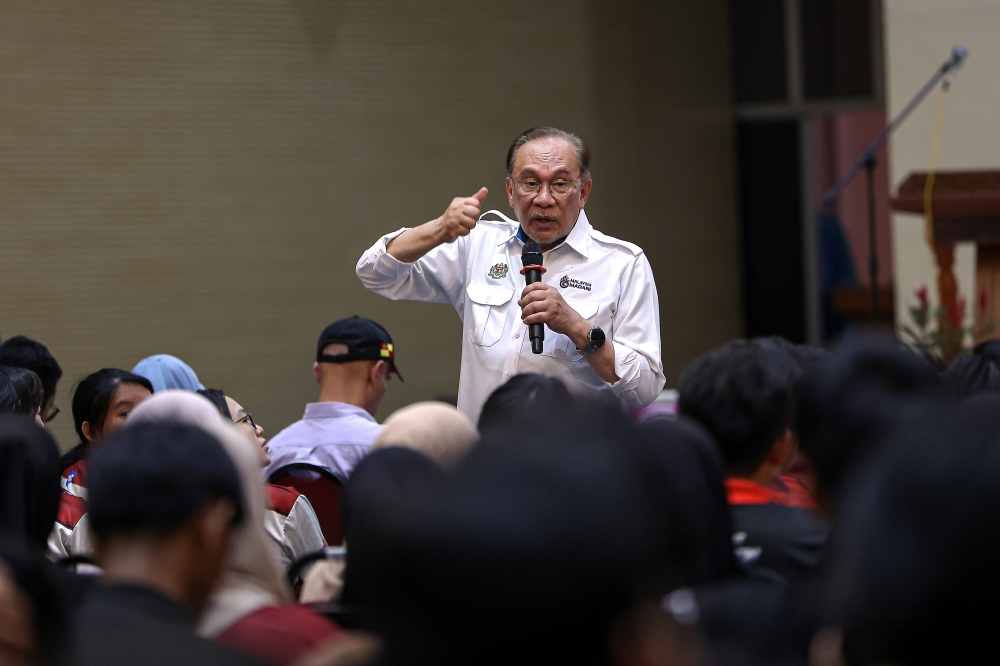
Prime Minister Datuk Seri Anwar Ibrahim made an impassioned appeal to Negeri Sembilan voters on Monday, urging them to reaffirm their confidence in the Pakatan Harapan coalition by delivering a fresh electoral mandate. Speaking in Seremban, the capital of the central Malaysian state, Anwar framed the upcoming polls as a critical juncture for consolidating governance gains and preventing political disruption that could derail ongoing initiatives. His remarks underscore the coalition's strategy of emphasizing continuity and steady progress rather than radical change as it courts voters facing their own assessment of the government's performance.
Anwar's appeal reflects broader anxieties within the Pakatan-led administration about maintaining its parliamentary majority and state-level control amid shifting voter sentiment. Since the 2022 general election, the coalition has navigated a fragile political landscape, managing competing interests within its three constituent parties while delivering on campaign promises. Negeri Sembilan, traditionally a crucial swing state in Malaysian politics, holds particular significance given its role in determining overall national parliamentary arithmetic. The state's twelve parliamentary seats contribute materially to Putrajaya's ability to govern, making the electoral outcome there consequential beyond its borders.
The Prime Minister's framing of stability as the paramount voter consideration reflects a deliberate messaging choice. Rather than emphasizing ambitious new policies or transformative reforms, Anwar positioned Pakatan's continued governance as a bulwark against uncertainty and the economic disruption that might accompany political instability. This conservative approach suggests internal calculations that voters, particularly in economically vulnerable constituencies, may prioritize reassurance over innovation in the current climate of global economic headwinds and inflationary pressures affecting household finances throughout Southeast Asia.
Negeri Sembilan's voters face a complex decision calculus. The state encompasses diverse constituencies ranging from urban centres to rural agricultural communities, each with distinct priorities. Urban voters in areas like Seremban proper may emphasize infrastructure development and economic opportunities, while rural constituencies focus on agricultural support, connectivity, and basic services. Anwar's pitch of stability as a public good attempts to transcend these divisions by suggesting that all communities benefit from predictable governance without the disruptions that follow electoral upheaval and the frequent shifts in policy direction that characterise fragmented legislatures.
The coalition's request for voter backing carries implicit acknowledgment that its 2022 election mandate has eroded somewhat. Subsequent by-elections, defections, and shifting coalition dynamics have complicated Pakatan's parliamentary position, necessitating coalition partners' continued support and occasional accommodation of their policy preferences. By seeking fresh validation from Negeri Sembilan specifically, Anwar attempts to demonstrate grassroots confidence that might strengthen his negotiating position within the broader ruling coalition and deter potential defections among elected representatives concerned about electoral viability.
Context matters significantly here. Since assuming office in late 2022, Anwar's government has pursued economic stabilization measures while attempting structural reforms in areas including civil service efficiency and corruption prevention. These initiatives require extended implementation periods to yield tangible results that voters can observe and appreciate. A return to electoral competition and potential government transition would inevitably disrupt such long-term endeavours, creating the very instability Anwar warns against. The Prime Minister's appeal essentially asks voters to grant his government additional time to complete work commenced but not yet visibly concluded.
Opposition parties, conversely, will likely frame the election as an opportunity to redirect development priorities, pursue alternative economic policies, or address perceived governance shortcomings. The electoral contest in Negeri Sembilan will thus reflect broader ideological and policy disputes about Malaysia's development direction, the appropriate pace and nature of institutional reform, and the distribution of economic benefits across different communities and regions. How local candidates and parties articulate these competing visions will significantly influence voter behaviour.
For Malaysian observers and Southeast Asian analysts, the Negeri Sembilan election carries implications beyond state borders. The result will provide indicators about voter sentiment regarding Anwar's administration, the continued viability of Pakatan's coalition model, and the relative strength of opposition movements. Given regional trends toward political fragmentation and electoral unpredictability, Malaysia's performance in maintaining stable, predictable democratic transitions between elections itself constitutes significant information for neighbours managing their own political transitions and institutional development. A decisive Pakatan victory would suggest voter appetite for continuity, whereas a more fractured result might indicate shifting preferences requiring coalition recalibration.
Anwar's appeal ultimately represents a calculated bet that most Negeri Sembilan voters value governance stability sufficiently to overlook any dissatisfaction with specific policies or delivery failures. This optimistic assessment may or may not align with actual voter preferences, which will become apparent once polling concludes. The outcome will determine not only Negeri Sembilan's direction but also influence the political calculations of elected representatives nationwide regarding coalition loyalty, potential defections, and the government's capacity to implement its agenda during the remainder of its five-year term.

