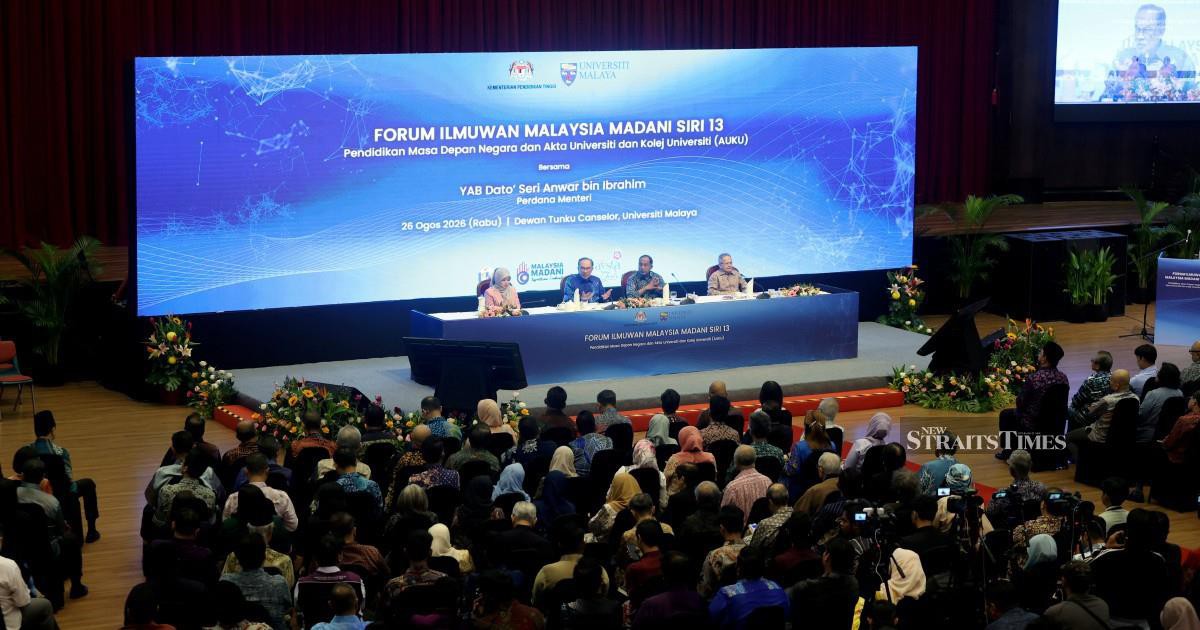
Prime Minister Datuk Seri Anwar Ibrahim has appealed to the university community for patience as his administration charts a course toward reforming the Universities and University Colleges Act, commonly known as AUKU. Speaking to concerns that have animated campus discourse for years, Anwar called on students and institutional leaders to have confidence in the government's commitment to designing substantive improvements to the current regulatory framework.
The AUKU, enacted decades ago, remains one of the most contentious pieces of legislation affecting higher education in Malaysia. The act imposes stringent restrictions on student activism, political participation, and freedom of expression on university campuses, requiring formal approval for most organised activities and effectively limiting the scope of student discourse. These constraints have periodically drawn criticism from civil society groups, academics, and international observers who argue that they stifle intellectual development and democratic participation among young Malaysians during formative years.
Anwar's request for a deliberative timeline reflects the complexity of reforming higher education law while navigating competing interests. University administration, student groups, political parties, and state governments all hold stakes in how campus autonomy rules are structured. Any significant revision must balance institutional governance needs with aspirations for greater freedom of expression and association—a calibration that cannot be rushed without risking unintended consequences or creating new friction points within the system.
The government's framing of its intentions as "comprehensive improvement measures" suggests an ambition beyond cosmetic adjustments. This language indicates potential changes to multiple dimensions of campus life, possibly including protocols for student organisations, the approval process for events and protests, and the disciplinary mechanisms that currently govern student conduct. Whether such improvements will amount to substantial liberalisation or merely procedural refinement remains unclear, a gap that may explain both student scepticism and Anwar's emphasis on building trust.
For Malaysian readers, the AUKU debate carries particular significance because it sits at the intersection of several national concerns: youth empowerment, democratic development, and economic competitiveness. Universities are spaces where future leaders, policymakers, professionals, and entrepreneurs develop their thinking. Restrictions that dampen critical engagement and civic participation potentially limit the intellectual dynamism that contributes to social and economic progress. Regional competitors such as Singapore and Thailand, despite their own constraints, have found ways to permit more robust academic and student discourse.
International perspectives on campus freedom also weigh on Malaysia's standing. Universities that operate under heavy restrictions risk diminished appeal to top international students and faculty, complicating efforts to build world-class institutions. This institutional and reputational dimension lends urgency to reform efforts, even as the process requires careful stewardship to avoid destabilising campus ecosystems or creating perceptions of sudden political shifts.
Anwar's appeal for trust hinges on demonstrating tangible progress. The government must translate its reform intentions into concrete legislative or administrative changes that stakeholders can see and evaluate. Vague promises without timelines or specific commitments may reinforce student cynicism about political pledges. Transparency about the consultation process, the stakeholders being consulted, and the principles guiding reform design would help build the confidence Anwar is requesting.
The timeline for AUKU reform also intersects with broader governance questions within Malaysia's higher education sector. Questions about autonomy for public universities, the role of student welfare versus institutional control, and the alignment of campus policies with constitutional protections of free expression all inform how AUKU revision should proceed. These are not merely technical legal matters but reflect fundamental philosophical questions about the purpose of universities in Malaysian society.
For students themselves, the situation presents both opportunity and uncertainty. The moment offers potential for meaningful change if reform efforts are substantial and inclusive. However, without clear communication about what students can expect and when, the space between current restrictions and imagined reform may breed frustration. Student movements must balance aspirations for immediate change against the reality of legislative processes, while the government must balance caution against the risk of appearing unresponsive to legitimate demands.
Southeast Asian context amplifies the relevance of Malaysia's AUKU reform debate. The region grapples broadly with questions about the relationship between state authority, institutional autonomy, and individual freedoms. How Malaysia navigates these questions influences regional conversations about governance, development models, and the role of higher education in national progress. A substantive and participatory reform process could position Malaysia as thoughtfully engaging with these tensions rather than maintaining entrenched constraints.
Moving forward, the government's credibility depends on demonstrating that the requested time and space will yield meaningful change rather than indefinite delay. Establishing clear milestones, publishing consultation findings, and engaging openly with student and faculty representatives would help validate Anwar's call for patience. Without such visible progress, the appeal for trust risks being perceived as a request to defer demands rather than a commitment to deliver transformation.
Ultimately, the AUKU reform question reflects deeper questions about Malaysia's trajectory as a knowledge-based economy and maturing democracy. Students represent an investment in Malaysia's future, and the regulatory environment in which they study shapes their development as citizens and professionals. The government's approach to this reform will send signals about its broader commitment to enabling rather than constraining the intellectual and civic development of young Malaysians.

