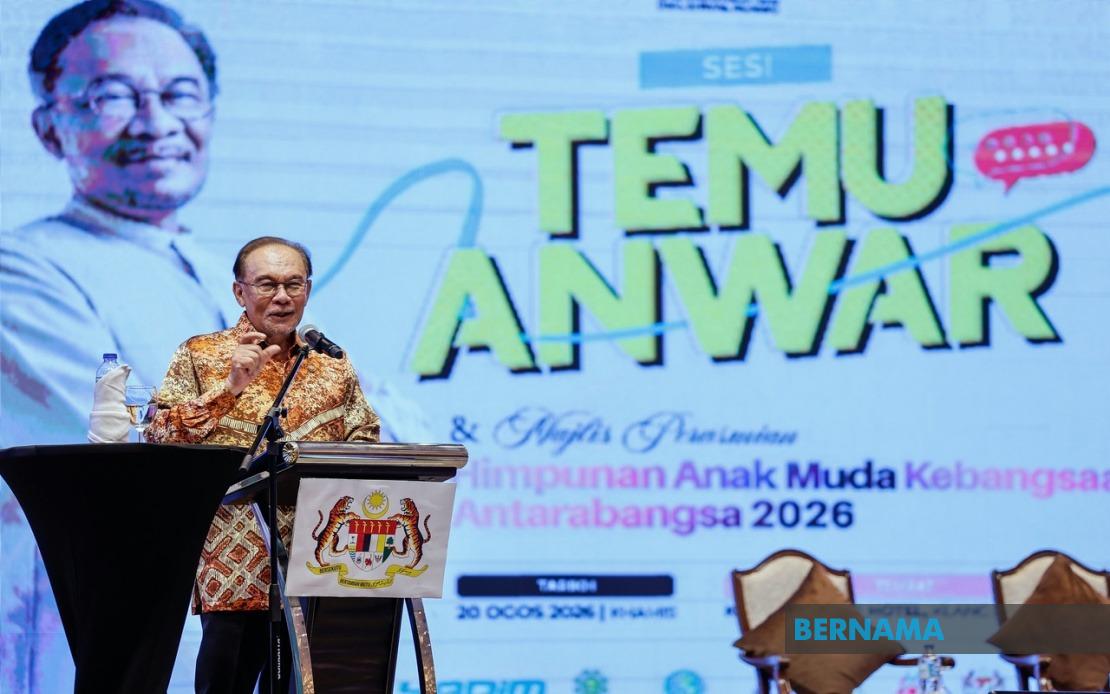
Prime Minister Datuk Seri Anwar Ibrahim has flagged a series of significant announcements scheduled for key national occasions, underscoring the government's intent to use these platforms for rolling out policy decisions. Speaking at a youth engagement session in Klang during the opening of Himpunan Anak Muda Antarabangsa (HAMKA) 2026, Anwar indicated that the first major announcement would come on the eve of Merdeka Day on August 30, to be followed by another during Malaysia Day celebrations in Kuching on September 16, with a third timed to coincide with Budget tabling in early October. While he deliberately withheld specifics, the strategic spacing of these announcements suggests a carefully choreographed rollout of government priorities across the remainder of the year.
The Prime Minister's decision to use national celebrations as backdrop for policy unveilings reflects a broader political strategy of anchoring government initiatives to moments of national significance and heightened public attention. By distributing announcements across three key dates, the administration appears intent on maintaining momentum on its legislative and policy agenda whilst capitalising on the symbolic importance of these occasions. The approach also allows the government to shape national discourse around patriotic sentiment and collective progress, framing policy changes within a narrative of national development rather than routine administrative updates.
At the Temu Anwar session, Anwar directly addressed youth concerns about employment security and financial wellbeing in the gig economy, an issue of growing salience across Southeast Asia as non-traditional work arrangements proliferate. A young participant raised questions about government initiatives to protect the welfare and financial security of those engaged in gig work, prompting the Prime Minister to outline existing protective mechanisms. The government has established the Malaysian Gig Economy Commission (SEGiM) and is introducing new legislation focused on small business support, both intended as frameworks for strengthening protections for workers operating outside conventional employment relationships.
The establishment of SEGiM represents a recognition that gig work requires distinct regulatory approaches compared to traditional employment. The commission's formation signals acknowledgment that the expanding informal economy necessitates tailored support systems rather than reliance on outdated labour frameworks. For Malaysia, where an estimated 3 million workers engage in gig-based activities, the commission's work carries particular significance in determining whether the country can develop adaptive policies that protect worker welfare without stifling the flexibility and entrepreneurial potential that attract workers to gig arrangements. Neighbouring countries in ASEAN are watching Malaysia's approach closely, as the region grapples with similar challenges around informal economy regulation.
Anwar acknowledged persistent criticism that existing government assistance for gig workers remains inadequate, a concern voiced by worker advocates and civil society organisations throughout 2024. Rather than dismissing these critiques, he indicated the government's continued commitment to finding solutions whilst implicitly suggesting that resource constraints and competing priorities shape what is achievable within current budgetary parameters. This candid acknowledgment of limitations contrasts with earlier optimistic rhetoric about protecting all segments of the workforce, suggesting either a recalibration of expectations or a more forthright discussion of trade-offs inherent in welfare expansion.
Beyond gig economy workers, Anwar pivoted to address entrepreneurship challenges facing university graduates, an equally pressing concern for young Malaysians entering the workforce amid moderate economic growth and competitive job markets. He highlighted the government's existing financing mechanisms through TEKUN, the National Entrepreneurial Group Economic Fund, which provides capital for new business ventures. However, he identified a specific bottleneck: existing financing requirements mandate that applicants demonstrate prior business track records, a criterion that inherently disadvantages fresh graduates lacking entrepreneurial experience and creates a paradoxical barrier to entry for precisely the demographic the scheme purports to support.
The Prime Minister's indication that this requirement should be reviewed demonstrates responsiveness to structural impediments that frustrate young entrepreneurs, many of whom possess education and ideas but lack the foundational experience that traditional lenders use as proxy indicators for project viability. Relaxing or reforming this requirement could unlock entrepreneurial activity among graduates, though it simultaneously introduces higher default risk unless accompanied by enhanced mentoring, technical support, or risk-sharing mechanisms. The tension between encouraging youth entrepreneurship and maintaining responsible lending practices represents a genuine policy dilemma that no government can easily resolve, yet Anwar's openness to reconsideration suggests movement on this front.
The Prime Minister's broader message to assembled youth—that he would listen, consider multiple perspectives, and act within government capacity—reflects a consultative governing style that emphasises dialogue over unilateral decision-making. This approach resonates with younger demographics increasingly sceptical of top-down governance and more receptive to leaders who demonstrate openness to feedback and constraint-acknowledging discourse. For a government seeking to maintain engagement with youth voters and build legitimacy among the under-thirty demographic, such sessions represent crucial platforms for demonstrating responsiveness and building perception that grievances receive serious consideration.
The clustering of three major announcements across August through October suggests the government is front-loading policy changes before the November parliamentary session and potential political dynamics that arise in the final quarter of electoral cycles. The timing also aligns with international calendars affecting Malaysia's economic environment, including monetary policy decisions from regional central banks and external economic indicators that shape domestic policy space. By concentrating significant announcements in this window, the government optimises media coverage and public engagement before year-end fatigue and holiday periods diminish political salience.
For Malaysian youth specifically, the announcements carry tangible implications across employment, entrepreneurship, and welfare dimensions that will shape career trajectories and economic opportunities. The gig economy commission's effectiveness in developing worker protections will influence whether informal work offers genuine security or remains precarious and unregulated. Similarly, reforms to youth entrepreneurship financing could either unlock economic dynamism among graduates or prove merely rhetorical if implementation falters or conditions remain prohibitively restrictive. These announcements thus represent more than symbolic gestures; they will substantially affect the economic landscape young Malaysians navigate in coming years.

