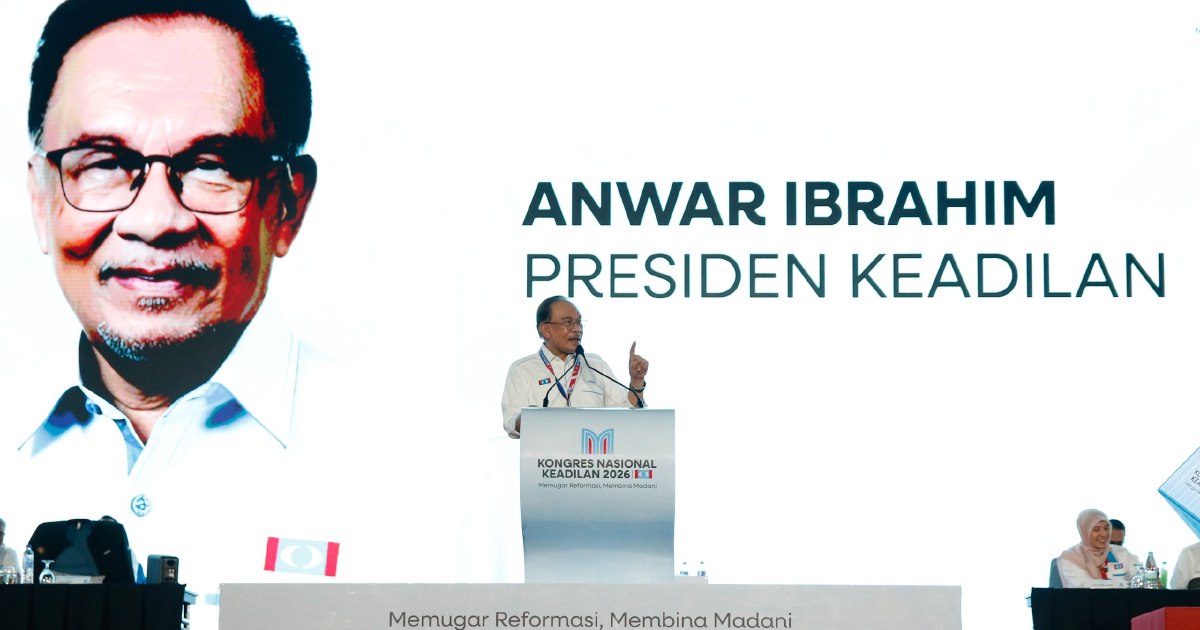
PKR President Anwar Ibrahim has affirmed that his party will continue its pragmatic engagement with BN and Umno at the federal government level while maintaining fidelity to its original Pakatan Harapan alliance partners. The clarification comes as Malaysia's fragmented political landscape requires careful negotiation between competing partnership obligations and ideological alignments.
This statement reflects the delicate balancing act that PKR must perform in Malaysia's current governance architecture. Since the formation of the Unity Government following the 2022 general elections, the political landscape has shifted dramatically from the earlier PH-focused approach to a broader coalition encompassing BN and Umno. PKR's position within this emerging consensus has become increasingly crucial to stability, yet the party cannot entirely abandon its foundational relationships with PH components like DAP and Amanah without incurring significant political costs.
For Malaysian observers, Anwar's explicit commitment to maintaining both sets of relationships signals that the party recognises the risks of choosing between powerful blocs entirely. Umno's dominant position within the BN coalition and its substantial parliamentary representation make it impossible for any government to function effectively while being adversarial towards the party. Simultaneously, DAP's electoral performance and organisational strength in key urban constituencies mean that PKR cannot afford to alienate its senior coalition partner without jeopardising federal-level support mechanisms.
The practical implications of this dual commitment manifest across Malaysia's governance framework. PKR members serve in cabinet positions, parliamentary committees, and state administrations alongside Umno and BN representatives, requiring daily operational cooperation on legislation and policy implementation. However, on matters of principle or when PH partners signal strong opposition to certain measures, PKR faces pressure to demonstrate solidarity with these longer-standing allies. This creates inevitable friction points where competing loyalties become difficult to reconcile.
Historically, such coalition arrangements have been unstable across Southeast Asia, as competing partners struggle to reconcile divergent agendas and voter bases. Malaysia itself has experienced coalition collapses when smaller parties felt squeezed between larger partners or when ideological differences became too pronounced to paper over through procedural compromises. Anwar's statement appears designed to reassure both sets of partners that PKR sees value in the existing arrangement rather than positioning itself as an intermediary poised to shift allegiances based on immediate tactical advantage.
For regional observers, the sustainability of Malaysia's current Unity Government remains a significant question. The arrangement depends substantially on the willingness of previously competing parties to cooperate despite deep historical antagonisms. PKR's role as a coalition manager becomes more important in this context, as the party theoretically occupies a centrist position between BN-Umno's traditional conservative base and PH's more progressive constituencies. However, this presumed centrism may be more perceived than real, given PKR's origins within the reform movement and its founder Anwar Ibrahim's fraught relationship with Umno's institutional culture.
The domestic political economy underlying this arrangement also merits scrutiny. PH's weakened position following the 2022 elections means that its partners now negotiate from reduced leverage compared to pre-2020 dynamics. DAP, despite strong urban support, requires PKR as a Malay-Muslim party within PH to maintain multiethnic credibility. This asymmetry potentially advantages PKR within PH negotiations even as Umno's parliamentary majority provides greater leverage within the Unity Government framework. Anwar's reassurances to both sides may therefore reflect growing confidence that PKR has found a sustainable middle position rather than genuine equidistance.
The international dimensions of Malaysia's political evolution warrant attention as well. Foreign investors, ASEAN partners, and major trading nations have expressed interest in Malaysia's political stability, particularly as the region navigates competing strategic pressures. Fragile coalition governments invite perceptions of weakness or unpredictability that can affect foreign investment decisions and regional positioning. Anwar's effort to project continuity and commitment to multiple partnership tracks simultaneously serves the broader interest of signalling political stability to external stakeholders, even if domestic political tensions remain underlying.
Practical policy areas where this dual commitment will be tested include matters touching on religious affairs, constitutional interpretation, and matters affecting Umno's traditional constituencies versus PH's progressive base. Criminal justice reform, LGBTQ+ rights protections, and religious establishment issues represent flashpoints where alignment with Umno could conflict visibly with PH expectations. Education policy, regional development spending, and bumiputera economic frameworks similarly require careful navigation to avoid appearing to favour one coalition over the other.
Moving forward, the sustainability of Anwar's model depends substantially on external factors beyond PKR's control. If economic pressures intensify or if major corruption cases emerge touching on current government figures, coalition unity could fracture rapidly as partners seek to deflect blame or position themselves for potential realignment. Conversely, if perceived common threats—such as strong opposition resurgence or religious-based populist mobilisation—gain traction, the need for coalition unity might actually strengthen PKR's position as indispensable bridge-builder.
Anwar's statement essentially declares that PKR intends to profit from being needed by multiple players simultaneously rather than committing entirely to any single bloc. Whether this strategy ultimately proves sustainable or merely delays coalition fracture remains to be determined by the pressures that Malaysian politics will face in coming quarters.

