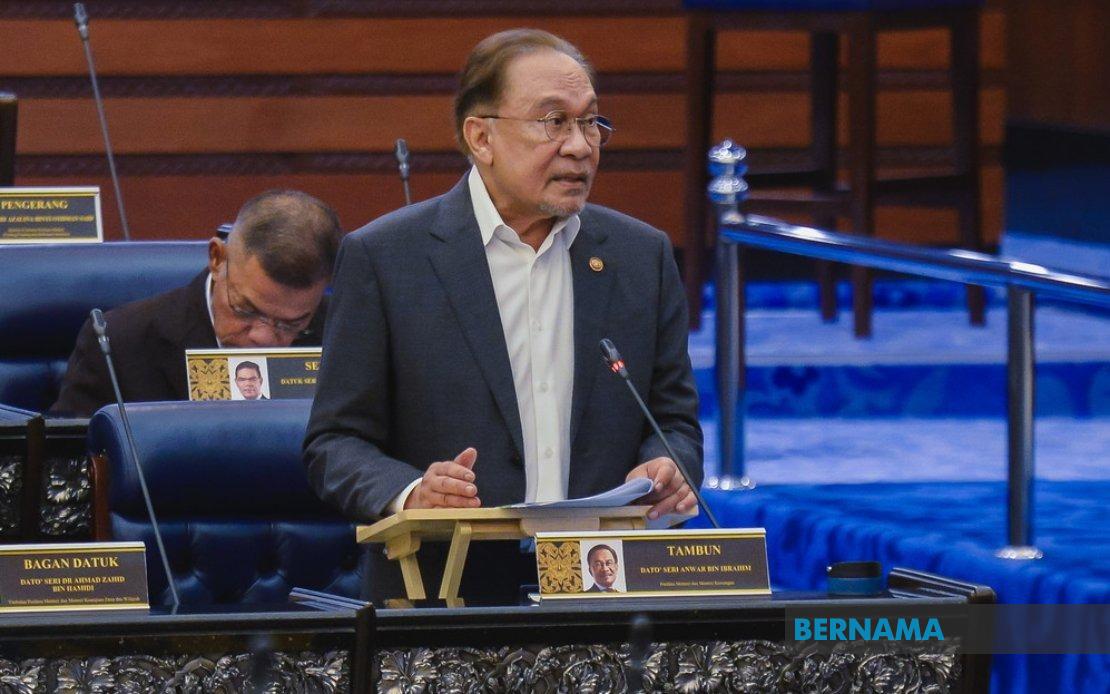
Prime Minister Datuk Seri Anwar Ibrahim has made clear that the Federal Government will not automatically approve additional funding whenever state governments request extra allocation for development projects that require a Notice of Change. Speaking in Parliament today, Anwar underscored that any such request must be subjected to a comprehensive renegotiation process before the Federal Government considers granting extra funds or loans.
The Prime Minister's statement comes in response to a parliamentary question about Kedah's petition for additional funding related to the Pulau Bunting Water Treatment Plant project, which involves obtaining approval for an NOC. This case exemplifies the broader issue of cost escalation in state-led development initiatives and the financial responsibilities that arise when project parameters change mid-implementation.
According to Anwar, the issuance of a Notice of Change carries significant financial consequences that cannot be overlooked or treated as routine administrative matters. When a project encounters cost increases necessitating an NOC, the situation fundamentally changes the financial framework originally agreed upon. The Prime Minister emphasised that such changes demand a thorough examination of the underlying causes before federal resources are committed to bridge the funding gap.
A critical element of Anwar's position involves determining contractor culpability in cost increases. The Federal Government must first establish whether the contractor bears responsibility for the escalation or whether external factors beyond the contractor's control drove the cost surge. This distinction matters considerably because it determines who should ultimately bear the financial burden. If a contractor has breached specifications or failed to manage resources efficiently, holding them accountable becomes essential; conversely, if unforeseen circumstances like material cost inflation or supply chain disruptions caused the increase, the responsibility may be distributed differently.
The Prime Minister stressed that once additional funding becomes necessary, the matter cannot remain confined to state-level decision-making. The Federal Government is not obligated to automatically rubber-stamp state requests whenever project costs escalate, regardless of the circumstances. This represents an important assertion of federal fiscal discipline and accountability, particularly relevant as Malaysia seeks to manage its overall debt burden and allocate limited resources strategically across competing national priorities.
Anwar's approach reflects broader concerns about project management standards and cost control across state governments. When states undertake development projects, they must establish realistic budgets and implement effective oversight mechanisms to prevent unnecessary cost overruns. The federal renegotiation requirement serves as a check on state spending and ensures that taxpayer money is deployed responsibly. By requiring fresh assessment rather than automatic approval, the Federal Government maintains leverage to improve project management practices and demand accountability from both state authorities and contractors.
The Pulau Bunting Water Treatment Plant exemplifies infrastructure projects that fall under federal scrutiny despite being state-led initiatives. Water treatment facilities serve essential public health functions and often involve complex engineering and significant capital expenditure. When such projects face cost increases, the implications extend beyond budgetary concerns to include potential delays in delivering critical services to communities relying on these facilities.
Deputy Prime Minister and Energy Transition and Water Transformation Minister Datuk Seri Fadillah Yusof has been tasked with providing more detailed technical and administrative explanation regarding the Kedah case specifically. This delegation suggests that the matter requires expertise in both energy and water sectors to properly assess whether the NOC and associated cost increase are justified by genuine project necessities or represent inadequate initial planning.
For state governments across Malaysia, Anwar's statement sends a clear signal about federal expectations for project governance. States must prepare comprehensive feasibility studies, engage qualified contractors with proven track records, and implement rigorous monitoring throughout implementation phases. Requests for additional funding will face scrutiny examining whether problems stemmed from avoidable errors or legitimate unforeseen circumstances. This creates incentives for states to exercise greater diligence during project planning and execution.
The federal renegotiation requirement also protects the national budget from becoming a bottomless pit for state project overruns. With multiple states undertaking development initiatives simultaneously, uncontrolled cost escalations could quickly consume resources needed for federal priorities or other states' legitimate requirements. By establishing a gatekeeping mechanism, Anwar's approach distributes federal funds more equitably and prevents a few poorly managed projects from consuming disproportionate resources.
For contractors involved in state development projects, the message is equally significant. Contractors can no longer assume that cost increases will automatically be accommodated through NOCs and federal funding without scrutiny. The Federal Government will examine their role in cost escalation, potentially holding them financially responsible if negligence or poor management contributed to the problem. This accountability should encourage contractors to exercise better cost control and resource management throughout project execution.
The renegotiation process itself will likely involve multiple stakeholders including state authorities, federal agencies, contractors, and financial institutions. Determining fair allocation of cost increases among these parties requires careful negotiation balancing legitimate concerns about project completion against fiscal responsibility. In the case of the Pulau Bunting facility, ensuring adequate water treatment capacity for Kedah residents may require federal support despite cost increases, but only after confirming that the increases are unavoidable and not the result of negligent planning or management.
As Malaysia continues investing in state infrastructure across water, energy, and transportation sectors, establishing clear protocols for handling cost overruns becomes increasingly important. Anwar's position provides that necessary framework, ensuring that federal participation in funding state projects remains conditional on proper governance standards and accountability mechanisms. This approach aims to deliver better value from development spending while maintaining fiscal sustainability at the national level.

