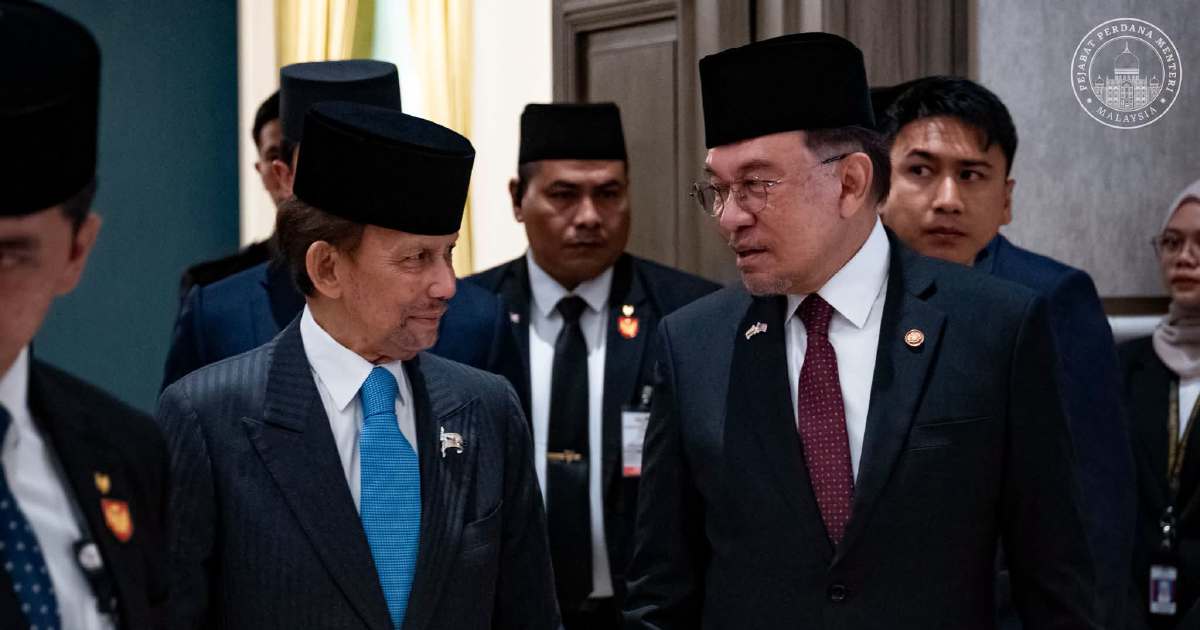
Prime Minister Datuk Seri Anwar Ibrahim will journey to Bandar Seri Begawan next week to hold talks with Brunei Sultan Hassanal Bolkiah as part of the 27th Annual Leaders' Consultation between the two nations. The high-level engagement underscores the enduring strategic partnership between Malaysia and Brunei, two countries bound by geography, shared history, and deep cultural connections across Borneo.
The Annual Leaders' Consultation represents one of the most significant diplomatic institutions in Southeast Asia, serving as a formal mechanism for the two heads of government to deliberate on matters of mutual concern. Established over nearly three decades ago, this annual gathering has evolved into a cornerstone of bilateral relations, providing a platform for candid discussion and policy alignment at the highest level. The consistency of these meetings demonstrates the commitment both nations have made to maintaining stable, predictable, and constructive engagement despite occasional challenges.
The timing of Anwar's visit holds particular significance given Malaysia's expanding regional role and Brunei's position as a key partner in the Brunei-Malaysia-Singapore Growth Triangle and broader ASEAN architecture. Both countries have historically coordinated positions on regional security matters, maritime issues, and economic integration. The consultation will likely touch on trade facilitation, investment flows, and the harmonisation of regulatory frameworks that affect cross-border commerce and movement of people between the two nations.
Energy cooperation remains a critical dimension of Malaysia-Brunei relations, particularly regarding oil and gas resources in the South China Sea. The two nations share maritime boundaries and overlapping claims that have been managed through diplomatic channels and cooperative frameworks. Discussions at this level often address resource management, environmental protection of shared waters, and the delicate balance between economic extraction and regional stability—issues of mounting importance as geopolitical tensions persist elsewhere in Asian waters.
From Kuala Lumpur's perspective, Brunei's strategic location and its role as a stable, prosperous ASEAN member state make it an important anchor for Malaysia's foreign policy in the region. Brunei's Sultan has maintained a consistent and thoughtful approach to regional diplomacy, often serving as a moderating voice within ASEAN forums. For Anwar, engaging regularly with Sultan Hassanal Bolkiah helps reinforce Malaysia's position within ASEAN's inner circle and maintains the personal relationships essential to effective multilateral diplomacy.
The bilateral relationship encompasses multiple dimensions beyond government-to-government contact. Educational exchanges, military cooperation, and cultural programmes keep the two societies connected. Many Malaysians have family ties in Brunei, and vice versa, creating organic linkages that supplement official channels. Business communities in both nations have developed sophisticated networks that benefit from the stable political environment these regular consultations help maintain.
Transportation links between Malaysia and Brunei continue to improve, with investments in road, sea, and air connectivity. These physical infrastructure developments complement the diplomatic architecture, facilitating genuine people-to-people engagement. The ease of travel and commerce between Kuala Lumpur and Bandar Seri Begawan contrasts sharply with more challenging corridors elsewhere in the region, reflecting the maturity of Malaysia-Brunei relations.
Within the ASEAN context, Malaysia and Brunei often coordinate their approaches to regional challenges ranging from maritime security to transnational crime. The consultation provides an opportunity to align responses to evolving threats and opportunities. Both nations face similar pressures regarding cybersecurity, human trafficking, drug trafficking, and other transnational issues that respect no borders. Joint initiatives on these fronts require regular consultation and agreement on priorities and resource allocation.
Anwar's visit also carries symbolic weight domestically. It demonstrates Malaysia's commitment to maintaining strong regional relationships even as the nation navigates complex domestic political currents. For citizens and investors alike, such sustained engagement with neighbouring governments provides reassurance about political continuity and stability. The predictability of annual leaders' consultations signals to international observers that Malaysia's foreign policy maintains consistent bearings despite domestic transitions.
The 27th iteration of this consultation format reflects both the longevity of the relationship and its relevance. Rather than becoming merely ceremonial, these meetings have adapted to address contemporary challenges from pandemic response coordination to digital economy integration. The participants typically emerge with joint statements outlining cooperation in new areas, suggesting that both leaderships view these consultations as opportunities for creative problem-solving rather than pro forma engagements.
Looking ahead, the consultation may address Indonesia's increasing assertiveness in regional maritime affairs and how Malaysia and Brunei should position themselves within evolving ASEAN dynamics. Vietnam's growing strategic partnerships and Japan's expanding defence commitments in Southeast Asia are reshaping the regional balance in ways that affect Malaysian-Bruneian strategic calculations. These broader geopolitical shifts make regular, high-level dialogue between neighbouring countries more essential than ever for clarifying intentions and coordinating responses.

