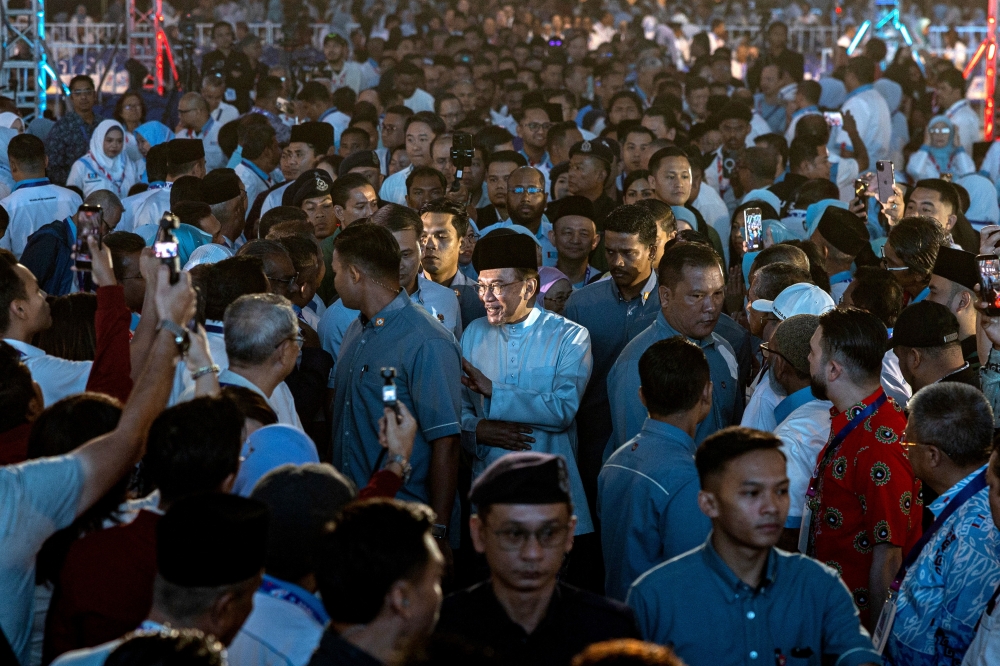
Prime Minister Datuk Seri Anwar Ibrahim indicated this week that a significant overhaul of Malaysia's university regulatory framework is imminent, with his administration preparing to submit a proposal repealing the Universities and University Colleges Act (UUCA) to Cabinet deliberation within days. The announcement, made in Ayer Keroh, signals a potential watershed moment for Malaysian higher education policy, particularly concerning the balance between institutional autonomy and state oversight in the academic sector.
The proposed repeal represents a notable departure from decades of legislation that has shaped university governance across the country. The UUCA, which has governed the operational parameters of public and private tertiary institutions, has long been criticised by students, academics, and civil society observers who argue that its restrictive provisions inhibit intellectual discourse and limit democratic participation within campus environments. Anwar's initiative appears responsive to persistent advocacy from education stakeholders who contend that existing frameworks constrain both academic inquiry and student activism in ways increasingly incompatible with Malaysia's aspirations toward becoming a knowledge economy.
The Cabinet submission timeline establishes immediate momentum for legislative action, suggesting the government views this as a priority matter rather than a secondary reform initiative. Such expedited handling underscores the political weight Anwar appears willing to invest in this particular legislative agenda. The compressed timeframe also implies that groundwork has already been undertaken through consultations with relevant stakeholders, ministry officials, and legal specialists tasked with drafting replacement frameworks or substantive amendments to existing university legislation.
For Malaysian higher education institutions, the implications are potentially transformative. Universities operating under more permissive regulatory environments typically experience enhanced capacity for research innovation, expanded student engagement mechanisms, and greater institutional flexibility in curriculum development and international partnership arrangements. The current UUCA structure imposes considerable restrictions on campus assembly and expression, areas where Southeast Asian universities generally lag behind their counterparts in developed democracies regarding academic freedoms and participatory governance models.
The Cabinet's forthcoming deliberation will likely focus on several substantive questions about the proposed legislative framework. Policymakers must navigate the tension between expanding academic freedom and maintaining quality assurance mechanisms that protect institutional credibility and educational standards. Additionally, officials will need to address how repealing existing legislation affects student political participation, which has historically been curtailed under UUCA provisions that restrict campus-based political activity and student union operations. The government's proposed alternative structures will prove essential in determining whether reforms genuinely democratise university environments or merely replace one set of constraints with another.
Anwar's positioning of this initiative carries particular political significance within Malaysia's current factional landscape. His government has publicly committed to democratic renewal and accountability-centred governance, making university autonomy a natural extension of broader constitutional and institutional reform themes. However, balancing these commitments against security concerns and the preferences of certain stakeholder constituencies within educational bureaucracies will present genuine governing challenges. The Cabinet's composition and existing departmental positions will substantially influence the ultimate legislative outcome.
Regionally, Malaysia's approach to university governance carries relevance for other Southeast Asian nations grappling with comparable questions about institutional autonomy and state regulation. Countries including Thailand, Vietnam, and Myanmar have experienced tensions between authorities seeking to maintain control over campus environments and increasingly vocal constituencies demanding academic freedom and student voice. How Anwar's administration navigates this issue could establish important precedents influencing neighbouring governments' policy trajectories in higher education governance.
The practical implementation of any UUCA repeal would necessitate crafting detailed transitional provisions, establishing new regulatory bodies or adapting existing ones to oversee university operations under revised frameworks, and developing operational guidelines governing institutional autonomy while preserving legitimate government interests in educational quality and financial accountability. Universities themselves would require time to restructure internal governance mechanisms and familiarise administrators, faculty, and students with modified regulatory environments. The transition period could span months or years depending on legislative complexity.
For international student recruitment and institutional rankings, enhanced academic freedom typically improves Malaysia's competitive positioning within global higher education markets. International students increasingly prioritise universities where intellectual inquiry thrives unfettered by excessive political restrictions. Similarly, academic reputation indices incorporate measures of institutional autonomy when assessing world-class status, suggesting that UUCA reform could incrementally enhance Malaysia's profile among prestigious ranking systems.
The Cabinet's deliberation will also likely address whether reforms extend uniformly across public and private tertiary institutions or establish differentiated regulatory regimes. Some stakeholders advocate stronger autonomy protections for research-focused universities than for vocationally-oriented institutions, while others contend that uniform frameworks promote equity and prevent regulatory arbitrage. These technical questions, though seemingly procedural, will substantially shape the practical impact of any legislative changes on institutional behaviour and student experience.
Anwar's legislative initiative demonstrates recognition that Malaysia's international competitiveness increasingly depends on cultivating intellectual environments capable of generating innovation, attracting global talent, and producing research-active graduates prepared for knowledge economy participation. The UUCA repeal proposal thus extends beyond narrow questions of campus governance to encompass broader strategic considerations about national economic development and educational sector positioning within competitive global markets.
Cabinet deliberations in coming weeks will reveal whether the government's commitment to university autonomy withstands internal debate and competing policy pressures. The outcome will signal to Malaysian academic communities, international observers, and neighbouring governments whether this administration's democratic reform agenda extends substantively into institutional domains traditionally marked by state-exercised authority.

