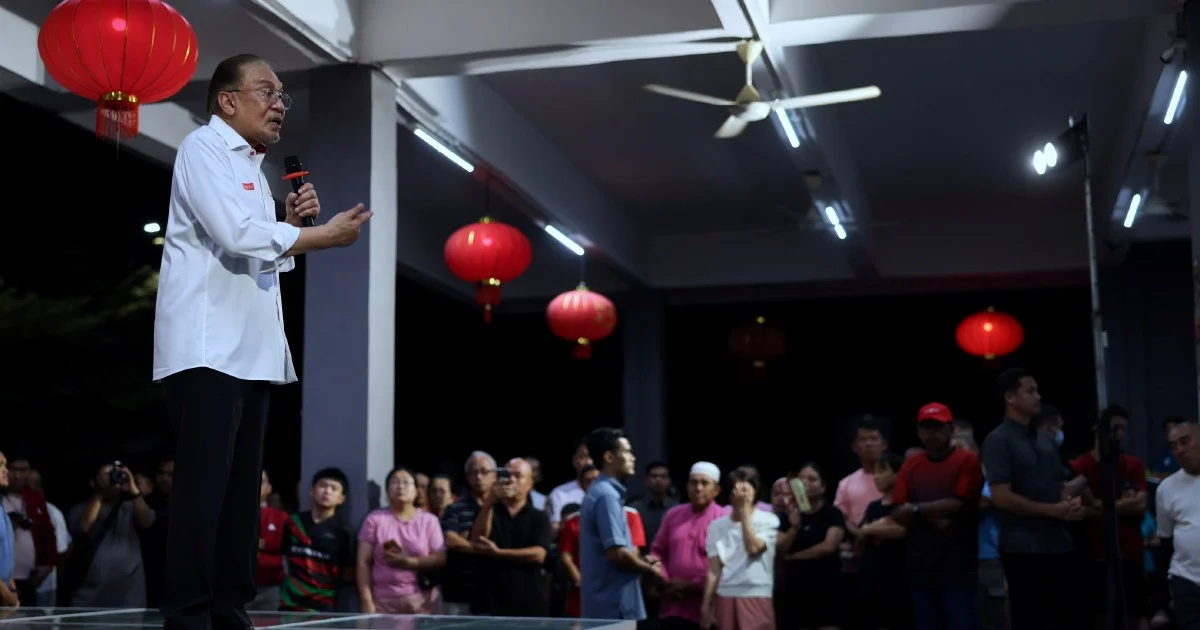
Prime Minister Datuk Seri Anwar Ibrahim has pledged to raise the issue of falling Malaysian durian prices with Chinese Premier Li Qiang during his visit to China next month, in a bid to expand exports and help growers affected by a nationwide glut.
The commitment, made during an engagement in Tangkak, reflects growing concern within Malaysia's agricultural sector over the sharp decline in durian valuations that has squeezed farmer incomes across the country. With substantial stocks of the premium tropical fruit accumulating in warehouses and local markets, the government recognises that diplomatic intervention at the highest levels may unlock crucial export opportunities in China, Malaysia's largest and most lucrative durian market.
Malaysia's durian industry has historically thrived on Chinese demand, with the country consistently shipping record volumes to Chinese importers and consumers willing to pay premium prices. However, market dynamics have shifted recently, with oversupply from competing producers and changing consumption patterns depressing prices significantly. The glut has created genuine hardship for smallholder growers and larger-scale cultivators alike, particularly in major durian-producing states such as Pahang, where Tangkak is located. For these farming communities, seasonal income from durian sales represents a critical portion of annual revenue, making price fluctuations a matter of serious economic concern.
Anwar's planned discussions with Li Qiang suggest the Malaysian government recognises that resolving the current price crisis requires engagement beyond domestic market management. China's appetite for premium durians has been a major driver of Malaysia's agricultural exports in recent years, with consumers in tier-one and tier-two cities demonstrating strong purchasing power and willingness to seek out quality Malaysian varieties. Strengthening bilateral trade in this sector could provide immediate relief to struggling farmers while reinforcing Malaysia's position as a preferred supplier to the Chinese market, competing against other Southeast Asian producers.
The durian market's volatility underscores the broader vulnerability of Malaysia's agricultural sector to external demand shocks and supply chain disruptions. While durians represent one of Malaysia's most successful agricultural export products, their concentration in relatively few major markets—particularly China—creates dependency risk. When Chinese buyers reduce purchases or hold back from the market in anticipation of lower prices, the effects cascade rapidly through Malaysia's supply chain, leaving growers with limited options and diminishing returns on their harvest.
Malaysian durian growers have invested heavily in expanding cultivation over the past decade, responding to surging Chinese demand and attractive export prices. This expansion boosted incomes and attracted younger farmers to the sector, reversing long-standing rural youth migration trends. However, rapid supply expansion across multiple countries, combined with logistics improvements that have allowed producers in Thailand, Vietnam, and Indonesia to reach Chinese consumers more efficiently, has fundamentally altered market conditions. The resulting competitive pressure has exposed Malaysia's need for more sophisticated export marketing and possibly stricter quality control standards that justify premium positioning.
During the Tangkak visit, Anwar's emphasis on raising durian prices with the Chinese premier signals that Kuala Lumpur intends to approach the crisis through diplomatic channels and trade facilitation rather than relying solely on domestic price support mechanisms or export subsidies. This approach aligns with Malaysia's broader trade strategy and avoids measures that might violate international trade agreements. By engaging with China's leadership directly, Anwar seeks to emphasise the mutual benefits of robust durian trade—securing reliable supply for Chinese consumers while providing sustainable income for Malaysian farmers.
The timing of the planned Beijing visit carries additional significance. China's post-pandemic economic recovery is proceeding unevenly, and consumer confidence has fluctuated in response to domestic economic pressures. Enhanced diplomatic engagement around agricultural trade could serve multiple purposes: reinforcing bilateral economic ties, demonstrating Malaysia's commitment to serving Chinese market needs, and positioning Malaysia as a strategic trading partner in the broader Indo-Pacific region. Such conversations also potentially open pathways to discussing other agricultural products where Malaysia faces export challenges.
For Malaysia's durian sector, the outcome of Anwar's discussions with Li Qiang could prove consequential. Success in securing expanded Chinese purchasing commitments, tariff reductions, or preferential trade arrangements would provide immediate relief to current growers while signalling confidence that could encourage continued investment in the sector. Conversely, failure to achieve concrete trade benefits might necessitate more substantial policy interventions, including domestic price supports or demand stimulation programs that would strain government budgets.
The broader context of this trade engagement highlights the interdependence between Malaysia and China across multiple economic sectors. While durians represent a niche agricultural export, they embody the larger pattern of Malaysia's reliance on Chinese markets for premium commodity sales. Strengthening this relationship while managing supply-side vulnerabilities will require sustained attention from Malaysian policymakers and industry stakeholders, ensuring that the country can compete effectively while supporting farm-level incomes across the durian-growing regions.

