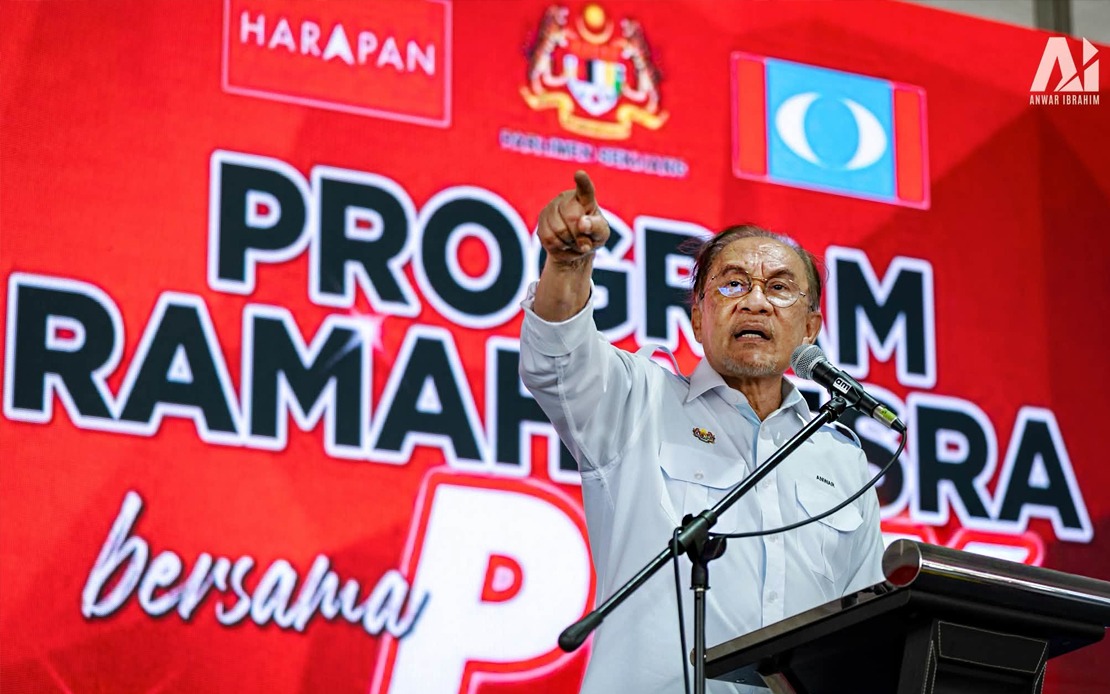
Prime Minister Datuk Seri Anwar Ibrahim has committed to tackling the durian sector's current crisis by placing the matter directly on his diplomatic agenda with Beijing. During a public gathering in the Gambir state constituency in Tangkak, Anwar outlined plans to broach the issue of Malaysian durian exports when he travels to China next month, signalling the gravity with which the federal government views the situation affecting thousands of smallholder and commercial growers across Peninsular Malaysia.
The timing of his intervention underscores an increasingly urgent problem facing the farming community. The convergence of durian harvest seasons across Malaysia has created an unprecedented supply glut that has pushed prices into freefall, directly threatening the livelihoods of producers who depend on export revenues and domestic sales to sustain their operations. Many growers invested heavily in cultivation practices and infrastructure based on historical price expectations, making the current downturn particularly devastating for their household finances and business viability.
Anwar's strategy centres on diplomatic leverage and bilateral trade relations. By positioning the durian issue within the broader Malaysia-China economic partnership, the Prime Minister hopes to create conditions that would allow Malaysian producers better access to Chinese markets, thereby absorbing excess supply and restoring price equilibrium. China represents an enormous potential market for premium durian varieties, given the fruit's luxury status among affluent consumers in major Chinese cities. However, Beijing's stringent import standards and complex regulatory requirements have historically limited Malaysian market penetration.
The challenge Anwar faces is substantial. China maintains rigorous food safety and phytosanitary protocols that Malaysian exporters must navigate, and negotiations over agricultural products involve considerations far beyond simple commercial logic. Environmental standards, traceability requirements, and political considerations all factor into decisions about expanding import quotas for foreign agricultural goods. Anwar's candour in acknowledging these hurdles—describing Chinese standards as "very high"—reflects both the complexity of the negotiation ahead and his determination to pursue it nonetheless.
The Prime Minister's reference to his relationship with Chinese Premier Li Qiang suggests confidence in diplomatic channels and personal rapport that might facilitate progress. Strengthening bilateral agricultural trade fits within the broader framework of Malaysia-China cooperation, where both nations see mutual benefit in deepening economic ties across multiple sectors. For Malaysia, expanded durian access to China would provide farmers with immediate relief and longer-term market stability. For China, secure supply chains for premium agricultural products align with rising consumer demand in urban centres.
Beyond the durian issue, Anwar also addressed broader economic concerns affecting ordinary Malaysians. He reiterated the government's commitment to maintaining some of the world's lowest fuel prices through sustained subsidisation, despite mounting global pressures stemming from Middle Eastern geopolitical tensions and resulting supply disruptions. The stark gap between retail fuel prices—RM3.37 per litre for RON95 and RM3.97 per litre for diesel—and subsidised rates provided under the BUDI MADANI scheme illustrates the substantial fiscal commitment the government makes to shield consumers from international market volatility.
Anwar's emphasis on Malaysia's unique position in offering substantially discounted fuel prices reflects a policy choice with significant budgetary implications. Rather than allowing market forces to operate, the government explicitly absorbs the difference between global crude oil costs and domestic pump prices, effectively transferring wealth from the national budget to fuel consumers. This approach provides immediate relief to households and businesses but raises sustainability questions about long-term fiscal burden and the incentive structure created by persistent price subsidies.
The dual focus on durian farmers and fuel prices reveals a political strategy that addresses both rural and urban constituencies. Agricultural communities, particularly in southern peninsular states like Johor where Tangkak is located, form a crucial voting bloc that requires tangible government support during economic hardship. Simultaneously, fuel price stability resonates across all demographic groups and geographic regions, making it a politically prudent issue to emphasise during public engagement. The Prime Minister's presence at a meet-the-people session in a state constituency reflects the localised approach that current political dynamics in Malaysia demand.
The government's intervention in agricultural markets through export development and diplomatic engagement demonstrates a pragmatic approach to sectoral challenges that cannot be resolved through domestic policy alone. Unlike manufacturing sectors that can shift production or adjust pricing independently, agricultural output depends on natural cycles and geographic constraints. When regional oversupply depresses prices below production costs, farmers cannot simply reduce output without incurring losses on existing crops or sacrificing permanent assets like mature durian trees.
For Malaysian agriculture more broadly, the current durian crisis highlights structural vulnerabilities in export-dependent commodity production. The concentration of harvest seasons creates periodic gluts that destabilise prices and incomes, affecting rural communities with limited capacity to absorb losses. Developing more robust market access, implementing better supply management practices, and investing in value-added processing could provide longer-term resilience. Anwar's engagement with China represents a shorter-term palliative measure that buys time for such structural adjustments.
The success of Anwar's diplomatic efforts will likely depend on negotiations over specific trade mechanisms. Whether discussions lead to expanded import quotas, reduced tariff barriers, or enhanced certification arrangements for Malaysian durian producers remains to be determined. Even if the talks prove productive, implementation timelines may extend beyond the immediate crisis, meaning farmers will need interim support measures to sustain operations through the current downturn. The announcement itself, however, signals at least rhetorical commitment to the sector and provides some reassurance that the crisis has registered at the highest levels of government.
The convergence of durian market distress and the Prime Minister's intervention raises broader questions about Malaysia's agricultural policy framework and trade negotiation capacity. As a country seeking to diversify its economy and strengthen regional ties, strategic agricultural products offer both economic and diplomatic opportunities. How effectively Malaysia leverages these opportunities will influence not only farmer incomes but also the nation's positioning within regional trade arrangements and its ability to support rural development as part of broader economic planning.

