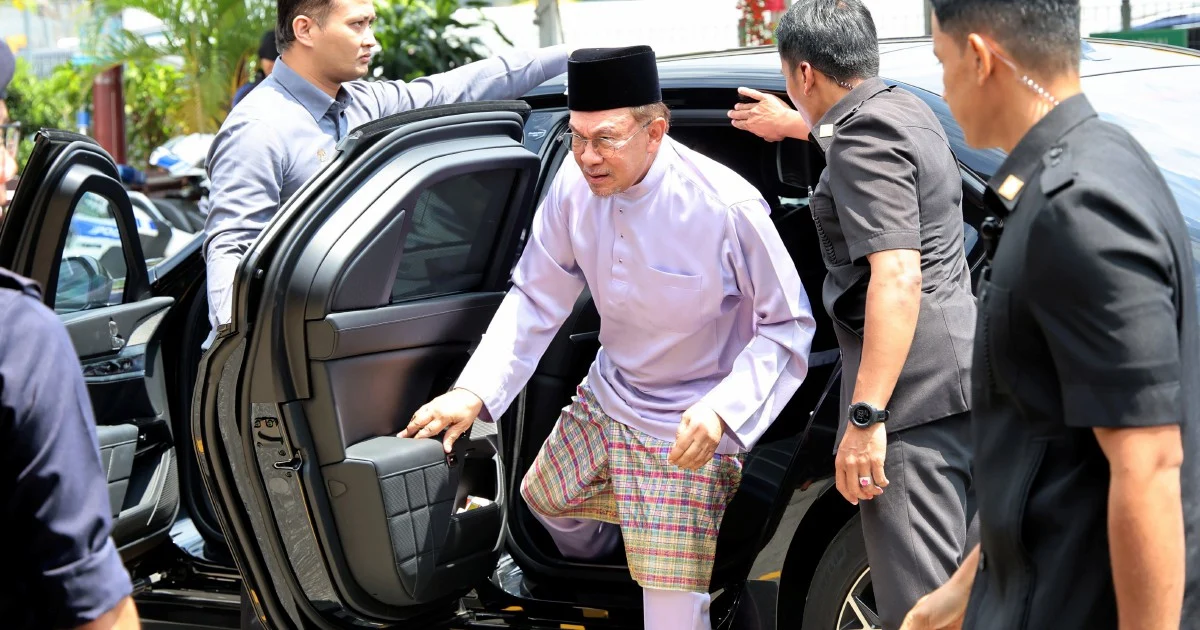
Prime Minister Datuk Seri Anwar Ibrahim has urged all contending parties in the forthcoming Johor election to maintain standards of respectful conduct and demonstrate personal integrity during their campaigns, cautioning against arrogance and the abandonment of ethical principles. Speaking in Dengkil, the premier underscored the responsibility of political contestants to set a tone of civility as voters prepare to cast their ballots, implying that the manner in which campaigns are conducted carries broader significance for democratic practice in the country.
The appeal reflects growing concerns within Malaysia's political establishment about the tenor of electoral contests, which have occasionally been marked by personal attacks, inflammatory rhetoric, and displays of overconfidence from competing camps. Anwar's intervention signals the federal government's intent to frame the Johor election around substance rather than theatrics, positioning the ballot as an opportunity for Malaysians to engage with policy platforms presented with grace rather than vitriol. This messaging proves particularly relevant given Malaysia's experience with elections that have occasionally descended into name-calling and character assassination.
The Johor state election represents a significant political test in one of the country's most crucial economic regions, with control of the state government carrying implications for federal coalition dynamics and governance priorities across the peninsula. As a major industrial, manufacturing, and trade hub, Johor's administration directly affects thousands of Malaysian businesses and millions of residents, making the calibre of discourse surrounding the election consequential for public confidence in the political process itself. Anwar's emphasis on respectful campaigning thus carries practical weight beyond symbolic posturing about political civility.
The prime minister's comments place Malaysia in a regional context where electoral integrity and campaign ethics have become pressing concerns across Southeast Asia. Countries throughout the region have grappled with the rise of disinformation, personal attacks through social media, and the erosion of traditional norms of political conduct, prompting senior leaders to reassert the importance of maintaining democratic standards even as competition between parties intensifies. Anwar's statement aligns with broader international efforts to uphold ethical benchmarks in electoral competition.
For Malaysian businesses and investors, the tone of the Johor campaign carries material implications. Political stability and the quality of governance depend partly on whether elected representatives win mandates through persuasive policy advocacy or through divisive appeals that leave electoral losers feeling delegitimized. When campaigns degenerate into personal attacks, the losing camp often emerges with reduced commitment to accepting results, potentially complicating post-election governance and consensus-building on important development initiatives. Anwar's reminder to parties that they must campaign with respect thus speaks to an interest in ensuring that whoever prevails in Johor can govern with the cooperation of diverse interests.
The reminder also reflects Anwar's positioning as a statesman concerned with preserving democratic institutions and political norms, a crucial aspect of his political identity following his own electoral victory and reconstitution of the federal coalition. By calling for elevated standards of conduct from all parties, the PM distances his administration from suggestions that it operates through aggressive partisanship, instead presenting a vision of government that expects high ethical standards from all political actors regardless of affiliation. This rhetorical stance reinforces his authority to set expectations for democratic behaviour across the country.
Arguably, Anwar's appeal also implicitly acknowledges that political parties, particularly those newly in power at state or federal level, sometimes fall prey to the temptation to abuse incumbency or deploy hardball tactics against opponents. By issuing a preemptive call for restraint, the prime minister frames arrogance and disrespect as unacceptable regardless of which party exhibits these behaviours, establishing a standard against which all contestants will be judged. This approach potentially insulates his government against accusations of double standards should controversies arise during the campaign period.
The statement's emphasis on upholding good values extends beyond mere campaign etiquette to encompass the broader purpose of electoral politics in a democracy. Values such as honesty, fairness, and dignity in public discourse form the foundation of public trust in institutions and elected officials, without which governing becomes more difficult even for parties that win majorities. Anwar's invocation of these principles suggests an understanding that the legitimacy of electoral outcomes ultimately depends on whether voters perceive the process as fundamentally fair and the contestants as fundamentally honourable.
For Malaysian voters, particularly those in Johor who will decide the election, the prime minister's message carries an implicit contract: political parties should offer competing visions for state development articulated through honest persuasion rather than character assassination or false claims. When campaigns adhere to these standards, voters can make informed choices based on substance, and winners can claim genuine mandates that reflect considered public preference rather than victories purchased through emotional manipulation or misinformation. Anwar's call thus invites voters to hold parties accountable not merely for policy promises but for the manner in which they pursue power.
The prime minister's remarks also underscore the interconnection between state and federal politics in Malaysia's federal system, where decisions made in Johor reverberate through national coalition dynamics and influence the balance of power between ruling and opposition camps. The conduct of the Johor campaign will be scrutinized by political observers nationwide and internationally, with commentators assessing whether the quality of Malaysian democratic discourse is improving or declining. Anwar's call for respect thus extends beyond Johor to reflect broader aspirations for the tenor of Malaysian politics as a whole.

