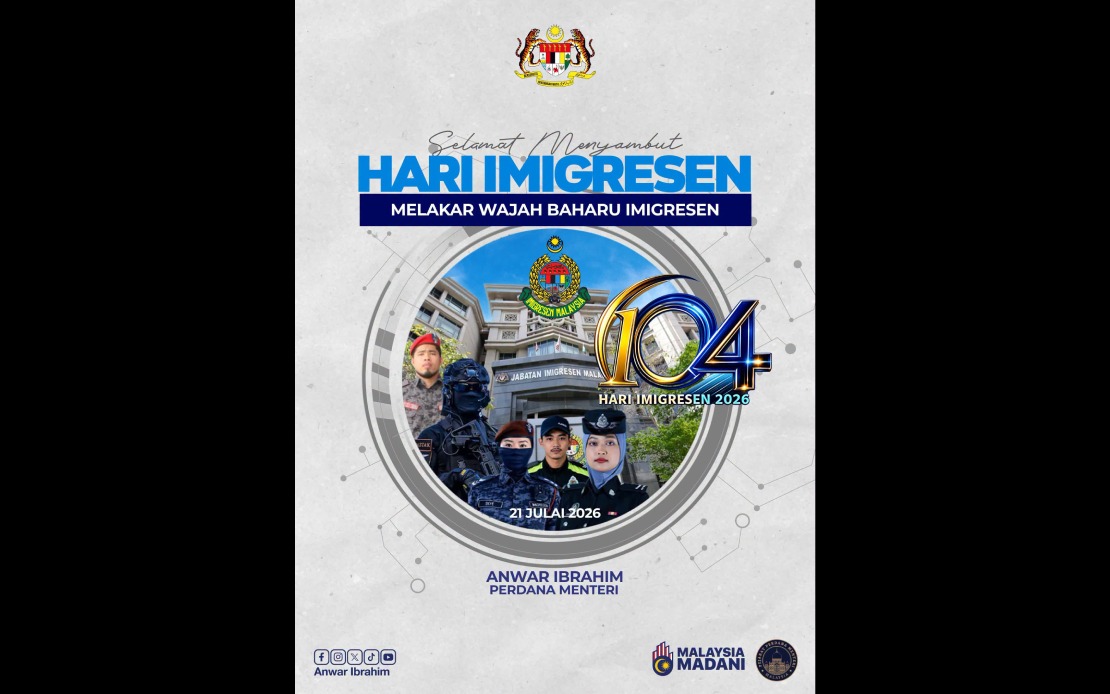
Prime Minister Datuk Seri Anwar Ibrahim has called upon the entire workforce of the Immigration Department (JIM) to discharge their duties with unwavering integrity and to categorically refuse any involvement in corrupt practices or operational irregularities. The appeal came as the nation marked Immigration Day on July 21, with Anwar using the occasion to reinforce the critical role that immigration officials play in maintaining Malaysia's security and reputation.
In his public remarks on social media, Anwar articulated a comprehensive vision for the department that extends beyond mere administrative competence. He stressed that integrity must form the bedrock of all immigration operations, recognising that this principle directly impacts public confidence in government institutions. The emphasis on rejecting corruption signals the administration's broader commitment to institutional reform and accountability—priorities that have gained prominence in Malaysia's governance landscape in recent years.
Central to Anwar's message is the principle that integrity and compassion must work in tandem within JIM's operations. While integrity safeguards the institution's credibility and the nation's borders, compassion ensures that immigration services remain accessible and humane. This dual emphasis reflects an understanding that effective immigration administration requires both firm ethical standards and empathetic engagement with the public. Officers are thus expected to deliver services that are simultaneously efficient and considerate, professional yet personable.
The Prime Minister articulated his expectation that JIM personnel would maintain excellence in their core mandate: safeguarding national sovereignty. This framing positions immigration work as a frontline national security function, not merely a bureaucratic process. Border control, visa assessment, and deportation proceedings directly influence Malaysia's ability to manage external threats and maintain social cohesion. By highlighting sovereignty protection, Anwar underscores why corruption or negligence within JIM carries consequences far beyond departmental dysfunction.
Anwar's public commendation of JIM staff reflected recognition of the department's essential contributions to national administration. His message conveyed both appreciation for dedicated officers and an implicit warning against those who might compromise their professional obligations. In a country where public sector integrity has faced periodic scrutiny, such directional messaging from the Prime Minister's office carries significance for institutional culture and accountability expectations.
The 2026 Immigration Day celebration itself carried thematic weight, with organisers selecting "Charting a New Face for Immigration" as this year's theme. This choice suggests an aspiration for departmental evolution and modernisation, potentially encompassing technological upgrades, process streamlining, and cultural reforms. The theme implies that Malaysia's immigration system is undergoing deliberate transformation, with contemporary challenges requiring fresh approaches and renewed commitment to excellence.
For Malaysian readers and the broader Southeast Asian context, immigration administration touches matters of national concern ranging from security to economic competitiveness. A professional, uncorrupted immigration system facilitates legitimate travel and business, enhances tourism revenue, and enables Malaysia to attract talent and investment. Conversely, systemic corruption within immigration bureaucracies generates costs: delayed processing harms business confidence, bribes undermine security screening, and institutional erosion damages international perception of Malaysia's governance standards.
Anwar's appeal also reflects awareness that immigration personnel operate under considerable pressure and often face attempts at inducement or improper influence. Officers manning borders, processing applications, and investigating documentation encounter situations where corruption presents itself as opportunity. By publicly reinforcing ethical standards and institutional values, leadership can strengthen internal resistance to corrupt practices and signal that deviations will not be tolerated.
The invocation of Malaysia's global standing within Anwar's remarks indicates understanding that immigration administration impacts international relations and economic diplomacy. Countries with well-regarded immigration systems attract higher-quality visitors, facilitate trade, and enjoy enhanced diplomatic standing. Conversely, systems tainted by corruption concerns invite scrutiny from trading partners and may complicate bilateral arrangements. Immigration Day messaging thus serves both internal morale purposes and external signalling functions.
Moving forward, the effectiveness of such public appeals depends on institutional follow-through. Anwar's message establishes a clear ethical framework and departmental aspiration, but translating rhetoric into sustained practice requires robust oversight mechanisms, professional development initiatives, and career incentive structures that reward integrity. JIM leadership must operationalise the Prime Minister's exhortations through concrete policies that make ethical conduct the norm rather than the exception.
The broader governance implication of this public intervention is that Malaysian leadership recognises immigration administration as a governance priority warranting high-level attention. As regional migration patterns shift and border security challenges evolve, countries that maintain professional, corruption-resistant immigration systems gain competitive advantage in regional competition for talent, investment, and soft power influence.

