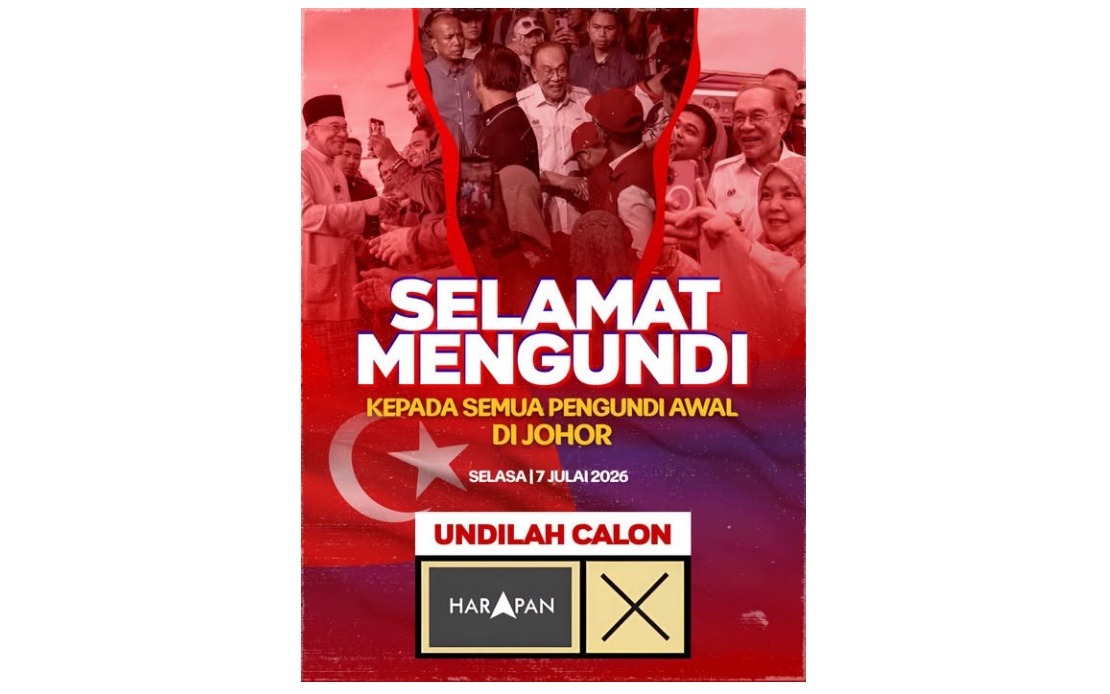
Prime Minister Datuk Seri Anwar Ibrahim has called on early voters in Johor to support Pakatan Harapan candidates as the coalition prepares for a decisive test of electoral strength in the coastal state. Speaking through a Facebook post on July 7, Anwar, who heads the PH coalition, encouraged the nearly 25,000 personnel and their families eligible to vote early to cast their ballots strategically for what he described as a better future for Johor. His message underscores the high stakes surrounding Saturday's election, which represents a significant opportunity for the ruling coalition to consolidate support in a state that has long been a political battleground.
The early voting phase involved 24,751 registered voters across 64 polling centres throughout Johor. The composition of these early voters reflects a pattern common across Malaysian elections, with security and law enforcement personnel and their spouses forming the bulk of the electorate casting ballots before general polling day. The Malaysian Armed Forces contributed 12,041 eligible early voters, including service personnel and their spouses, while the Royal Malaysia Police and General Operations Force together accounted for 12,710 voters and their family members. This segmentation is designed to accommodate those on active duty who may be deployed or unable to vote on the main election day.
Logistics for the early voting process were carefully coordinated across multiple polling centres. The Royal Malaysia Police operated 53 early voting centres while the Malaysian Armed Forces managed 11, with all locations opening simultaneously at 8 am and closing between noon and 6 pm depending on local circumstances and voter registration numbers. This staggered closing arrangement is intended to manage crowds and ensure every eligible person has adequate time to participate in the democratic process without creating bottlenecks at polling stations.
Pakatan Harapan is mounting a comprehensive campaign across all 56 state seats in the Johor assembly, with partner parties distributing candidacies according to their internal coalition agreement. The People's Justice Party fields 20 candidates, the National Amanah Movement puts up 19, while the Democratic Action Party contests 17 seats. This proportional distribution reflects the relative strengths and influence of each component party within the broader coalition, and Anwar's direct appeal to voters demonstrates the political importance the PH leadership places on this state election.
The scale of Saturday's main polling day underscores the electoral significance of Johor. A total of 172 candidates across all parties competing for the 56 available seats indicates a highly contested election environment where individual constituencies will likely see multi-cornered contests. The 2.7 million registered voters in Johor represent a substantial electorate, and strong performance here could significantly bolster PH's narrative of continued popular support or alternatively provide ammunition for opposition critics if results disappoint coalition expectations.
For Malaysia's ruling coalition, the Johor election carries implications that extend beyond state politics. Electoral performance in major states often influences the political momentum leading into potential federal contests, and a convincing PH victory would validate the government's continued relevance following its return to power in 2022. Conversely, a poor showing could embolden internal party critics or opposition figures seeking to portray the ruling coalition as vulnerable to electoral rejection. Anwar's personal engagement with early voters signals that PH considers this contest sufficiently important to warrant visible leadership involvement.
The timing of early voting, occurring five days before the general poll, allows security and enforcement personnel to participate while remaining available for duty. This is particularly important in Johor, which hosts significant military installations and a substantial police presence due to its position as Malaysia's southern gateway and the presence of key federal assets. The participation of these state servants in early voting ensures that civil and military personnel directly serving the public maintain their democratic rights while continuing essential duties.
Historically, Johor has been a competitive electoral arena where no single party has maintained overwhelming dominance, making the state a barometer for broader Malaysian political trends. The 2.7 million voters represent approximately nine percent of Malaysia's total electorate, giving the state considerable weight in national political calculations. PH's decision to field candidates in every single seat demonstrates confidence and suggests the coalition intends to project strength across all demographic and geographic segments of the Johor voting population.
Anwar's public appeal to early voters reflects the broader campaign messaging that has characterised PH's approach, emphasizing development, stability, and good governance as counter-arguments to opposition narratives. By specifically encouraging citizens to "choose Harapan candidates for a better future for Johor," the Prime Minister attempted to frame the election as a choice between his vision of progress and alternative political directions. This messaging is particularly significant given that early voters, predominantly drawn from disciplined services, represent a demographic traditionally viewed as important swing voters in Malaysian electoral contests and may influence broader turnout patterns on polling day.

