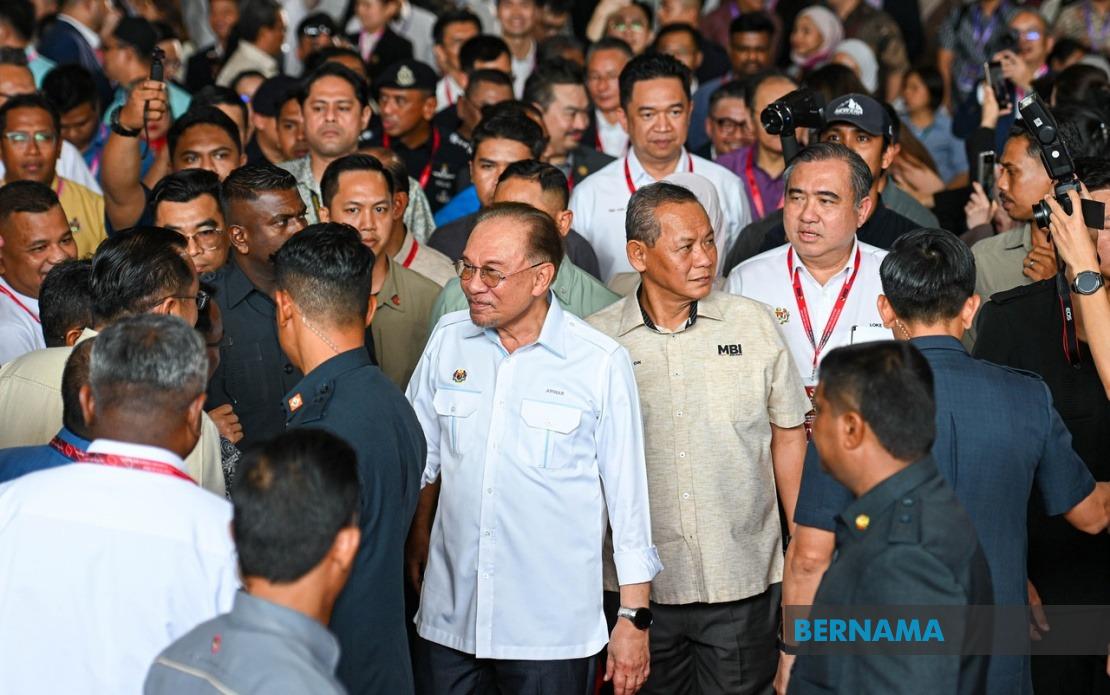
Prime Minister Datuk Seri Anwar Ibrahim has made a direct appeal to Melaka DAP to reconsider its decision to exit the state government, hoping to preserve administrative continuity and shield development initiatives from political turbulence. Speaking in Port Dickson on July 14 after launching the AI-powered Midport Smart Container Terminal, Anwar emphasised that postponing the withdrawal would allow the Melaka administration to function smoothly until elections are held. The move reflects growing tensions within the ruling Pakatan Harapan coalition, which has faced internal strains in several state governments over policy disagreements.
Melaka DAP announced its immediate withdrawal from state government administration following the passage of constitutional amendments by the Melaka State Legislative Assembly. The amendments would permit the appointment of nominated assemblymen to the legislature—a mechanism the party views as fundamentally at odds with democratic principles and electoral integrity. DAP chairman for Melaka, Khoo Poay Tiong, characterised the decision as consistent with the party's principled opposition to the bill, which he argued undermines the legitimacy of elected representation.
As Pakatan Harapan chairman and national leader, Anwar leveraged his position to initiate negotiations aimed at defusing the crisis. He confirmed engaging with DAP secretary-general Anthony Loke and Melaka Chief Minister Datuk Seri Ab Rauf Yusoh in efforts to broker a resolution through dialogue rather than allow the coalition to fracture publicly. The intervention suggests the federal government recognises the political risks of state-level coalition breakdowns, particularly with national elections potentially on the horizon. Anwar's willingness to negotiate directly underscores how seriously the Prime Minister takes threats to PH's territorial control.
The constitutional amendment controversy touches a sensitive nerve in Malaysian politics, where questions of democratic legitimacy and appointment powers have repeatedly sparked coalition disputes. Nominated assemblymen, though a recognised feature of Malaysian legislatures, have historically become flashpoints for debates about proportional representation and the sanctity of electoral verdicts. DAP's position as the most vocal proponent of electoral accountability within the PH coalition means the party faces internal pressure to oppose mechanisms perceived as weakening democratic credentials, even if doing so creates practical governance challenges.
Anwar's framing of the dispute reveals a pragmatic approach to managing coalition diversity. He characterised disagreements among coalition partners as inevitable and even acceptable, provided they do not impede the broader economic and welfare agenda. This philosophy reflects the reality that multiparty coalitions in Malaysia must navigate competing ideological positions while maintaining enough cohesion to govern effectively. The Prime Minister's comment that component parties may disagree on multiple issues but unite on economic policy suggests he views the current disagreement as manageable within a functional coalition framework.
The Melaka situation carries broader implications for Pakatan Harapan's stability. The coalition has struggled to maintain unity across state administrations where it holds power, with tensions between DAP and its allies—particularly PKR and Amanah—occasionally threatening governance. A highly visible withdrawal by a major component party from a state government would send signals of weakness at a moment when the federal administration is consolidating its reform agenda. Conversely, any perception that PH leadership has conceded to pressure from DAP to block democratic amendments could alienate other coalition partners or invite criticism from political opponents.
The timing of this crisis also matters strategically. State elections in Melaka have periodically determined control of government, and the state remains politically contested territory where coalitions must guard their influence carefully. An internal split during the pre-election period could provide openings for opposition parties to exploit fragmenting alliances. Anwar's appeal for postponement essentially seeks to buy time for intensive negotiations while maintaining public stability and avoiding the appearance of intra-coalition warfare that media and opposition would weaponise aggressively.
For Malaysian readers and observers, this episode illustrates the delicate choreography required to sustain multiparty democratic governance. Coalition politics demands that parties compromise on secondary issues to preserve primary objectives, yet doing so repeatedly risks appearing unprincipled to core supporters. DAP's democratic principles-based stance resonates with its urban, reform-minded voter base; abandoning opposition to constitutional amendments could trigger grassroots backlash. Simultaneously, Anwar's appeal highlights the executive's interest in administrative continuity and avoiding destabilising governance crises at state level.
The negotiations now unfolding will likely determine whether PH can retain Melaka's state government intact or whether the coalition fractures publicly. Both outcomes carry electoral and reputational costs. A continued withdrawal deepens PH's internal divisions and threatens control of a strategically important state; a reversal of DAP's position requires the party to accept measures it characterises as anti-democratic, potentially damaging credibility on governance reform. Anwar's intervention seeks a middle path through postponement—effectively parking the constitutional amendment issue temporarily while preserving the coalition's ability to govern and campaign together.
The resolution of this dispute will offer clues about the durability of Pakatan Harapan as currently constituted. If PH leadership can broker compromise on foundational democratic principles, the coalition demonstrates resilience and pragmatism; if fundamental disagreements prove irreconcilable, the coalition faces deeper structural challenges heading into electoral contests. For Southeast Asia's most closely watched multiparty coalition, the stakes in Melaka extend beyond state administration to questions about whether diverse democratic alliances can sustain governance without fracturing over principle.

