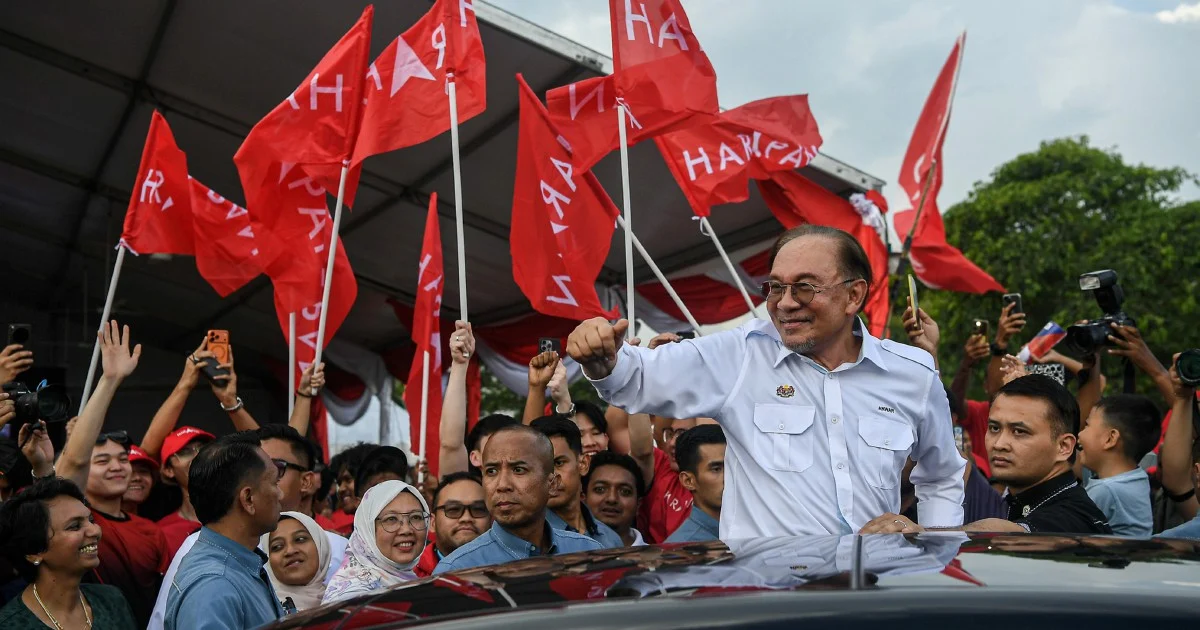
Prime Minister Datuk Seri Anwar Ibrahim delivered a pointed message to his political adversaries during a recent engagement in Segamat, calling on them to accept the outcomes of democratic processes and work constructively with coalition partners including DAP. Speaking in his capacity as Pakatan Harapan chairman, Anwar expressed concern that certain politicians continue to view partnership with the Democratic Action Party as beneath them, a stance he characterized as fundamentally at odds with Malaysia's democratic values.
The remarks signal growing frustration within the ruling coalition about the persistent stigmatization of DAP, which has become a lightning rod for opposition criticism despite the party's integration into Malaysia's mainstream political landscape. Anwar's intervention suggests an attempt to solidify the Pakatan Harapan alliance by defending one of its most controversial partners and emphasizing that electoral mandates carry expectations for cooperation across traditional dividing lines. This defense is particularly significant given DAP's consistent portrayal by critics as a threat to Malay-Muslim interests, a narrative that continues to resonate among certain voter segments despite repeated denials from the party.
The broader context involves Malaysia's complex political architecture, where coalition-building requires careful navigation of communal sensitivities and historical grievances. When voters elected Pakatan Harapan in recent electoral cycles, they effectively endorsed a multi-party alliance that includes DAP alongside PKR and Amanah. Anwar's argument rests on the straightforward principle that rejecting coalition partners amounts to disrespecting the choices made at the ballot box, a position that carries democratic legitimacy even among his detractors.
For Malaysian readers, this dispute reflects ongoing tensions about the nature of political participation and inclusion in a multi-ethnic democracy. The refusal of some political figures to share platforms with DAP, whether out of political calculation or genuine conviction, has become emblematic of deeper divisions about how Malaysia should manage its diversity. Anwar appears to be making the case that maturity in democratic politics involves accepting outcomes that extend invitations to parties one may not have voted for, and that refusing to do so represents a form of democratic nihilism.
The Prime Minister's comments also carry implications for regional observers watching Malaysia's democratic development. Southeast Asia's largest democratic economy continues to grapple with how to balance majoritarian impulses with inclusive governance, and Anwar's stance suggests at least some commitment to expanding the political space for minority-representation parties. This contrasts sharply with trends in other regional democracies where rising ethno-nationalism has narrowed such spaces considerably.
Within the Pakatan Harapan coalition itself, tensions around DAP have proven persistent obstacles to unified messaging. While the party has successfully served in government alongside its partners, its urban-based membership, predominately Chinese constituency, and secular policy orientations continue to provoke anxiety among certain segments of Malaysia's Malay-Muslim majority. These anxieties are deliberately amplified by opposition actors seeking to drive wedges between coalition partners, making Anwar's public defense strategically necessary for maintaining alliance cohesion.
The timing of Anwar's remarks matters considerably, as they arrive during a period when opposition figures have intensified attacks on Pakatan Harapan's governance record and coalition stability. By reframing the debate from DAP's perceived threats to the legitimacy of democratic choice, Anwar attempts to place critics on the defensive and establish a moral framework where accepting electoral outcomes becomes a mark of democratic responsibility rather than political compromise.
For voters who supported Pakatan Harapan despite reservations about particular coalition members, Anwar's position validates the notion that electoral decisions necessarily involve accepting outcomes one may not have chosen in their entirety. This framing is important in Malaysian political culture, where voters often hold competing values and make nuanced choices rather than enthusiastic endorsements of single parties. Many Pakatan supporters voted for the coalition while holding mixed feelings about DAP, making Anwar's emphasis on respecting collective outcomes rather than individual preferences potentially resonant with his political base.
The underlying stakes extend beyond partisan advantage to questions about whether Malaysia can sustain multi-party coalitions in an environment where one partner faces persistent delegitimization campaigns. If major political figures and opinion leaders continue refusing platforms with DAP, the coalition's long-term viability becomes questionable, potentially fragmenting Malaysian politics along more exclusionary lines. Conversely, if Anwar's exhortations gain traction, they could normalize cross-community cooperation and demonstrate that electoral mandates carry expectations for good-faith coalition governance.
Opposition parties, particularly those competing for Malay-Muslim votes, have built considerable electoral strategies around anti-DAP sentiment, making acceptance of Anwar's arguments politically costly for them. Yet the Prime Minister's framing forces a choice between maintaining divisive positioning and acknowledging democratic legitimacy, a tension that will likely shape political discourse in coming months. Whether other political leaders embrace Anwar's call for respecting voters' choices or double down on their refusal to engage with DAP will reveal much about Malaysia's political maturity and whether the country can sustain inclusive coalition governance in deeply divided contexts.

