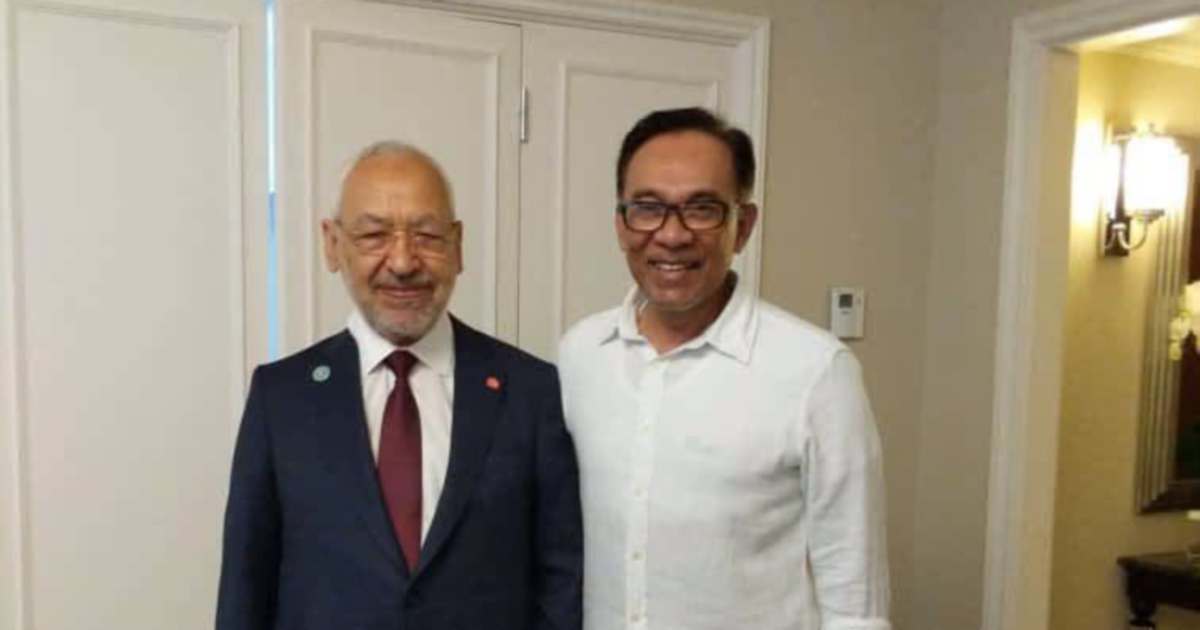
Malaysia's Prime Minister Datuk Seri Anwar Ibrahim has intervened in a sensitive political matter affecting Tunisia, dispatching a formal communication to President Kais Saied that calls for the liberation of Sheikh Rached Ghannouchi. The appeal is framed explicitly around humanitarian considerations, reflecting a diplomatic approach that prioritises compassion over political calculation.
Ghannouchi, a significant figure in Tunisian politics and the Arab world's Islamist movement, has become the subject of heightened international scrutiny following his detention. His case has attracted attention from regional and international observers who view his circumstances through varying lenses—some seeing him as a political prisoner, others as part of broader governance disputes within Tunisia. By personally engaging with this matter, Anwar has positioned himself within a wider network of leaders concerned about the treatment of detained political figures.
The decision to communicate directly with President Saied underscores the importance Malaysia places on its ties with North Africa and the broader Muslim-majority world. While Tunisia sits geographically distant from Southeast Asia, it carries symbolic weight as the birthplace of the Arab Spring and as a nation navigating complex questions about democracy, judicial independence, and the role of Islamist movements in governance. Anwar's outreach demonstrates that such concerns transcend geographical boundaries and resonate across Islamic-majority nations.
Ghannouchi's detention must be understood within Tunisia's turbulent recent political history. The country has experienced significant constitutional and governmental upheaval, particularly following President Saied's extraordinary moves to expand executive authority. These actions have drawn criticism from international human rights organisations and democratic governance advocates. Ghannouchi, who led the Ennahda Movement—Tunisia's most organised and historically powerful Islamist political party—became a target as the political landscape shifted dramatically in Tunis.
For Malaysian observers and policymakers, the situation carries particular relevance given Anwar's own historical trajectory. The Prime Minister has repeatedly spoken about his personal experiences with detention and what he characterises as politically motivated prosecution during earlier phases of his career. This biographical element likely informs his sensitivity to cases where political opponents face incarceration. His willingness to raise such matters internationally reflects a conviction that political imprisonment warrants international attention regardless of the detained person's ideological orientation.
The humanitarian framing of the appeal is significant and deliberate. Rather than invoking political solidarity or questioning the legitimacy of Tunisian governance structures, Anwar's letter reportedly focuses on human dignity and compassionate considerations. This approach potentially creates space for face-saving negotiation and dialogue, allowing President Saied to consider the request without perceiving it as interference in Tunisia's internal affairs or as partisan support for particular political movements.
Southeast Asian nations, including Malaysia, have maintained varying relationships with Tunisia and broader North African politics. Whereas East Asia has long dominated regional trade and security discussions, Southeast Asia's engagement with Africa remains comparatively limited despite growing economic and diplomatic initiatives. Malaysia's historical role as a leader within the Organisation of Islamic Cooperation and its commitment to Islamic solidarity means that developments affecting Muslim-majority nations—particularly those concerning democratic governance and human rights—fall within its legitimate sphere of diplomatic concern.
The mechanics of the appeal also warrant consideration. Direct leader-to-leader correspondence carries weight in international diplomacy, signalling seriousness and elevating the matter beyond routine bureaucratic channels. That Anwar took this personal step suggests he views the matter as sufficiently important to invest his own political capital, despite the obvious risks of becoming entangled in another nation's contentious domestic disputes.
International responses to Ghannouchi's situation have varied considerably. Human rights groups have called for his release on procedural and substantive grounds, citing concerns about fair trial standards and prison conditions. Other observers have expressed reservations about Ennahda's democratic commitments or questioned the appropriateness of external pressure on Tunisia's judicial system. Anwar's intervention neither endorses nor condemns Tunisian governance wholesale; instead, it targets a specific outcome through the lens of humanitarian concern.
Looking forward, the success or failure of this appeal remains uncertain. Tunisia's government has demonstrated resistance to international pressure on judicial matters, particularly when framed as criticism of state institutions or support for Islamist movements. However, sustained diplomatic engagement from respected international figures like Anwar may eventually contribute to shifting circumstances or creating conditions for negotiated resolution.
For Malaysia specifically, the move reinforces the country's positioning as a nation willing to advocate for principles of human dignity and compassionate governance while maintaining respectful diplomatic relations. It also demonstrates how Southeast Asian leaders can engage with developments in other regions in ways that reflect genuine values rather than narrow strategic calculation.

