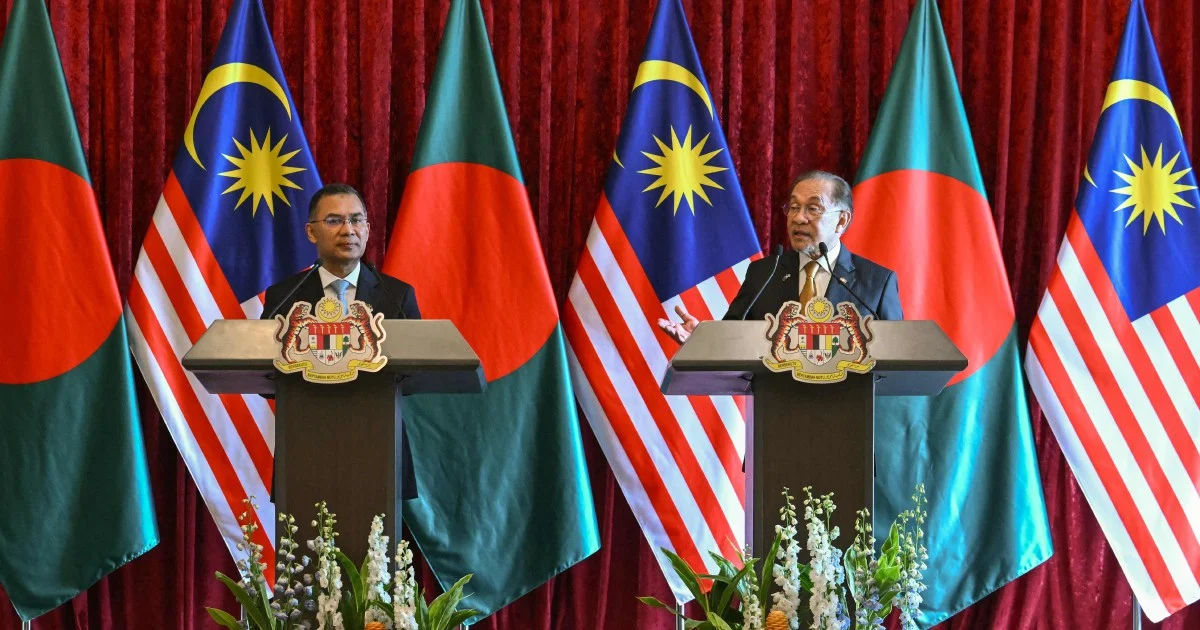
Prime Minister Datuk Seri Anwar Ibrahim has committed to eradicating the systematic exploitation of Bangladeshi workers employed across Malaysia, recognising their indispensable role in sustaining the nation's economic output. Speaking on the protection of migrant labour rights, Anwar underscored that such abuse cannot be permitted under any circumstances, signalling a hardened stance against employers and labour traffickers who prey on vulnerable workers from South Asia.
Bangladeshi nationals represent one of Malaysia's largest migrant worker populations, with hundreds of thousands employed in construction, manufacturing, domestic work, and agriculture. The scale of their participation in Malaysia's labour force means their welfare carries significant implications not only for humanitarian reasons but also for bilateral relations with Bangladesh, a key regional partner. The Prime Minister's explicit focus on this demographic reflects growing international pressure on Malaysia to improve its treatment of foreign workers and address longstanding concerns about wage theft, unsafe working conditions, and debt-bondage arrangements that bind many migrants to exploitative employers.
Anwar's intervention into worker protections signals a shift in political messaging around migration policy, moving beyond purely economic calculations of labour supply toward acknowledgment of workers' fundamental rights. This positioning aligns with Malaysia's stated commitments under international labour conventions and reflects domestic pressure from civil society groups and trade unions that have documented widespread abuses. The pledge carries particular weight given Malaysia's previous international criticism from organisations monitoring human trafficking and labour rights violations.
The economic rationale for protecting these workers cannot be understated. Bangladeshi migrants perform essential functions in sectors struggling to attract local workers, including hazardous jobs in construction and manufacturing that command lower wages. Their contribution sustains competitive pricing in industries crucial to Malaysia's export competitiveness and domestic infrastructure development. Disruptions to this labour supply through immigration restrictions or reduced inflows would create significant bottlenecks across multiple economic sectors, potentially increasing production costs and reducing output.
Exploitation within this worker cohort typically manifests through several mechanisms that have become endemic to Malaysia's migrant labour system. Recruitment fees amounting to months of wages trap workers in debt cycles, forcing them to endure poor conditions to recover their investment. Wage theft, where employers withhold portions of salaries or impose illegal deductions, diminishes workers' ability to support families in Bangladesh while enriching unscrupulous business operators. Confiscation of identity documents by employers—a practice that contravenes international labour standards—renders workers unable to change jobs or seek assistance from authorities.
The enforcement challenge remains formidable. Despite existing regulations, including provisions in the Employment Act and Immigration Act, compliance across Malaysia's sprawling informal economy remains inconsistent. Labour inspectorates frequently lack sufficient resources to conduct meaningful workplace audits, particularly in small and medium enterprises operating in remote areas or construction sites. Corruption among officials enables violations to continue unchecked, while workers' fears of deportation discourage reporting of abuses to authorities.
Bangladeshi workers themselves occupy a precarious position within Malaysia's immigration framework. Their legal status depends entirely on employer sponsorship through the migration system, creating inherent power imbalances. Threat of deportation becomes a tool through which employers enforce compliance and silence complaints. Language barriers and unfamiliarity with Malaysian legal systems further complicate workers' ability to seek redress. These structural vulnerabilities explain why Bangladeshi migrants experience disproportionately high rates of exploitation compared to other migrant groups.
Bilateral relations between Malaysia and Bangladesh rest substantially on how Malaysian employers treat Bangladeshi nationals. Bangladesh's government faces domestic political pressure when news emerges of its citizens enduring harsh conditions abroad, and deterioration in worker protections could strain diplomatic ties and potentially affect Bangladesh's willingness to cooperate on other regional matters. Conversely, tangible improvements in worker treatment enhance Malaysia's reputation across South Asia and align the country's labour practices with competitive economies that offer comparable market opportunities.
Implementing Anwar's commitment requires legislative reinforcement and institutional capacity building beyond rhetorical pledges. Strengthening penalties for wage theft, simplifying complaint mechanisms accessible to non-Malaysian speakers, and removing employer-sponsored visa conditions that concentrate power inequitably would create meaningful deterrence. Establishing independent monitoring mechanisms staffed by individuals from origin countries could bridge trust gaps between vulnerable workers and local authorities. Technology-enabled wage payments that bypass employer intermediaries could reduce theft, while portable benefits systems would diminish workers' dependency on individual employers.
The timing of Anwar's statement reflects both immediate pressures and longer-term demographic trends affecting Malaysia's labour market. As domestic population growth slows and younger Malaysians increasingly pursue higher education, reliance on migrant labour across multiple sectors will intensify rather than diminish. Securing stable access to this workforce requires demonstrating reliable worker protections that make employment in Malaysia attractive relative to alternatives in Singapore, Thailand, or the Middle East. Nations offering better protections and stronger rule of law will increasingly draw the most capable migrant workers.
Regional competition for skilled migrant labour suggests that Malaysian employers recognising worker protections as competitive advantage rather than cost imposition will secure better quality personnel and greater workforce stability. Workers treated fairly exhibit higher productivity, lower turnover costs, and reduced workplace disputes. This reframing moves protection from a humanitarian imperative to an economic imperative, broadening the coalition of stakeholders supporting stricter enforcement.
Moving forward, monitoring the translation of Anwar's commitments into concrete policy changes will reveal the government's earnestness. Increased labour inspections, successful prosecutions of trafficking networks, higher penalties against wage theft, and documented improvements in working conditions would substantiate the pledge. Without such follow-through, the statement risks becoming symbolic positioning rather than genuine reform, perpetuating the conditions that make Malaysia a destination where systematic exploitation continues largely unchecked despite regulatory frameworks ostensibly designed to prevent such abuses.