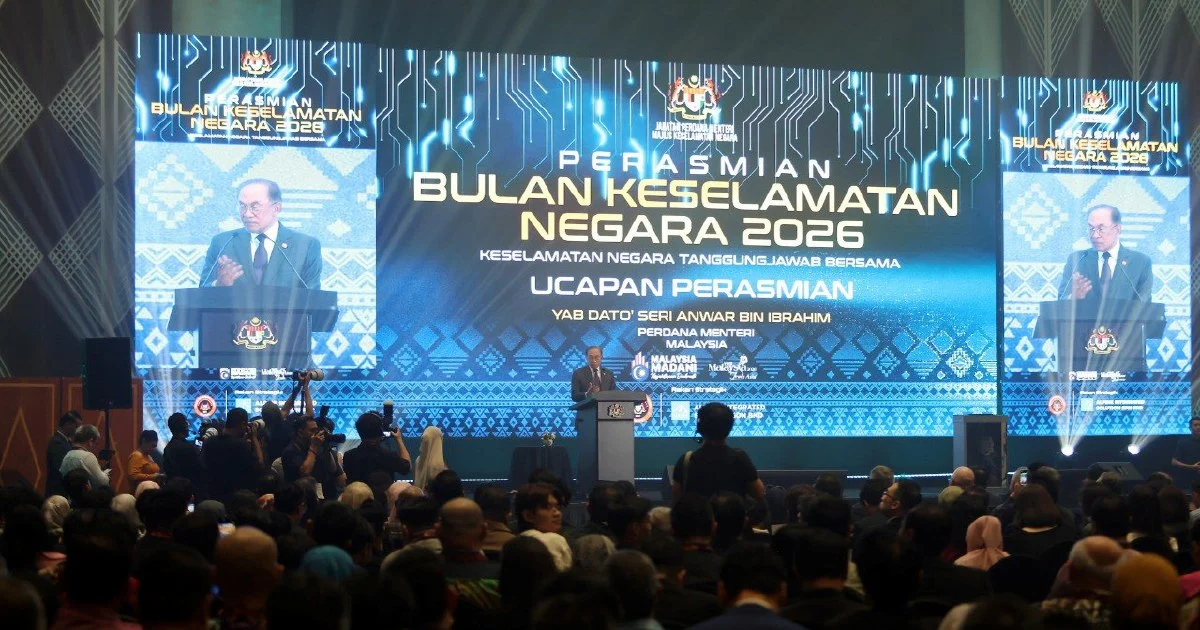
Prime Minister Datuk Seri Anwar Ibrahim has issued a stern warning about the persistence of racial and regional narratives in Malaysian politics, describing the trend as particularly troubling as the state of Johor prepares for its forthcoming elections. Speaking from Putrajaya, he underscored the urgency of Malaysia moving beyond these divisive frameworks that have characterised much of the nation's political discourse for decades.
The Prime Minister's intervention reflects a broader concern within the federal government about campaign messaging in the crucial southern state. Johor, as Malaysia's second most populous state and a traditional kingmaker in national politics, carries significant weight in determining political trajectories. The electoral contest there will likely influence perceptions about the government's standing and ability to govern effectively across diverse communities.
Anwar's comments address a persistent challenge in Malaysian electoral politics: the tendency for candidates and political parties to mobilise voters along communal lines rather than focusing on policy platforms and governance records. Such appeals often rely on stoking anxieties about competing ethnic or religious interests, a strategy that has proven electorally potent but ultimately corrosive to social cohesion. The Prime Minister's caution suggests that despite efforts to modernise political discourse, these old divisions continue to surface during competitive elections.
The timing of Anwar's remarks is strategic. By publicly flagging concerns about divisive rhetoric before the campaign intensifies, he aims to set expectations about acceptable political conduct. This preemptive messaging may serve as a gentle rebuke to coalition partners or rival factions that might be tempted to deploy such narratives, signalling that the federal government takes seriously its responsibility to maintain national unity during electoral contests.
For Malaysian politics, Anwar's intervention highlights the ongoing tension between electoral competition and national cohesion. While elections are inherently competitive and voters often hold different preferences, the manner in which politicians articulate these differences matters profoundly. Appeals grounded in policy disagreements or administrative performance differ fundamentally from those centred on racial or religious grievances, which can harden communal boundaries and make post-election reconciliation more difficult.
The reference to Johor specifically carries historical significance. The state has long been viewed as a barometer for Malay-Muslim sentiment and a crucial source of support for the ruling coalition. Electoral outcomes there have previously shifted the political balance nationally. Any perception that racial divisions are deepening in Johor could signal broader fractures in the national consensus that Anwar has sought to build through his coalition-building efforts.
Anwar's warning also reflects international scrutiny of Malaysia's political practices. As an upper-middle-income democracy, Malaysia's handling of electoral competition while maintaining inter-communal peace is watched closely by regional and global observers. Instances of divisive campaign messaging invite criticism and potentially damage Malaysia's reputation as a relatively stable Southeast Asian democracy, an asset that carries both diplomatic and economic value.
The challenge for political parties contesting in Johor will be demonstrating that they can differ sharply on governance approaches without resorting to communal mobilisation. This requires developing compelling policy alternatives on issues like economic management, urban development, education, and healthcare—areas where state governments have considerable influence on citizens' daily lives. When elections centre on such substantive matters, they tend to produce less polarising outcomes.
Anwar's stance also reflects changing demographics and expectations among younger Malaysian voters, who often express less attachment to traditional communal categories than their predecessors. Parties that can successfully position themselves as forward-looking and inclusive often find electoral reward, particularly in urbanised areas like Johor's major centres. The Prime Minister may be attempting to create political space for such candidates within his coalition.
The underlying concern implicit in Anwar's comments is that entrenching racial and regional narratives during elections can have lasting consequences for governance. Administrations elected on divisive platforms often feel constrained to deliver policies that privilege certain communities, potentially widening gaps and making evidence-based policymaking more difficult. By contrast, elections fought on substantive grounds tend to produce administrations with broader mandates to govern in the national interest.
Moving forward, how political parties in Johor respond to Anwar's warning will be revealing. Some may dismiss it as an attempt to constrain legitimate political expression, while others may welcome clearer guardrails around acceptable campaign conduct. The extent to which political actors internalise and act upon this message will indicate whether Malaysia is genuinely transitioning toward a more mature political culture, or whether old patterns remain deeply entrenched despite rhetorical shifts at the federal level.

