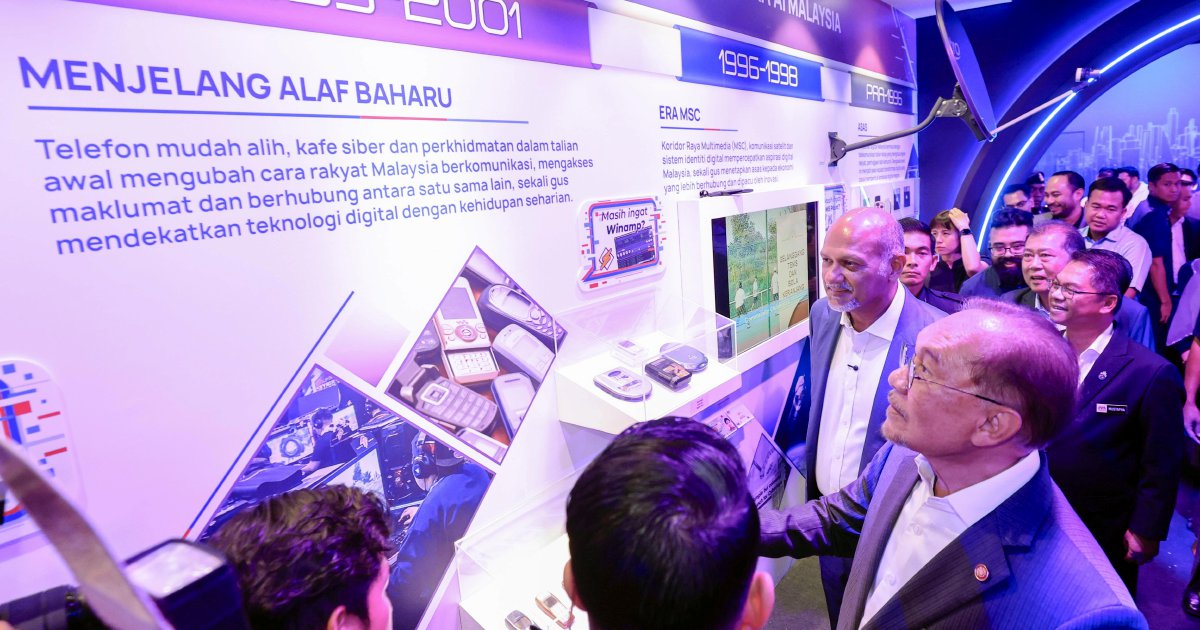
Prime Minister Datuk Seri Anwar Ibrahim has delivered a stark warning about the social consequences of Malaysia's ambitious artificial intelligence expansion, emphasising that the nation's technological aspirations cannot come at the cost of leaving behind segments of the population without adequate access to digital tools and innovation. Speaking in Cyberjaya, the heart of Malaysia's digital infrastructure, Anwar underscored the critical need to accompany technological progress with deliberate, inclusive governance frameworks that extend opportunity across all socioeconomic strata.
The concern raised by the Prime Minister reflects a growing global awareness that AI adoption, while promising productivity gains and economic growth, carries inherent risks of technological stratification. Nations racing to establish themselves as AI hubs often focus investment on urban centres, high-value sectors, and established institutions, inadvertently sidelining rural communities, small and medium enterprises, and workers in traditional industries. Malaysia's geographic and economic diversity—spanning developed urban clusters in Klang Valley and Penang alongside rural communities across Peninsular Malaysia, Sabah, and Sarawak—makes this balancing act particularly complex.
Anwar's intervention signals recognition that AI-driven transformation cannot follow the historical pattern of development initiatives in Malaysia, where benefits have frequently concentrated among early adopters in major cities. The digital divide, already visible in broadband penetration rates and tech skills distribution, risks calcifying into a permanent structural inequality if policy makers fail to proactively redistribute AI's benefits. Without intentional correction, a new class of AI-literate workers and AI-enabled businesses could emerge while vast populations find themselves economically obsolete in an automation-driven economy.
The remarks come as Malaysia charts its technology roadmap through initiatives like the Malaysia Digital Economy Framework and various AI research commitments from universities and private institutions. These efforts have generated substantial optimism about the nation's potential to compete in high-value digital sectors and reduce dependence on commodity-based economic models. However, Anwar's caution suggests the government recognises that technological capability alone does not guarantee equitable outcomes—deliberate redistributive policy and universal access programmes are essential prerequisites.
Implementing truly inclusive AI adoption requires sustained investment beyond research parks and innovation hubs. Educational initiatives must reach secondary schools across all states, not merely elite institutions, to build foundational coding and computational thinking skills among the next generation. Vocational training programmes need recalibration to prepare workers facing displacement from automation, equipping them with complementary skills that position them alongside rather than in competition with AI systems. Broadband infrastructure expansion remains foundational, particularly across Sabah and Sarawak where rural connectivity remains patchy and unreliable.
Small and medium enterprises, which form the backbone of Malaysia's private sector employment, face particular barriers in adopting AI technologies. Access to affordable computing resources, technical expertise, and capital-intensive tools remain concentrated among larger corporations and well-funded startups. Government initiatives providing subsidised AI tools, capacity-building workshops, and preferential financing for SMEs adopting automation could prevent Malaysia's AI economy from becoming a domain of corporate giants at the expense of dispersed business communities. Failure to support this crucial middle tier would undermine both social stability and the nation's stated aim of AI-driven economic diversification.
The Prime Minister's framing also implicitly acknowledges that Malaysia operates within competitive global dynamics. Singapore and South Korea have invested heavily in AI ecosystems and already possess advantageous positions in this technological race. Yet Malaysia's competitive advantage may lie not in replicating those models but in demonstrating that AI adoption can be achieved equitably, creating a development template for other Southeast Asian nations and emerging economies wrestling with similar tensions between growth and inclusion.
Regionally, Malaysia's approach carries weight. Across ASEAN, widening technology gaps threaten to exacerbate existing inequalities while creating new dependencies on technologically advanced nations for critical infrastructure and decision-making systems. If Malaysia deliberately constructs its AI transition to encompass all communities and regions, it would provide valuable evidence that inclusive development need not sacrifice competitiveness or innovation. Conversely, failure to bridge the divide risks intensifying internal tensions and limiting the human capital base available to sustain long-term AI competitiveness.
Anwar's warning also touches on fundamental questions about algorithmic fairness and AI governance. AI systems trained predominantly on data from affluent, connected populations often perform less reliably for marginalised communities. Healthcare algorithms, financial credit systems, and public service delivery platforms built without diverse training data perpetuate historical biases in new technological forms. Ensuring equitable AI outcomes demands conscious effort in data collection, algorithm auditing, and governance frameworks that prioritise fairness alongside performance metrics.
The statement positions the government as cognisant of both the promise and peril of AI-driven transformation. This rhetorical stance creates space for policy makers to justify investments in digital infrastructure, skills development, and inclusive technology access as legitimate national priorities rather than mere welfare spending. Framing AI equity as essential to Malaysia's competitiveness and stability, rather than as charity, could mobilise both public and private sector resources toward genuinely transformative inclusive initiatives.
Moving forward, translating Anwar's cautionary words into concrete action requires coordinated effort across multiple government ministries, private technology companies, educational institutions, and international partners. Clear metrics for measuring AI access and benefit distribution should be established, alongside accountability mechanisms ensuring that Malaysia's technological advancement genuinely improves opportunity for all citizens rather than concentrating wealth and power further among those already positioned to capitalise on innovation.

