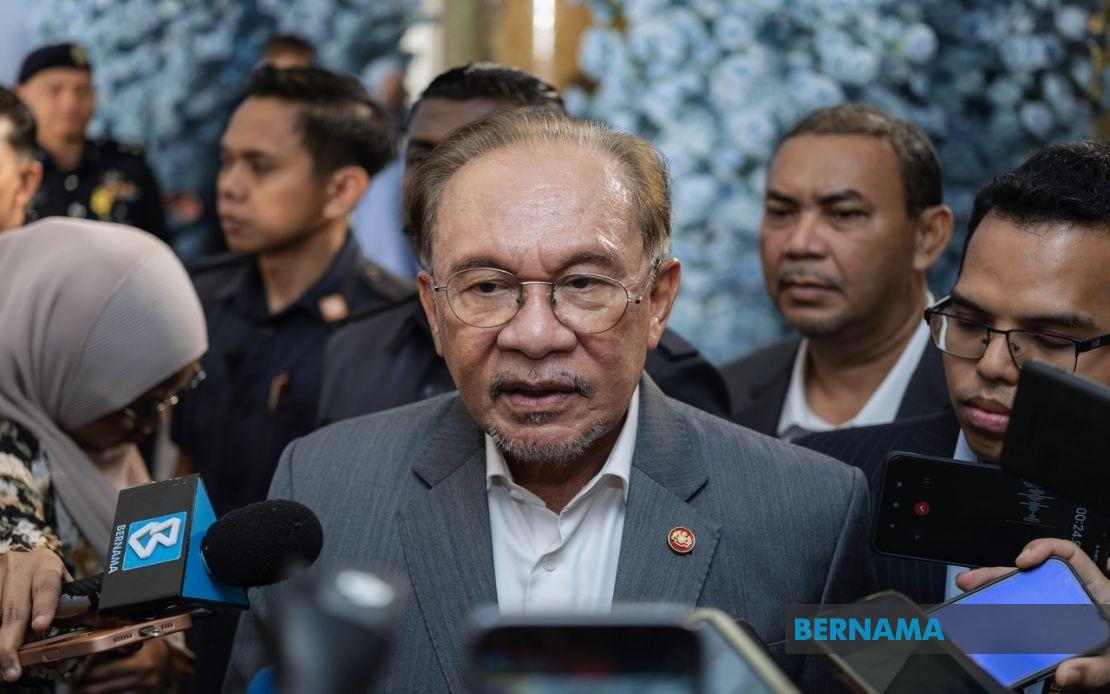
Prime Minister Datuk Seri Anwar Ibrahim acknowledged on July 15 that he remains without a full briefing regarding the circumstances that prompted four Melaka DAP state assemblymen to withdraw from the state government, though he indicated that senior Pakatan Harapan officials would address the situation imminently. Speaking to journalists in Kuala Lumpur, the Prime Minister—who also chairs the PH coalition—confirmed that leadership would pursue the matter through established channels in the coming days, though he did not specify a timeline or the nature of actions being contemplated.
The political development in Melaka emerged after the State Legislative Assembly approved constitutional amendments permitting the appointment of nominated assemblymen, a procedural change that triggered the immediate resignation of the four DAP representatives. The departing assemblymen are Allex Seah Shoo Chin from Kesidang, Low Chee Leong representing Kota Laksamana, Leng Chau Yen from Banda Hilir, and Kerk Chee Yee from Ayer Keroh. Their coordinated exit marked a significant development within the PH-led state coalition and raised questions about governance structures and representation in the Melaka administration.
The constitutional amendments themselves represent a procedural shift with potentially far-reaching implications for state-level politics in Malaysia. By enabling the appointment of nominated assemblymen—rather than relying solely on elected representatives—the mechanism creates new pathways for political appointments and potentially alters the balance of power within state governance structures. For Melaka specifically, this change appears to have crossed a threshold that the four DAP lawmakers viewed as incompatible with their participation in the state government, suggesting underlying tensions within the ruling coalition regarding democratic representation and constitutional practice.
Anwar's stated lack of briefing is noteworthy given his dual roles as Prime Minister and coalition chairman, positions that typically position him as a central figure in addressing significant internal party matters. His acknowledgment of being uninformed, combined with his assurance that leadership would follow up, suggests that the matter may have developed swiftly or that relevant parties had not yet formally escalated the issue through formal coalition channels. The absence of a prepared statement or detailed response indicates that the Prime Minister's office was still processing the implications of the Melaka developments when he spoke to the media.
Just one day prior to his remarks, Anwar had already publicly appealed to Melaka DAP to reconsider its withdrawal decision, urging the party to maintain its role in state governance so that resources could be directed toward development initiatives and public welfare. This intervention demonstrated immediate concern at the federal leadership level, though it proved unsuccessful in preventing the four lawmakers from formalizing their resignation. The unsuccessful appeal suggests either that the Melaka DAP representatives held firm ideological objections to the constitutional changes or that grievances within the state coalition had accumulated beyond the point where public appeals could resolve them.
The withdrawal carries significance for Melaka's political stability and the broader strength of the Pakatan Harapan coalition at state level. The four departing assemblymen represent a meaningful proportion of DAP's legislative presence in the state assembly, and their exit directly reduces the coalition's numerical advantage in passing legislation. This consequence may necessitate recalibration of working relationships within the ruling state coalition, potentially requiring negotiations with other coalition partners or reassessment of legislative priorities in the coming parliamentary session.
For the Malaysian political landscape more broadly, the incident illustrates ongoing tensions between different conceptions of democratic practice within the broader PH movement. DAP has historically positioned itself as a champion of electoral democracy and meritocratic representation, making constitutional amendments that introduce nomination mechanisms potentially conflictual with the party's policy positions. The four lawmakers' decision to resign rather than accommodate the changes suggests that party members at the state level maintain commitment to these principles, even when such positions create friction within the ruling coalition.
The situation also reflects broader questions about coalition management in Malaysia's contemporary political environment. Pakatan Harapan, as a multi-party coalition encompassing ideologically diverse partners, periodically confronts situations where different members prioritize competing values or political strategies. The Melaka development illustrates how state-level decisions can create friction with coalition partners, requiring mechanisms for conflict resolution that apparently were not sufficient to prevent the four lawmakers' departure. How federal PH leadership chooses to address this episode may establish precedents for managing similar disputes.
Moving forward, the dynamics within Melaka's state government will merit close observation, particularly regarding whether the reduced DAP contingent continues participating in governance, whether the four withdrawing lawmakers maintain party membership while sitting independently, or whether additional political realignments occur. The Prime Minister's commitment to follow-up engagement suggests that the matter will not be permitted to fade without formal intervention from PH's top leadership, indicating that coalition officials view the Melaka situation as significant enough to warrant sustained attention despite other competing demands on federal government time and resources.

