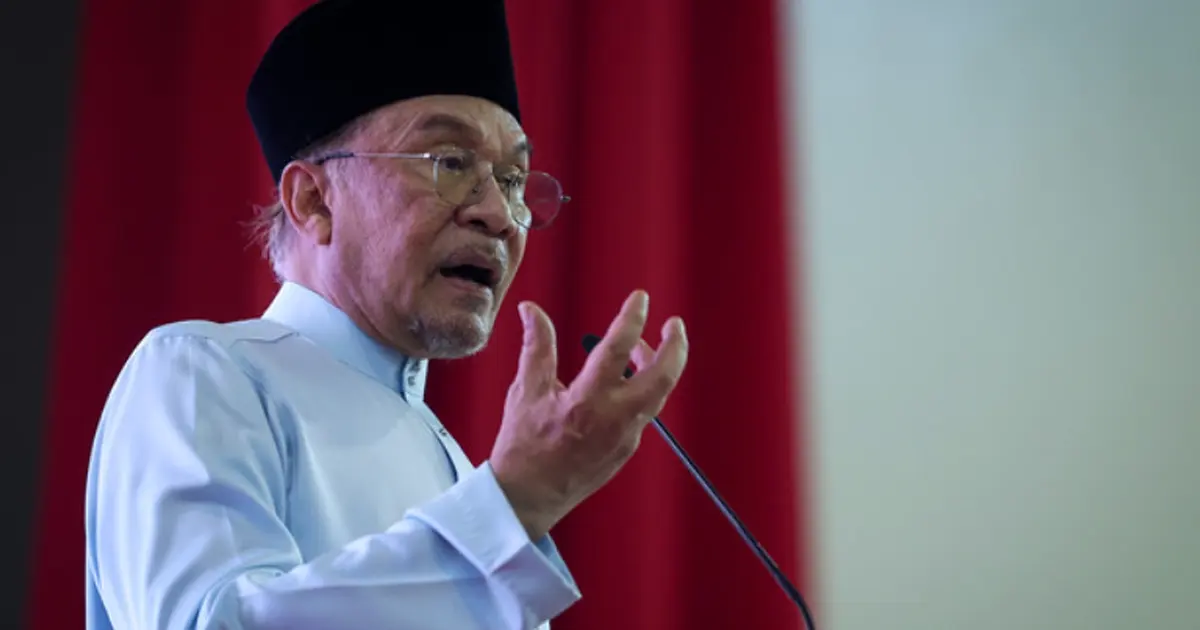
Prime Minister Anwar Ibrahim's pivotal decision to forge a governing alliance with Umno following the 2023 general election has become a point of contention within his own party, with PKR Youth leadership now arguing that his gesture of political partnership was fundamentally misunderstood and ultimately unappreciated by the coalition partner.
Huraimi Husri, the Federal Territories chapter chairman of PKR Youth, articulated a narrative in which Anwar is positioned as a statesman who transcended partisan rivalry to stabilise Malaysia's political system during a moment of acute institutional fragility. According to this framing, the Prime Minister extended assistance to Umno when the party found itself in precarious circumstances following its disappointing performance in the 15th general election. Rather than capitalise on the situation or impose punitive conditions, the reasoning suggests Anwar instead chose a path of pragmatic cooperation in the national interest.
The characterisation of this relationship as one of betrayal reflects deeper tensions simmering beneath the surface of the Pakatan Harapan-Barisan Nasional coalition government. Since its formation, the administration has navigated considerable friction between constituent parties, with periodic disagreements over policy direction, resource allocation, and ministerial positions creating friction that periodically threatens the government's stability. Huraimi's comments suggest that members of PKR, particularly in the youth wing, view Umno as an ungrateful partner that has failed to acknowledge the political capital expended by Anwar in facilitating the coalition arrangement.
From a strategic perspective, Anwar's decision to collaborate with Umno represented a significant departure from traditional opposition politics. During the Pakatan Harapan government of 2018-2020, the coalition had positioned itself as a reformist force fundamentally opposed to the entrenched interests Umno represented. The shift towards cooperation required Anwar to justify to his own supporters why pragmatism and stability should supersede ideological consistency. This recalibration has not been uniformly accepted within PKR's grassroots, where some members continue to harbour reservations about the alliance with a party they previously confronted as adversaries.
The timing of Huraimi's public statement carries particular significance given the Malaysian political calendar and ongoing internal party dynamics. Coalition governments dependent on slender parliamentary majorities require constant management and communication between partner parties to prevent defections or public squabbling that undermines institutional credibility. When youth wing leaders air grievances about their own coalition partners through media channels, it signals underlying discontent that may foreshadow broader organisational divisions.
Umno's position within the coalition remains complex. The party emerged from the 2023 election as a significantly diminished force compared to its historical dominance of Malaysian politics, retaining only 26 parliamentary seats. This dramatic contraction created genuine vulnerability that Anwar and PKR could have exploited through more aggressive political positioning. Instead, the decision to include Umno in government conferred legitimacy on a party that might otherwise have faced sustained pressure from reform-minded constituencies. From Huraimi's perspective, this represents an unreciprocated favour rather than a pragmatic political bargain.
The coalition arrangement itself has generated considerable debate among political analysts regarding its sustainability and effectiveness. Some observers contend that including Umno provided essential stability and broadened the government's parliamentary base beyond what PKR and Pakatan Harapan alone could achieve. Others argue that the inclusion of a major opposition party compromised the reform agenda and created inherent contradictions within government policy-making. These structural tensions manifest periodically through episodes of public disagreement and manoeuvring over legislative priorities.
For Malaysian voters and observers of regional politics, the framing offered by PKR Youth raises important questions about the nature of coalition governance in Westminster systems with fragmented party systems. When political cooperation becomes necessary despite ideological differences, expectations about mutual recognition and reciprocal behaviour often become sources of friction. Huraimi's comments suggest that PKR members question whether Umno has genuinely accepted the logic of coalition partnership or continues to pursue opportunistic behaviour designed to maximise its own advantage.
The discourse also illuminates generational divides within PKR itself. Youth wing leaders often articulate more ideologically consistent positions than senior party management, which must balance competing pressures from coalition partners, business constituencies, and diverse electoral interests. That Huraimi has publicly ventilated these frustrations indicates a possible gap between how the party leadership frames the coalition's rationale and how grassroots members actually perceive Umno's behaviour within government.
Looking forward, the sustainability of the coalition partnership depends substantially on whether parties can resolve underlying perceptions of unfairness and unequal commitment to shared governance objectives. If PKR members increasingly view the arrangement as primarily benefiting Umno whilst constraining their own party's reform agenda, pressure may mount on Anwar to reassess the coalition's structure or terms. Conversely, from Umno's perspective, regaining organisational strength and parliamentary representation requires demonstrating that coalition membership serves its interests effectively.
The broader implications for Southeast Asian politics merit consideration as well. Malaysia's experience with grand coalition models offers lessons about the institutional and psychological dimensions of cross-party cooperation. When parties sacrifice core constituencies and policy preferences to ensure governmental stability, the partners involved must actively cultivate trust and reciprocal recognition. Huraimi's commentary suggests this cultivation has not occurred sufficiently, raising questions about whether the coalition model can accommodate the diverse expectations and constituencies that compose Malaysia's plural political landscape.

