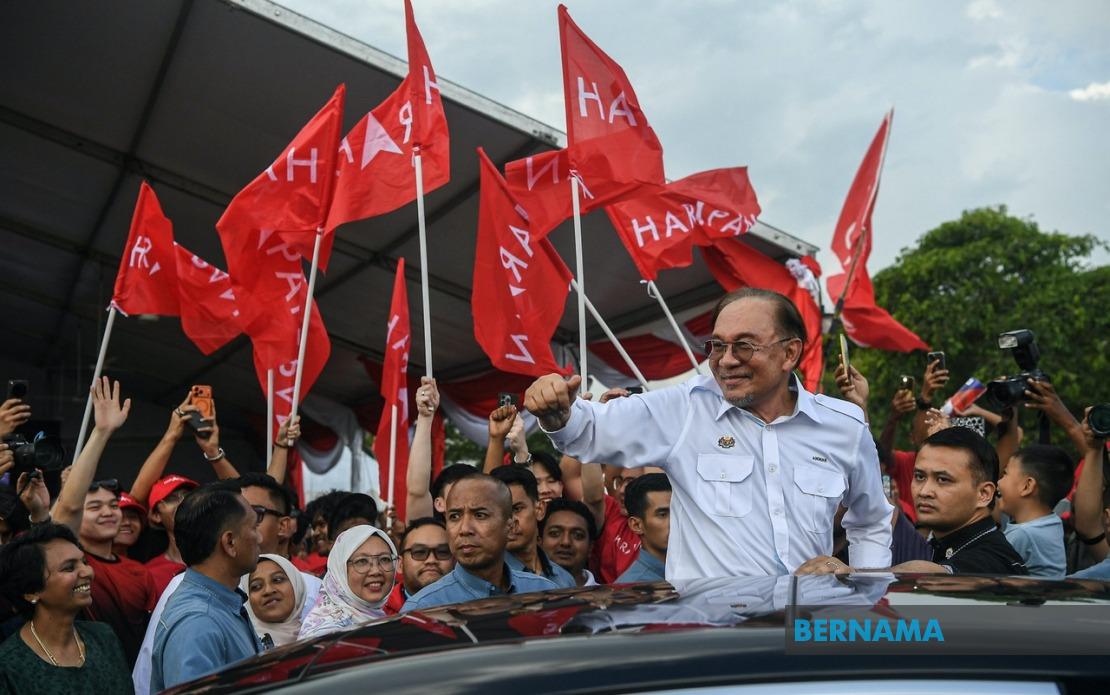
Prime Minister Datuk Seri Anwar Ibrahim's high-profile campaign presence across Johor is proving to be a significant mobilising force for Pakatan Harapan ahead of Saturday's state election, according to Communications Minister Datuk Fahmi Fadzil. The coalition's determination to field candidates in all 56 State Legislative Assembly seats reflects confidence in capturing ground support, and Fahmi's observations of community reactions at recent campaign events suggest the strategy is generating genuine interest beyond traditional party faithful.
Fahmi witnessed the reception firsthand while accompanying the Prime Minister at campaign programmes in Senggarang and Semerah within the Batu Pahat district, instances that he characterised as reflecting extraordinary community engagement. The minister noted that responses appeared spontaneous rather than orchestrated, pointing to genuine curiosity and approval among voters. A particularly telling anecdote involved an elderly resident who brought his wife by trishaw specifically to encounter Anwar, illustrating the personal appeal the Prime Minister commands in the constituency.
The coalition's campaign narrative centres on presenting PH as a stabilising force capable of delivering development and responsive governance at the state level. Fahmi, who also serves as PH's communications director, attributed the visible enthusiasm to community interest in the coalition's policy platform and vision for Johor's future. This framing attempts to position the election beyond partisan competition, instead emphasising PH's track record and capacity to translate electoral support into tangible outcomes for residents.
Anwar's campaign itinerary was deliberately intensive, with the Prime Minister participating in 15 separate programmes statewide over the weekend of July 4-5. This schedule aimed simultaneously at energising party machinery, providing direct encouragement to candidates contesting the 56 seats, and reaching voters across diverse constituencies. The breadth of this campaign effort underscores how central Anwar's personal legitimacy has become to PH's electoral strategy in Johor, a state where the coalition historically faced significant challenges before recent political realignments.
The 16th Johor State Election represents a crucial test for Pakatan Harapan's capacity to consolidate support in a state that represents a substantial portion of peninsular Malaysia's economy and population. With 172 candidates competing for 56 seats across multiple parties, the contest will determine whether PH can sustain momentum beyond federal level into state governance. A strong showing would demonstrate that the coalition's national credibility extends to subnational politics, an essential component of building durable political dominance.
Community responsiveness to the Prime Minister's presence carries implications for voter mobilisation and turnout. When residents spontaneously gather to meet political leaders, campaign organisers gain valuable signals about underlying sentiment and engagement levels. Fahmi's interpretation suggests that PH's messaging is resonating beyond the party's core supporters, attracting at minimum sympathetic interest from fence-sitters who might otherwise sit out an election or default to incumbents. Such engagement, if converted to votes, could expand PH's seat count beyond conservative projections.
The timing of Anwar's intensive campaign drive reflects the narrowing window before polling day. Early voting commenced on the eve of the election, with formal voting scheduled for Saturday, July 11. This compressed timeline requires maximum candidate visibility and voter contact, making the Prime Minister's personal involvement strategically valuable. His presence adds national gravitas to what is technically a state-level contest, framing local issues within the broader context of national governance and PH's stewardship of Malaysia.
For the coalition, maintaining this momentum through election day remains critical. The polling day format allows voters multiple opportunities to participate, including early voting, which could affect turnout patterns and demographic composition of the electorate. Fahmi's confidence that observed community interest will translate into either direct support or sustained attention suggests PH strategists believe they have gained traction beyond their existing base. However, converting casual interest into actual votes requires sustained ground organisation throughout the remaining campaign period.
The broader significance of the Johor election extends beyond immediate seat calculations. Success here would vindicate PH's federal leadership approach and provide validation for continuing its current political trajectory. Conversely, underperformance could invite internal recriminations and embolden rivals challenging the coalition's governance record. Anwar's personal involvement therefore carries stakes beyond ceremonial campaigning—his credibility as PH chairman and Prime Minister directly influences how voters evaluate the coalition's fitness to govern at state and national levels.
For Malaysian politics more broadly, state elections serve as mid-term referendums on federal governments. The Johor contest occurs within a context of ongoing political consolidation and competing narratives about Malaysia's governance direction. Pakatan Harapan's performance here will send signals about voter priorities, regional political alignments, and the durability of the coalition's support across different communities and demographics. Anwar's personal appeal appears to be a significant asset in this assessment, though converting observed enthusiasm into electoral victories remains the ultimate test of campaign effectiveness.

