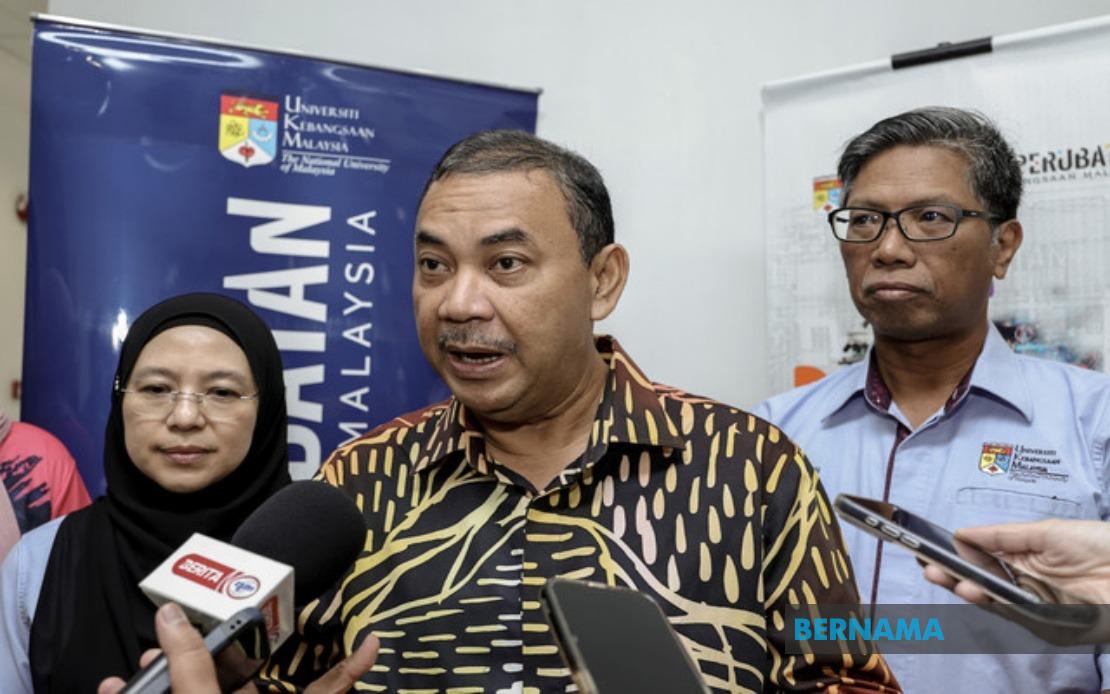
The MADANI Government under Prime Minister Datuk Seri Anwar Ibrahim is attracting broader acknowledgement for its economic management and currency stability, with the Prime Minister's political secretary stressing that these accomplishments demonstrate strong governance credentials. Datuk Azman Abidin, speaking after inaugurating a science education initiative at Universiti Kebangsaan Malaysia, contended that the administration's track record across multiple economic indicators reflects Anwar's capability to lead and justifies public support for extending his tenure.
Azman's remarks come as political commentators have increasingly highlighted the government's substantive progress on its reform agenda, noting that the administration has created a foundation for continued advancement. The political secretary argued that dismissing or downplaying these achievements would be intellectually dishonest, pointing to measurable gains in foreign and domestic investment flows, broader macroeconomic stability, and the ringgit's performance against major international currencies. These factors carry particular significance for ordinary Malaysians whose purchasing power and employment security depend substantially on currency strength and investment climate.
The government plans to amplify public awareness of its initiatives and their tangible benefits through announcements timed around National Day and Malaysia Day celebrations, as well as during the Budget 2027 tabling. This communication strategy suggests the administration views the coming months as critical for consolidating its narrative and demonstrating how policy outcomes translate into improved living standards across diverse demographic groups. The timing is deliberate, as these national occasions traditionally provide platforms for governments to frame their achievements within the context of national development and citizen welfare.
Azman expressed confidence that Malaysian voters would ultimately judge the government's record fairly when they next cast their ballots, implying that transparent economic data and measurable outcomes would outweigh opposition narratives. This confidence reflects the administration's belief that economic fundamentals, when properly communicated, resonate with the electorate more powerfully than political rhetoric alone. For Southeast Asian observers, Malaysia's economic trajectory under current leadership provides a counterpoint to regional concerns about policy instability and investor confidence.
Beyond immediate political considerations, Azman used the occasion to underscore the government's commitment to science and technology education as a pillar of long-term national competitiveness. The STEM Exploration 2.0 programme, which he inaugurated, involves two hundred Form Three students from the Klang Valley and Negeri Sembilan in hands-on scientific activities ranging from microbiology to advanced medical applications including three-dimensional printing technology. The initiative represents an attempt to cultivate scientific talent from secondary school level upward, addressing Malaysia's persistent skills shortage in technology-dependent sectors.
The political secretary advocated repositioning STEM education from optional subject to mandatory component of the national curriculum, arguing that technological advancement at the global level demands that all students acquire foundational competencies in these disciplines. His argument reflects broader trends across Asia where governments recognize that continued economic growth depends upon a population equipped with scientific literacy and technical capabilities. Malaysia, competing against regional neighbours for foreign investment and high-value manufacturing, cannot afford to leave scientific talent cultivation to chance or individual interest.
Azman framed the programme as both identifying exceptional young talent and providing career pathway visibility in medical and scientific fields where Malaysia faces persistent recruitment challenges. Participants engaged in laboratory experiments examining immune and circulatory systems alongside demonstrations of cutting-edge biomedical applications, creating experiential learning that conventional classroom instruction struggles to replicate. The second edition's expansion beyond initial pilot scope suggests positive reception and government willingness to scale successful educational initiatives.
The political secretary called upon student participants to view their current engagement with science as the foundational step of longer intellectual journeys, invoking the notion that exceptional leaders and scientists emerge through sustained commitment rather than sudden inspiration. His remarks acknowledged that educational transformation occurs incrementally, through successive cohorts of students building upon previous generations' knowledge and innovation. For Malaysia, this perspective matters considerably as the nation seeks to reduce dependence on foreign expertise in high-technology sectors and develop indigenous research and development capacity.
The initiative's nationwide expansion remains conditional upon resource allocation and institutional capacity, factors that will determine whether the programme becomes truly transformative or remains a limited pilot affecting only urban populations. Rolling out STEM exploration activities across rural areas and smaller urban centres would require substantial coordination between federal education authorities, state governments, and tertiary institutions outside the major research universities. The government's commitment to such expansion will indicate whether science education truly represents a national priority or remains a showcase initiative for presentation to international observers.
For Malaysian voters evaluating governmental performance ahead of anticipated electoral contests, economic outcomes and investment climate represent tangible metrics against which to assess leadership. Azman's emphasis on investment inflows, currency stability, and economic growth reflects recognition that these macro-level indicators ultimately determine employment availability, wage growth, and purchasing power for ordinary citizens. The administration's willingness to engage directly with claims about its economic performance suggests confidence in the underlying data, though observers will note that comprehensive assessment requires examining not only headline statistics but distribution of gains across income strata and geographical regions.
The government's strategy of combining immediate economic communication with long-term human capital investment through STEM education initiatives presents a dual-track approach to maintaining voter confidence. Short-term messaging emphasizes tangible achievements in investment and currency management, while longer-term initiatives frame the administration as committed to building sustainable competitive advantages. This dual approach attempts to address both immediate citizen concerns about economic security and longer-term anxieties about Malaysia's position in an increasingly technology-dependent regional and global economy.

