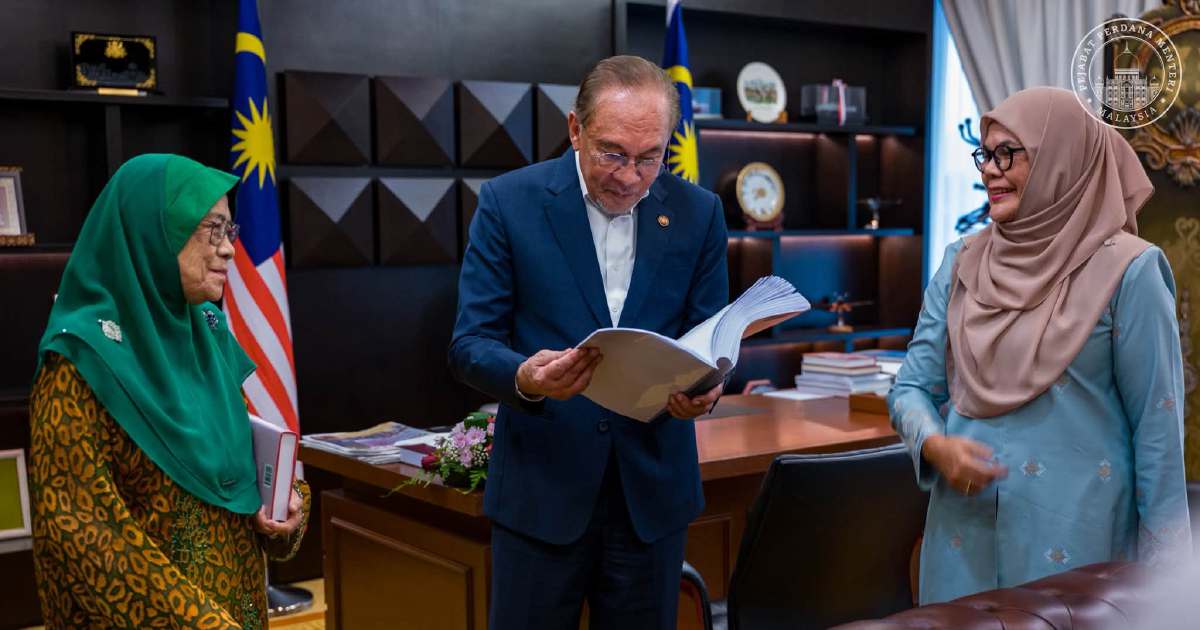
Prime Minister Datuk Seri Anwar Ibrahim has unveiled a new publication that brings together decades of his political thought and philosophical reflections on Malaysian society and governance. The book, titled Gagasan Anwar Ibrahim Dalam Peradaban Budaya Bangsa, represents an ambitious effort to systematically capture the prime minister's evolving perspectives on leadership, national development, and the cultural foundations underpinning the Malaysian state.
The initiative reflects a broader trend among established political figures across Southeast Asia to codify their intellectual legacies while still active in office. By committing his ideas to print, Anwar seeks to create a lasting framework that policymakers, students, and civil society leaders can reference when grappling with complex questions about Malaysia's future direction. This archival impulse carries particular weight given the prime minister's lengthy career spanning multiple decades and distinct political phases, each marked by shifting circumstances and evolving perspectives.
Anwar's stated hope that the compilation will guide future generations underscores his conviction that Malaysia's progress depends not merely on short-term administrative decisions but on the philosophical coherence and cultural self-awareness that undergird those decisions. The emphasis on character development alongside nation-building suggests the book addresses both institutional and moral dimensions of governance, a concern that has animated much of his public discourse over the years.
For Malaysian readers and scholars, the release presents an opportunity to examine how the country's top leader conceptualizes the relationship between cultural identity, democratic practice, and economic prosperity. The book's focus on civilisational values aligns with ongoing national debates about Malaysia's role as a bridge between Islamic heritage and multicultural democratic aspirations, positioning the nation between different global currents and traditions.
The compilation arrives at a moment when Malaysia faces pressing questions about institutional resilience, economic competitiveness, and social cohesion. Documenting a leader's intellectual framework during periods of institutional challenge can serve both practical and historical purposes—informing present policy decisions while creating a record for future analysis of how contemporary leaders approached systemic problems. The timing suggests Anwar views the documentation of his thinking as integral to his broader governance agenda rather than merely a retrospective exercise.
From a Southeast Asian perspective, the publication reflects patterns common across the region's established democracies, where leading figures attempt to translate their personal political evolution into enduring intellectual contributions. Malaysia's experience with multiple transition periods and constitutional negotiations makes such documents potentially valuable to neighbouring countries navigating similar terrain. The emphasis on cultural civilisation also resonates with broader regional conversations about how Asian nations can develop governance models rooted in their own historical traditions while remaining open to universal democratic principles.
The book's scope, spanning life experiences alongside formal ideas, suggests Anwar intends it as more than abstract philosophy. Personal narratives can illuminate how theoretical commitments translate into practical decisions under pressure, offering readers concrete illustrations of how principles might guide action in complex scenarios. This approach makes the material potentially more accessible and compelling to a broad readership beyond academics and policy specialists.
Educational institutions across Malaysia may find the compilation useful for curriculum development, particularly in political science, public administration, and philosophy programmes. By making his framework explicit, Anwar facilitates serious intellectual engagement with his ideas rather than relying on fragmented public statements or media interpretations. Students and young professionals seeking to understand contemporary Malaysian governance will have a primary source that captures how the prime minister himself articulates his vision.
The focus on nation-building and character development as organising themes suggests the book addresses what Anwar views as foundational challenges. Rather than focusing narrowly on technical policy matters, this framing implies his intellectual preoccupations centre on questions of national identity, values, and the kinds of citizens and leaders Malaysia needs to develop. This philosophical emphasis may provoke useful dialogue about whether technical expertise and institutional efficiency alone suffice for national progress, or whether deeper cultural and moral foundations require deliberate cultivation.
Critics and analysts from across the political spectrum may mine the compilation for insights into Anwar's priorities, evolution, and potential blind spots. Public intellectuals in Malaysia and beyond will likely engage with the ideas presented, either to build upon them or to challenge his framework. This kind of scholarly and political dialogue around documented thinking contributes to Malaysia's intellectual ecosystem and helps citizens evaluate different visions for the nation's future.
The release of such a work also signals confidence in the enduring relevance of his ideas beyond any particular electoral cycle or administrative term. By positioning the book as guidance for future generations rather than a campaign document or political manifesto, Anwar frames his contribution in terms of legacy and national benefit rather than immediate partisan advantage. Whether readers ultimately find his vision compelling, the availability of a systematic exposition allows for more rigorous assessment than relying on scattered speeches and policy announcements.

