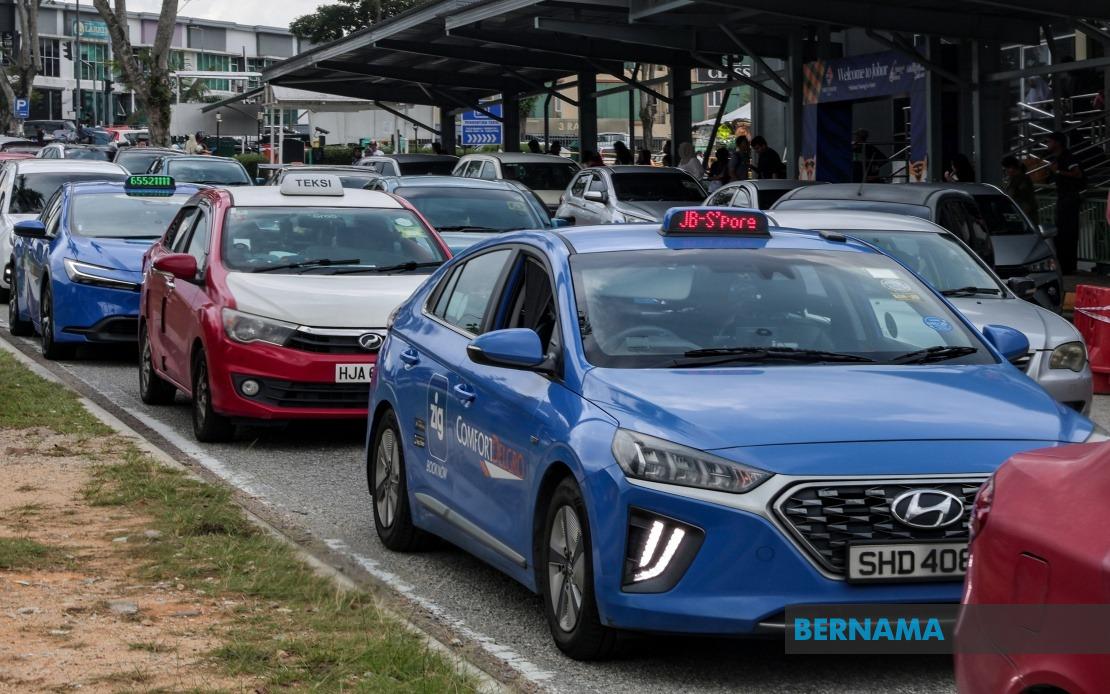
The Land Public Transport Agency (APAD) has announced a significant adjustment to the National MADANI Taxi Renewal Programme (Teksi MADANI), providing taxi drivers with greater flexibility in vehicle selection beyond the originally mandated Proton S70 model. This operational adjustment, disclosed in Putrajaya on August 7, addresses a key implementation challenge that has emerged since the programme's launch in early July, when certain applicants encountered barriers to participation despite the government's overhaul of the nation's iconic yellow-and-black taxi industry.
The flexibility provision is specifically designed to accommodate two categories of drivers: those who already possess operational vehicles and wish to retain them, and applicants who have applied for the programme but failed to secure hire-purchase financing approval. This pragmatic modification demonstrates APAD's recognition that whilst the Proton S70 represents the modernised standard for the industry's transformation, administrative rigidity could inadvertently exclude legitimate participants from benefiting from the broader MADANI initiative. The agency has framed this approach as a means of ensuring equitable access to the programme's incentive structure whilst maintaining the fundamental objective of industry renewal.
Prime Minister Datuk Seri Anwar Ibrahim launched the Teksi MADANI programme on July 3 with the explicit purpose of dismantling the traditional vehicle leasing model that has long characterised Malaysia's taxi sector. The initiative transfers vehicle ownership to drivers themselves, fundamentally altering the economic relationship between operators and drivers and addressing a persistent structural issue within the industry. The Proton S70 sedan was specifically selected as the official replacement model, featuring contemporary design elements including the elimination of traditional rooftop identification signs and implementation of a distinctive vehicle registration series commencing with the letters "GET", visually distinguishing MADANI programme vehicles from conventional taxis.
The Transport Ministry's policy announcement on April 23 had initially stipulated that all new applications and vehicle replacements would operate on a voluntary basis but would be restricted to the Proton S70 package offered through the MADANI framework. This clear demarcation was intended to establish a unified industry standard and facilitate consistent implementation across the nation's taxi sector. However, the divergence between policy intention and operational reality has prompted APAD to introduce this supplementary guidance, acknowledging that real-world circumstances frequently deviate from theoretical policy frameworks. The agency's decision reflects an understanding that flexibility mechanisms within structured programmes can enhance participation rates without fundamentally compromising programme objectives.
The financing challenge represents a particularly acute issue within Malaysia's taxi sector, where many drivers operate with limited capital reserves and depend heavily on credit availability to procure new vehicles. Whilst the MADANI programme ostensibly facilitates vehicle acquisition through hire-purchase arrangements, not all applicants qualify for financing under the prescribed terms, potentially excluding otherwise eligible participants. By permitting alternative vehicle selections for drivers unable to secure financing for the Proton S70, APAD has created a mechanism that enables broader participation whilst maintaining the opportunity for those with stronger financial profiles to access the programme's primary incentive structure centred on the new standardised model.
Existing taxi vehicles that remain unreplenished under the MADANI programme continue to operate legally until they reach specified vehicle age thresholds established by regulatory authorities. This provision ensures that the industry transition remains gradual rather than disruptive, preventing sudden supply disruptions in the taxi market and allowing drivers time to navigate the transition process according to their individual circumstances and financial capacity. The government's approach acknowledges the sector's economic importance and the need to maintain service continuity during the transformative period.
Financial support measures accompanying the MADANI programme have been expanded significantly since the initial policy framework. The Prime Minister announced a supplementary allocation of RM10 million for the Old Vehicle Replacement Matching Grant Programme, specifically earmarked for taxi drivers and introduced following positive responses to the initial RM10 million provision included within Budget 2026 for MADANI implementation. This escalated financial commitment indicates the government's serious investment in facilitating sector transition and suggests that initial uptake has outpaced original budgetary allocations, necessitating additional resources to accommodate demand.
The MADANI programme represents one of Malaysia's most comprehensive industrial restructuring initiatives in the transport sector, with implications extending beyond immediate taxi service delivery into broader questions of driver welfare, industry modernisation, and government intervention in traditional economic sectors. The flexibility introduced by APAD demonstrates the government's willingness to pragmatically adjust implementation mechanisms when evidence indicates that rigid policy adherence creates unintended barriers to participation. This adaptive governance approach contrasts with purely prescriptive policy frameworks that resist mid-implementation adjustment.
For Malaysian taxi drivers, the APAD pronouncement provides meaningful relief from the apparent constraint that only Proton S70 vehicles qualified for participation. This clarification may encourage additional applications from drivers who previously interpreted the restrictive language as disqualifying them from the programme if they could not access Proton S70 financing. The expanded vehicle selection pool also creates opportunities for drivers with existing operational vehicles to formally regularise their status within the new MADANI framework, potentially unlocking access to accompanying incentives and support mechanisms that might otherwise have remained unavailable.
The broader context of this programme adjustment reveals the complexity inherent in transforming established industrial sectors through deliberate policy intervention. Whilst the original Proton S70 standardisation objective remains valid from an industry modernisation perspective, the practical implementation pathways have required recalibration to reflect credit market realities and driver economic circumstances. APAD's decision to introduce this flexibility mechanism ultimately strengthens the MADANI programme by reducing unnecessary barriers to participation whilst preserving the core incentive structure that encourages gradual transition toward the contemporary vehicle standard. For Southeast Asian observers monitoring Malaysia's approach to transport sector modernisation, this case study illustrates how policy frameworks benefit from built-in flexibility that accommodates real-world implementation challenges without compromising fundamental reform objectives.

