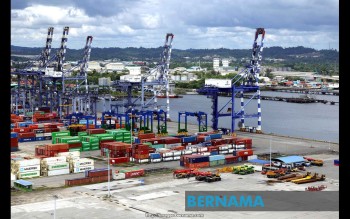
Malaysia's export prospects have brightened considerably, with Apex Securities Bhd revising upward its full-year forecast to 26.2 per cent growth for 2026, a substantial jump from its previous estimate of 16.3 per cent. The Kuala Lumpur-based securities firm attributed the revision to exceptional export performance recorded during the first seven months of the calendar year, signalling robust underlying momentum across key sectors. This upgraded outlook sits comfortably alongside Apex's positive domestic economic assessment, with the firm maintaining its forecast for gross domestic product expansion of 5.0 per cent this year, suggesting broad-based strength in the Malaysian economy.
The electronics and electrical goods sector is expected to remain the primary engine driving Malaysia's export recovery through the remainder of 2026, according to Apex's analysis. This resilience reflects structural demand tailwinds materialising from the global pivot towards artificial intelligence infrastructure, electric vehicle proliferation, and derivative manufacturing opportunities across the semiconductor and component supply chains. Such trends provide Malaysia with sustained competitive advantages, as regional manufacturers leverage the country's established production ecosystems and expertise to capture orders from multinational technology companies seeking diversified sourcing beyond traditional hubs. The firm indicates that this export dynamism should persist over the medium term, underpinned by steady order intake and capital investment from international buyers.
Commodity exports represent a secondary but increasingly significant pillar supporting Malaysia's 2026 export expansion. Apex Securities holds a notably optimistic view regarding petroleum and liquefied natural gas shipments during the second half of 2026, anticipating that geopolitical developments could channel additional demand Malaysia's way. Elevated global crude oil prices form the base case for this optimism, but the firm also flags the potential for trade diversion effects should disruptions to maritime traffic through the strategically critical Strait of Hormuz materialise. Such scenarios would redirect hydrocarbons shipments through alternative routes and suppliers, positioning Malaysia's energy exports as a beneficiary of supply-chain diversification by international buyers seeking to reduce concentration risk.
Palm oil constitutes Malaysia's third major export commodity, and Apex expects supportive conditions to persist in coming months. Indonesian demand for Malaysia's palm oil, particularly for B50 biodiesel blending applications, should underpin prices and export volumes through the year's close. The firm has also incorporated climate forecasting into its outlook, noting that meteorological models anticipate an intensification of El Niño conditions between October and December, bringing hotter and drier weather patterns that typically tighten global vegetable oil supplies and elevate prices. Evidence of this dynamic is already apparent: palm oil prices have climbed 16.8 per cent to RM4,596 per metric tonne as of August 19, 2026, compared to the start of the year, validating the firm's thesis that supply-side pressures are already pushing valuations higher.
However, Apex Securities cautioned that Malaysia's export trajectory faces material headwinds that could dampen growth momentum toward year-end. Front-loaded purchasing behaviour, wherein importers accelerated shipment timing during the first half to avoid anticipated cost increases or supply tightness, is expected to unwind during the final quarter. This normalisation of order patterns would suppress year-over-year export comparisons simply from a statistical base-effect standpoint. Additionally, the corresponding period last year benefited from exceptionally strong conditions that create a mathematically challenging comparison for 2026's fourth quarter.
Geopolitical risks loom as a serious external threat to Malaysia's export outlook. Apex flagged that any sharp re-escalation of tensions in the Middle East could dampen global demand for goods across multiple sectors, from electronics to consumer products, by undermining business and consumer confidence. Such uncertainty would cascade through supply chains and purchasing decisions, affecting Malaysia's downstream export performance regardless of its own policy environment or sectoral fundamentals.
Trade policy uncertainty emanating from the United States represents perhaps the most significant direct risk factor for Malaysian exporters. The ongoing Section 301 investigation into alleged excess manufacturing capacity creates an overhang of potential tariff escalation that could impact Malaysian firms with significant American market exposure. While the investigation's precise scope and implications remain fluid, Malaysian exporters and policymakers cannot ignore the possibility that punitive duties could be imposed, raising input costs or reducing competitiveness for Malaysian goods in the world's largest consumer economy. This uncertainty adds a policy risk premium to export forecasts that investors and businesses must navigate.
The revision by Apex Securities to 26.2 per cent export growth reflects a net assessment that positive structural tailwinds from artificial intelligence, electric vehicles, commodity markets, and palm oil dynamics outweigh the downside risks from inventory normalisation, geopolitical turmoil, and American trade policy. For Malaysian policymakers and businesses, the message is nuanced: seize the current momentum in electronics and commodities, but prepare for potential softness in the final quarter and remain vigilant regarding external shocks.
From a regional perspective, Malaysia's export strength represents positive spillover for Southeast Asian economies through supply-chain linkages and commodity demand. Strong Malaysian export growth typically translates into robust demand for inputs from neighbouring countries, higher freight revenues for regional logistics providers, and increased shipping traffic through regional ports. Conversely, any significant miss to these upgraded export forecasts would have ripple effects across the broader Association of Southeast Asian Nations economic outlook, underscoring Malaysia's role as a bellwether for regional manufacturing and trade cycles.

