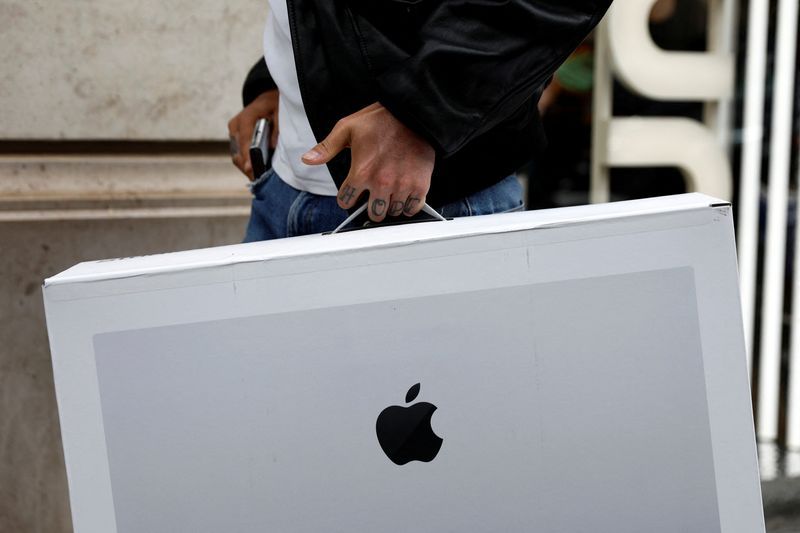
Apple has reclaimed the position of world's most valuable company, edging past Nvidia with a market valuation of $4.88 trillion compared to the chipmaker's $4.86 trillion. The milestone, achieved on 17 July, marks a significant reshuffling in the hierarchy of global technology giants and underscores a fundamental shift in how investors are evaluating opportunities within the artificial intelligence sector. It represents Apple's first ascendancy to the top position since April of the previous year, after Nvidia had dominated the rankings for nearly twelve consecutive months.
The changing valuations reflect a broader recalibration of investor sentiment regarding which companies stand to benefit most from the artificial intelligence revolution. For much of the past year, the market narrative centred on the indispensability of specialist chipmakers, particularly Nvidia, whose graphics processing units form the backbone of generative AI infrastructure globally. However, the latest market movements suggest that investors are now diversifying their focus, recognizing that competitive advantages in AI extend far beyond semiconductor manufacturing and into services, ecosystem integration, and consumer monetization strategies.
Apple's ascendancy is particularly noteworthy given that the company was widely perceived as lagging behind its peers in artificial intelligence development. Unlike rivals that invested heavily in building proprietary large language models and foundation AI systems, Apple pursued a different strategic path. According to analysis from BRI Wealth Management, this distinction now works in Apple's favour. The company's positioning as less capital-intensive than competitors, combined with its ability to monetize AI through its established services ecosystem, hardware upgrade cycles, and the unparalleled lock-in of its user base, has become increasingly attractive to investors seeking sustainable earnings growth rather than speculative exposure to emerging technologies.
The timing of Apple's resurgence carries particular significance for the company's leadership transition. Chief Executive Tim Cook is preparing to hand over operational control to John Ternus, a veteran hardware engineer, in September. How investors and market observers view the final chapters of Cook's tenure may be substantially shaped by this achievement, positioning his departure at a moment when the company appears to be reasserting its technological relevance and market dominance.
Central to Apple's AI narrative is the company's recent overhaul of Siri, its virtual assistant platform. This long-awaited refresh represents a deliberate effort to bridge the gap between Apple's capabilities and those of competitors who have moved more aggressively into AI-powered services. By enhancing Siri's functionality, Apple aims to demonstrate its capacity to compete effectively in a sector where it previously appeared to be playing catch-up. The company's strategy hinges partly on leveraging the vast repositories of personal user data that reside on billions of iPhones worldwide, data that could substantially enhance Siri's contextual awareness and responsiveness.
However, Apple faces a fundamental tension in exploiting this potential advantage. The personal information encrypted within iPhones represents an untapped resource for improving AI services, yet the company has built its reputation and regulatory standing on privacy commitments that restrict how this data can be accessed and processed. Unlocking the commercial value of on-device data while maintaining the privacy protections that differentiate Apple from rivals represents a complex technical and business challenge that will likely define the company's AI strategy for years to come.
Nvidia's position, while temporarily relinquished, should not be dismissed as fundamentally weakened. The company achieved a historic milestone in October when it became the first publicly listed entity to surpass a $5 trillion market valuation, demonstrating the extraordinary value investors have assigned to its role in AI infrastructure. The recent 3.5% decline that allowed Apple to take the lead reflects volatility rather than a fundamental reassessment of Nvidia's importance. The chipmaker's graphics processors continue to power the vast majority of generative AI training and deployment globally, and any substantive breakthrough in AI applications would likely trigger investor rebalancing that could easily restore Nvidia to the top position.
The broader semiconductor industry is experiencing a wider diversification of investor interest extending well beyond Nvidia and Apple. Memory chip manufacturers have emerged as unexpected beneficiaries of the AI infrastructure boom. Micron Technology crossed the $1 trillion market capitalization threshold in May as investors recognized the critical importance of advanced memory systems in supporting AI computational demands. South Korea's SK Hynix similarly entered the American market through a recent Nasdaq listing, introducing another significant competitor into the race for AI-related investor capital. This proliferation of opportunities suggests that the days of singular dominance by one or two firms may be concluding.
The semiconductor sector's rally confronted substantial headwinds during July as market participants began questioning the sustainability of the artificial intelligence investment cycle. The Philadelphia Stock Exchange Semiconductor Index tumbled nearly 19 percent from its all-time peaks as investors engaged in more rigorous evaluation of whether current spending patterns and valuations were justified by realistic commercial applications. Despite this significant correction, semiconductor stocks have nevertheless outperformed the broader market year-to-date, indicating that underlying conviction in the sector's long-term prospects remains resilient.
Benjamin Hall, vice president of alpha research at Segal Marco Advisors, cautions against interpreting Apple's temporary lead as a meaningful indicator of lasting competitive shifts. In his assessment, Nvidia will remain a significant participant in the AI landscape regardless of near-term valuation rankings. The distinction between short-term market movements and long-term competitive positioning bears particular importance in rapidly evolving technology sectors where sentiment can shift quickly in response to product announcements, earnings surprises, or macroeconomic developments.
Apple's position also carries inherent vulnerabilities that warrant investor attention. The company has pursued a pricing strategy that offsets rising manufacturing and research costs, a tactic that carries the risk of dampening consumer demand particularly in price-sensitive markets. For Malaysian and Southeast Asian consumers accustomed to considering value-for-money propositions, Apple's premium positioning could represent a constraint on growth in these regions, even as the company's financial valuations reach new peaks. The company must navigate between maintaining healthy profit margins and sustaining the volume growth necessary to justify its lofty market valuation.
Looking forward, the competitive dynamics among technology giants will likely remain fluid. The expansion of the AI investment opportunity set to encompass memory makers, software platforms, and specialized application developers suggests that investor capital will increasingly diversify across multiple winners rather than concentrating on a small number of dominant firms. For Malaysian investors and businesses, this broader distribution of opportunity within the AI sector presents both challenges and possibilities, as the region's technology ecosystem evolves in response to global capital allocation trends and competitive dynamics among the world's largest technology corporations.

