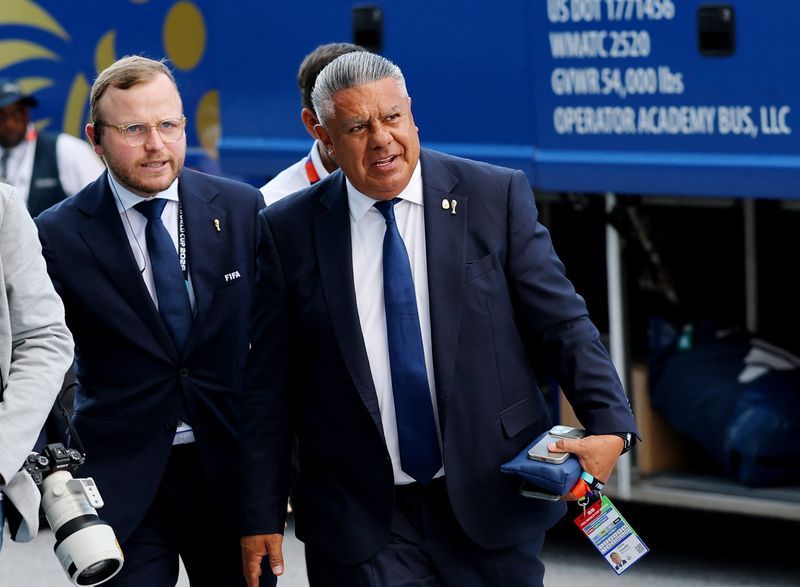
Argentina's football association moved swiftly on Wednesday to dispel mounting allegations that its president Claudio Tapia and treasurer Pablo Toviggino faced legal action from American authorities, issuing a forceful statement denying the pair had received court summonses or had their devices seized. The response came amid swirling reports about alleged FBI involvement at New York's JFK Airport following the Argentina squad's departure after the World Cup final, creating a crisis for the organisation that has faced scrutiny over its financial dealings.
The AFA's denial was notably precise in its language, emphasizing that neither Tapia nor Toviggino had been personally targeted by US authorities or faced any formal procedural obligations. However, the association did acknowledge a significant qualification: that a third party, whose identity it refused to disclose, had indeed been summoned to appear before a US grand jury and potentially provide testimony concerning multiple individuals, including officials from the football body. This careful distinction between direct and indirect legal exposure proved crucial to understanding the actual scope of the investigation.
Accounts from eyewitnesses at JFK Airport told a different story about the intensity of federal interest in the matter. According to observers present as the Argentine team prepared to board its charter flight, federal agents conducted questioning of both Tapia and Toviggino for approximately 30 minutes aboard a bus positioned on the airport tarmac. This encounter, while described by the AFA as non-coercive, nonetheless indicated that US law enforcement viewed the pair as figures of sufficient interest to warrant direct questioning during an operational moment when they were essentially immobilized before departure.
The underlying investigation that prompted this airport encounter relates to alleged irregularities in Argentine football's commercial arrangements. Infobae reported that US authorities were examining more than $300 million in contracts connected to the AFA, a figure that contextualizes the scale of financial activity under scrutiny. This investigation does not exist in isolation; it forms part of a broader examination of Argentine football's fiscal transparency that intensified following December raids conducted as part of a money-laundering investigation within the country.
For Malaysian and Southeast Asian readers, this episode illuminates the increasing overlap between international sports administration and financial crime enforcement. Football's global commercial ecosystem has become a significant vehicle for cross-border fund flows, making it attractive to regulators examining potential money laundering, corruption, and financial impropriety. The involvement of US authorities in investigating Argentine football contracts demonstrates how sports governance intersects with international law enforcement jurisdictions, particularly when substantial sums cross American financial systems.
The AFA's careful public response strategy reveals the organization's awareness of the political sensitivity surrounding its leadership. By simultaneously denying personal targeting while acknowledging that someone connected to the association faces court proceedings, the statement attempts to preserve leadership credibility while not directly contradicting documentary evidence that might later surface. This middle-ground approach, however, leaves significant questions unanswered about who the summoned third party might be and what specific contracts or transactions the US grand jury investigation concerns.
The timing of the airport encounter proved particularly significant given its occurrence immediately after Argentina's World Cup triumph. The match against France on December 18 had concluded just days before, meaning Tapia and Toviggino were traveling home as leaders of a team that had achieved football's most prestigious prize. The contrast between this celebratory moment and the confrontation with federal agents underscores how suddenly international legal complications can disrupt even moments of national sporting glory.
Argentine football's financial governance has faced persistent questions extending well beyond this specific investigation. The sport generates enormous revenue through broadcasting rights, sponsorship agreements, and tournament earnings, yet has historically operated with varying degrees of transparency regarding how these funds are allocated and managed. The AFA's commercial contracts, which appear to have numbered in the hundreds of millions of dollars, operate within a complex landscape where legitimate business dealings must be distinguished from potentially problematic financial arrangements.
The investigation's focus on contracts rather than match-fixing or doping represents a departure from typical sports scandal narratives. This financial dimension suggests that regulatory authorities are examining whether AFA-linked transactions served legitimate commercial purposes or functioned as vehicles for channeling funds in ways that violated US financial regulations or anti-money-laundering laws. The distinction matters considerably because it affects not just individual officials but potentially the organization's institutional credibility and its ability to manage commercial relationships going forward.
Regional sports bodies across Southeast Asia should note the implications of this case for their own governance structures. As football and other sports increasingly attract international investment and generate cross-border commercial activity, organizations face heightened exposure to scrutiny from foreign regulators. The precedent established here—where US authorities conducted airport questioning of foreign sports officials regarding their organization's contracts—suggests that no sporting body, regardless of jurisdiction, operates entirely beyond international law enforcement reach when their financial activities involve American banking systems or affect US commercial interests.
The investigation also raises questions about institutional accountability within Argentine football. The AFA statement carefully distinguishes between organizational liability and personal culpability, yet both may ultimately prove relevant to how this matter develops. Whether the summoned third party is an employee, contractor, or associate of the organization, their testimony could establish patterns or provide documentation that either implicates or exonerates specific officials and procedures.
Moving forward, the AFA faces a delicate balancing act between demonstrating cooperation with legitimate investigative processes and protecting its leadership's reputation during what remains an active inquiry. The organization's preemptive denial strategy, while understandable politically, may become more complicated if additional information surfaces suggesting the scope of US interest extended further than the association's statement indicates. The coming months will likely reveal whether the investigation remains focused on financial transaction patterns or potentially escalates to examine individual accountability among the organization's senior officials.

