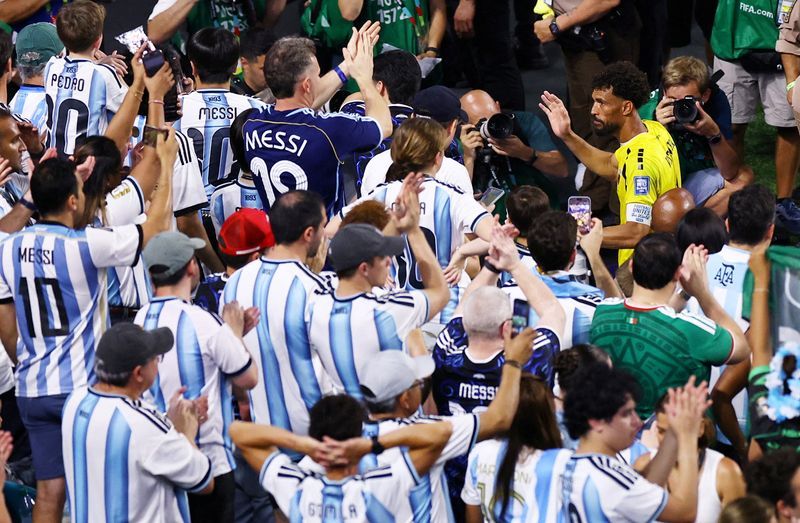
Argentina's passage into the World Cup knockout stage came at a cost that has unsettled the reigning champions. The defending titleholders laboured to a 3-2 extra-time victory over Cape Verde in Kansas City, Missouri on July 4, with an own goal from Cape Verde defender Diney Borges ultimately deciding a match that exposed serious tactical and defensive weaknesses that could prove costly in the tournament's business end.
The tournament debutants from the African nation demonstrated remarkable resilience and tactical sophistication, twice recovering from a goal down to keep the Argentine side under constant pressure throughout the contest. Few observers had anticipated such stubborn resistance from a team making their first appearance at the World Cup, and the performance has prompted serious reflection among Argentine coaching staff and pundits alike about the team's readiness for increasingly difficult opponents.
Argentina's group stage had been essentially flawless, with three consecutive victories that established them as serious contenders. Wins over Algeria by three goals, Austria by two, and Jordan by three goals had suggested a team firing on all cylinders with an almost clinical edge. Coach Lionel Scaloni's preparation had been thorough, and his squad appeared capable of maintaining their superiority from the 2022 World Cup triumph. Yet the Cape Verde encounter fundamentally shifted that narrative, forcing recognition that the quality of previous opposition may have masked underlying vulnerabilities.
Scaloni himself had provided warning before the match that Cape Verde represented a genuine threat, citing their respectable group-stage performances against Spain and Uruguay. His prescience proved justified, though even he may not have anticipated how effectively the African underdogs would press Argentina's defensive line and disrupt their possession-based approach. The match became a masterclass in how smaller nations can exploit the tactical rigidity of larger ones when those larger sides become complacent or overconfident.
Lionel Messi's record-extending twentieth World Cup goal in the first half ensured Argentina maintained scoring prowess, but the 39-year-old captain was candid about the physical and tactical struggles his team encountered. Messi acknowledged that Cape Verde's pressing prevented Argentina from executing their high defensive line strategy, with the team unable to regain possession quickly enough in advanced areas. The cohesion that had characterised their group-stage performances fractured under sustained pressure, and separation between defensive and midfield units became pronounced.
Former River Plate coach and World Cup veteran Marcelo Gallardo, who represented Argentina in the 1998 and 2002 tournaments, suggested the narrow escape might prove beneficial if it prompted necessary tactical adjustments. Speaking on ESPN Argentina, Gallardo argued that the shock of being pushed to extra time could catalyse improvement before more formidable opponents in the knockout stages emerge. His perspective reflects a view among Argentine observers that adversity sometimes strengthens teams if managed correctly by coaching staff.
Scaloni's response to the criticism focused on celebrating the team's character during adversity rather than defending tactical choices. The manager emphasised that Argentina's willingness to fight back from behind and secure progression despite not playing their most fluid football demonstrated resilience that would be essential in knockout competition. His comments suggested a philosophy that acknowledges room for improvement while defending the squad's mental toughness and competitive spirit.
Two defenders proved pivotal in Argentina's survival, with both having recently overcome significant injury setbacks that lent symbolic weight to their performances. Lisandro Martinez, recovering from an anterior cruciate ligament injury sustained in early 2025, scored Argentina's second goal and demonstrated physical commitment despite his rehabilitation process. His partner at the back, Cristian Romero, had returned from knee problems that had sidelined him earlier in the tournament and provided the crucial extra-time header that was ultimately diverted into the net by Cape Verde's own goal.
Martinez's post-match remarks revealed genuine emotion about his journey back to full fitness, acknowledging the support from both his club and Argentina's medical and coaching staff. His gratitude extended to the doctors whose work enabled his participation, highlighting the often-invisible labour that sustains elite athletes through recovery periods. For Argentine fans and observers, the contribution of recovered defenders attempting to cement their places in the squad added narrative texture to an otherwise troubling performance.
Argentina's next challenge arrives in the form of Egypt in Atlanta on Tuesday, representing a qualitative leap in opposition compared to previous fixtures. The Egyptian side brings different tactical characteristics and experience that could further expose the defensive frailties demonstrated against Cape Verde. Scaloni's squad returns to training in Miami on Saturday with ten days to implement necessary adjustments and restore the fluidity that characterised their group-stage campaign.
The implications of Cape Verde's strong showing extend beyond Argentina's immediate prospects. The tournament's structure has been designed to ensure that smaller nations face genuine competition alongside powerhouses, and Cape Verde's performance suggests that this system is functioning as intended. For Southeast Asian observers following the competition, the match illustrated that traditional hierarchies in international football remain navigable, and resilience combined with tactical discipline can make smaller sides genuinely competitive at the highest level.
Argentina's route to defending their World Cup title now requires traversing a knockout tournament where previous comfort margins have evaporated. The psychological impact of a near-elimination, combined with renewed questions about their defensive stability and pressing sequences, creates uncertainty about whether they can replicate their 2022 success. Whether Cape Verde's resistance becomes a cautionary moment that drives improvement or an early warning sign of vulnerability will become apparent as the tournament intensifies.

