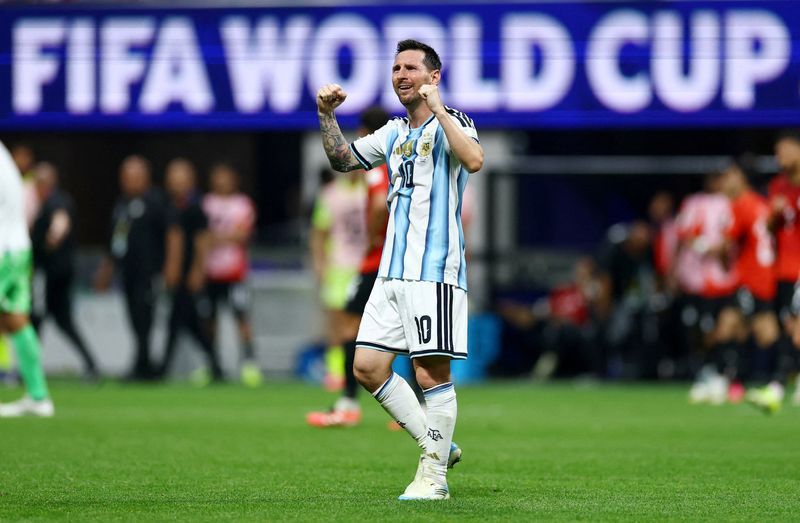
Argentina's journey through the knockout rounds has taken on an unexpected character, forcing the defending World Cup champions to excavate reserves of determination that their commanding group-stage performances barely hinted at. Having swept past Algeria, Austria and Jordan with apparent ease during the initial phase of the tournament, Lionel Scaloni's squad has been thrust into situations that would test the mettle of any team, most recently salvaging a 3-2 victory against Egypt in Atlanta on Tuesday after trailing 2-0 with just eleven minutes of regular time remaining. The narrative shift from dominance to drama reflects the harsh realities of knockout football, where even the tournament's most formidable sides must occasionally navigate through adversity to advance.
The resurrection against Egypt stands as a potential watershed moment in Argentina's championship campaign, particularly if the team ultimately completes its title defence. Messi's influence on the comeback cannot be overstated, as the Argentine icon orchestrated the unlikely turnaround that seemed impossibly distant mere moments before. The transformation from despair to jubilation within such a compressed timeframe has already become emblematic of this particular iteration of the squad, one characterised not merely by technical excellence but by an almost stubborn refusal to accept elimination. For regional observers in Southeast Asia familiar with high-stakes tournament football, Argentina's capacity to manufacture success from the precipice of failure demonstrates the psychological dimensions that distinguish champions from merely talented sides.
The contrast between Argentina's clinical group-stage performance and their laboured progression through the knockout rounds provides instructive context for understanding modern tournament dynamics. During their preliminary matches, the holders conceded only a single goal against Jordan, a fixture where Scaloni deliberately rotated the squad and afforded rest to several key performers. The defensive vulnerabilities exposed in the subsequent two matches present a more sobering picture, with four goals surrendered across the Cape Verde and Egypt encounters alone. This statistical reality underscores how knockout football compresses margins and eliminates the luxury of experimentation that group-stage play permits.
Yet there exists a counterintuitive dimension to Argentina's struggles that Scaloni himself has begun articulating. The coach acknowledged that his team's performance against Egypt, despite the adversity they encountered, represented a marked improvement over their earlier knockout encounter with Cape Verde. The creation of multiple scoring opportunities, including a penalty that Messi himself was unable to convert, suggested tactical coherence and attacking intent even amid the pressure of defending a two-goal deficit. From this perspective, Argentina's capacity to generate dangerous situations whilst simultaneously finding themselves vulnerable at the back creates a template for their remaining matches that combines both offensive ambition and defensive caution.
The psychological dimension of Argentina's recent trials cannot be underestimated in evaluating their prospects moving forward. Leandro Paredes' assertion that the team "never felt out of it" and continued to believe even when seemingly defeated speaks to a collective mentality that transcends individual moments of crisis. Former striker Carlos Tevez, commenting on the Egypt victory, emphasised "the heart they showed, the determination not to give up," identifying qualities that statistical analysis alone cannot capture. These attributes, forged through the very adversity that initially threatened to eliminate them, may yet prove decisive in future encounters.
Messi himself has become the voice of this unrelenting approach, declaring that "this group never gives up and keeps trying until the end." Such statements from the team's most accomplished player carry particular weight, especially for younger squad members who may draw confidence from his experience and perspective. In tournament football, such collective consciousness about resilience and persistence often proves as valuable as tactical arrangements or individual technical proficiency.
Argentina's immediate focus now turns toward Switzerland, an opponent that Scaloni has characterised with considerable respect. The Swiss bring both an extensive World Cup tradition and players with tournament experience distributed across elite European clubs, factors that suggest a challenging quarter-final encounter in Kansas City on Saturday. The preparation period offers Scaloni the opportunity to address defensive vulnerabilities whilst maintaining the attacking momentum that has ultimately carried them through their recent tribulations.
For Malaysian and Southeast Asian football enthusiasts, Argentina's current trajectory offers compelling lessons about tournament football's unpredictability. The defending champions had appeared positioned for a straightforward run toward the latter stages, yet have discovered that accumulating defensive frailties and clinical finishing opportunities missed can rapidly transform comfortable positions into desperate situations. The subsequent recovery from such jeopardy, however, suggests that psychological resilience and collective determination can compensate for occasional lapses in execution.
The broader implications for Argentina's championship aspirations remain considerable. Should they progress beyond Switzerland, the psychological foundation established through survival against Cape Verde and Egypt may well prove invaluable in contests against increasingly formidable opponents. Conversely, the defensive instability that has characterised their knockout matches must be addressed, lest future opponents exploit similar vulnerabilities more conclusively than Egypt ultimately managed. Scaloni's task involves balancing the confidence generated through miraculous comebacks against the practical necessity of tightening defensive shape and reducing the margin for error as the tournament progresses toward its conclusion.
Argentina's remaining path through the tournament will ultimately determine whether their recent struggles become defining adversity that strengthened a champion or early warning signs that were inadequately remedied. The squad's demonstrated capacity to respond in moments of extreme pressure certainly augurs well, yet knockout football's binary nature means that such resilience must be paired with tactical discipline and clinical finishing to ensure ultimate success.

