As Argentina prepared for a high-stakes World Cup semi-final showdown against England on Wednesday, the country's war veterans federation issued an unusual but pointed reminder to supporters: keep the football separated from geopolitical grievances. The April 2 War Veterans Federation released a statement urging the nation's fans to concentrate on the sport rather than weaponise the match as a platform for reviving historical disputes over territorial sovereignty.
The tension between sporting rivalry and unresolved territorial claims runs deep in the Argentine-British relationship. Decades ago, in 1982, the two nations engaged in a brutal three-week conflict over possession of islands in the South Atlantic—called the Falkland Islands by Britain and the Malvinas by Argentina. The human cost was considerable: 649 Argentine military personnel and 255 British combatants lost their lives in that armed struggle. For many Argentines, the islands remain a matter of profound national concern, and the memory of those who perished is woven into the fabric of national identity.
The veterans' federation's statement struck a delicate balance, acknowledging the legitimacy of Argentina's territorial claim while firmly drawing a line against allowing sporting events to become vehicles for nationalist grievance. According to their message, the upcoming match represented neither a replay of armed conflict nor an opportunity for historical compensation through football. Instead, they argued, Argentines could honour fallen soldiers while maintaining decorum through proper channels—diplomatic negotiations, historical documentation, and the peaceful assertions of sovereignty enshrined in Argentina's constitution and pursued through the United Nations.
The federation's language was notably measured yet emphatic. "The ball rolls, pride in our colours multiplies, but memory remains intact," the statement declared, suggesting that sporting enthusiasm need not entail aggression or resentment toward England. They called explicitly for fans and the public to avoid hatred and xenophobic expressions while commemorating the 1982 conflict. This was a deliberate caution against the politicisation of sport, particularly given the global reach and emotional intensity surrounding World Cup competitions.
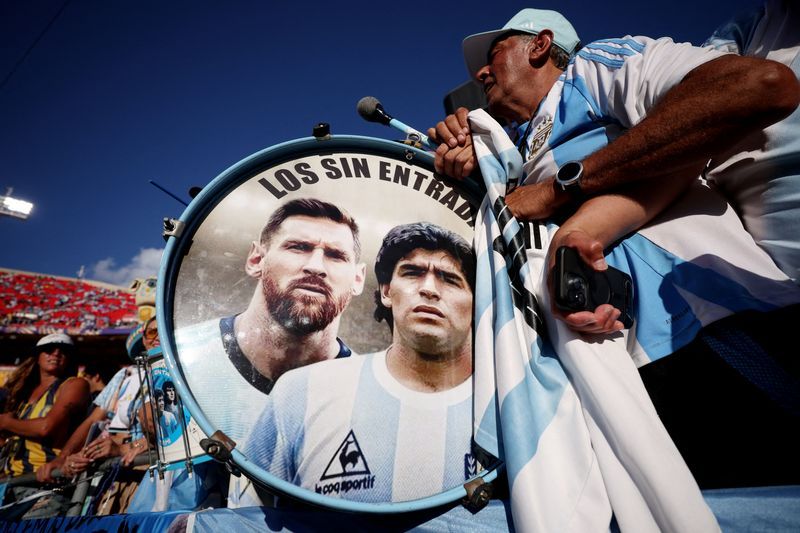
During the tournament, Argentine supporters and players had indeed begun channelling historical memory through song, incorporating references to the Malvinas, the late Diego Maradona, and Lionel Messi's pursuit of a second World Cup title to cap his legendary career. These chants blended sporting pride with territorial assertion, illustrating exactly the dynamic the veterans sought to temper. The federation's intervention suggested a concern that international attention on the World Cup could amplify claims that might otherwise remain confined to diplomatic forums.
The Argentine coaching staff and players appeared aligned with the veterans' message. Manager Lionel Scaloni had made clear that the semi-final would be decided on football merit alone, with nothing beyond the sport itself hanging in the balance. This measured stance from the national team's leadership suggested an institutional effort to prevent the match from becoming a flashpoint for broader political tensions. Scaloni's authority as manager gave particular weight to such pronouncements, signalling to fans that the team itself wished to keep the focus narrowly on competition.
England's camp reinforced this message from across the rivalry. Goalkeeper Jordan Pickford, speaking to reporters on the eve of the match, echoed the sentiment that the fixture represented simply a contest between two proud football nations. "The football will do its talking," he said, downplaying any suggestion that non-sporting issues should intrude. This reciprocal restraint from both sides created space for the match to be enjoyed as pure sport without becoming entangled in unresolved historical grievances.
The Argentina-England rivalry itself carries a storied history on football's grandest stage. Their most celebrated meeting came at the 1986 World Cup quarter-final in Mexico, where Diego Maradona produced a performance of such brilliance and controversy that it transcended sport: his infamous "Hand of God" goal became immortalised in football lore, symbolising cunning and audacity in equal measure. That match embodied how these two nations' encounters could become more than games, infusing matches with historical significance and emotional weight.
For Malaysian and Southeast Asian observers, this dynamic illustrates a broader challenge facing football-loving nations worldwide. The sport's unparalleled capacity to mobilise national sentiment and emotional investment means that matches between rivals with genuine political divisions can easily become proxies for unresolved disputes. The veterans' federation's appeal was essentially a call for maturity—the recognition that patriotic expression through football need not require channelling grievance or perpetuating animosity. It suggested that sporting pride and historical memory could coexist without demanding that one competition serve as compensation for past suffering.
The broader context matters for understanding the federation's intervention. Argentina has pursued its Malvinas claim persistently through diplomatic and international legal channels, with the claim enjoying constitutional status and UN recognition. Pursuing sovereignty through such mechanisms is fundamentally different from attempting to assert claims through sporting nationalism. The veterans' statement recognised this distinction, arguing implicitly that legitimacy flows from institutional processes rather than emotional displays at football matches.
As the semi-final approached, the stage was set for a competition that would test whether two nations with genuine historical wounds could engage in sporting rivalry without reopening old conflicts. The veterans' call represented a mature voice asking supporters to distinguish between love of country and love of one's national team, and between commemorating sacrifice and instrumentalising sport for political purposes. Whether their plea would resonate with supporters in the stands and at home remained to be seen, but their intervention marked an important moment when a nation's historical consciousness was asked to step back and let football be football.

