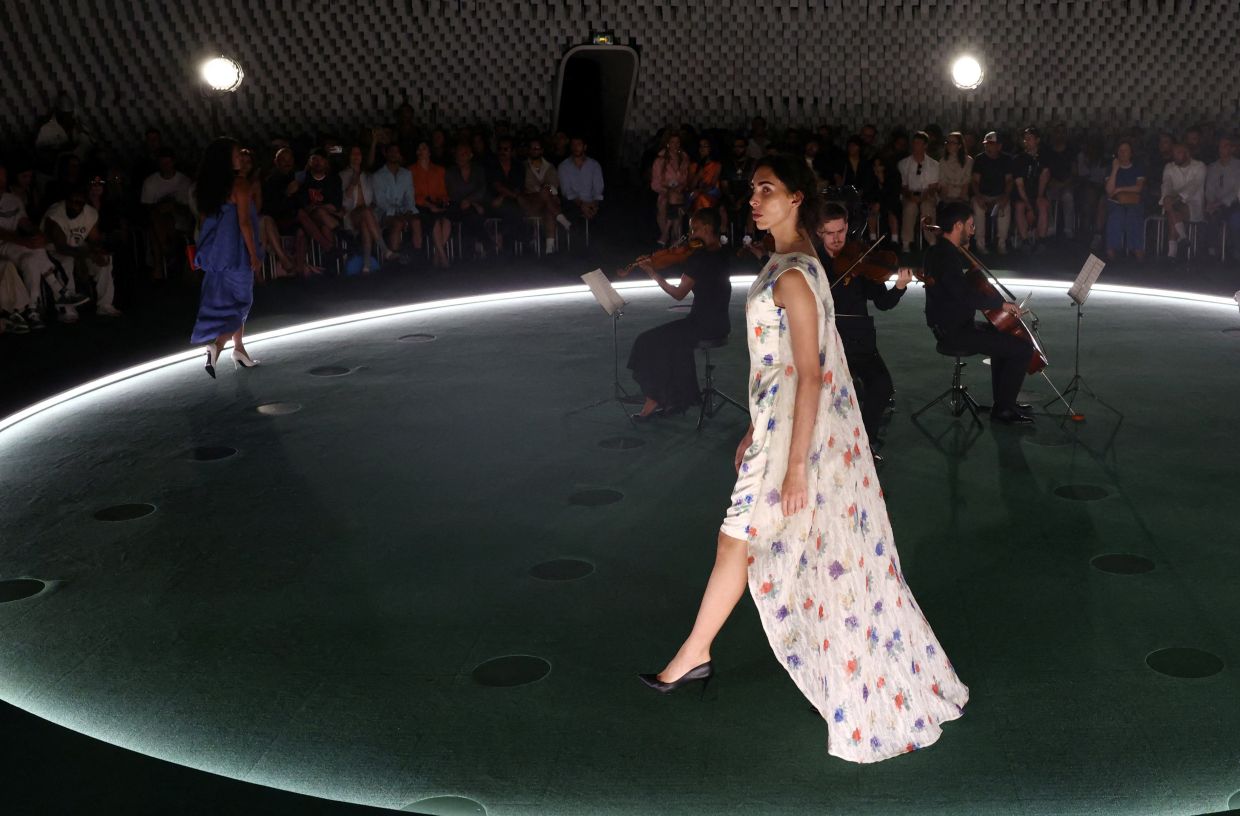
The fashion industry is experiencing a striking shift towards sleeveless garments, reflecting broader changes in climate, culture, and workplace norms. The global sleeveless market is projected to expand dramatically from US$24.36 billion (approximately RM99.38 billion) in 2021 to over US$51.39 billion (RM209.65 billion) by 2033, according to Cognitive Market Research. This expansion signals more than a passing fad. Alexandra Van Houtte, founder of the fashion search engine Tagwalk, has documented a 133% increase in sleeveless looks featured in Spring 2026 collections compared to Spring 2025, underscoring the momentum behind this trend across high fashion's most influential platforms.
Multiple factors are driving this transformation. Rising global temperatures have naturally prompted consumers to seek cooler, less restrictive clothing options, particularly in Southeast Asia where humid climates make lighter garments increasingly practical. The simultaneous influence of fitness culture has amplified interest in sleeveless styles, as gym-focused consumers display the results of their training. Equally significant are shifting gender norms that challenge traditional notions of feminine modesty and professional presentation. Designer Willy Chavarria, who prominently featured sleeveless dresses during Paris Fashion Week, encapsulates the industry's current thinking: "the past two seasons our sleeveless has outperformed sleeved substantially," he observed, noting that major fashion houses are deliberately prioritising this aesthetic.
The pervasiveness of sleeveless fashion now extends to mainstream media visibility. Television news anchors, particularly women, increasingly appear on screen in sleeveless dresses, normalising a style choice that was once considered daring or inappropriate for formal professional settings. This cultural shift reflects changing attitudes towards female bodies in the workplace, yet it simultaneously places pressure on women to conform to a new standard that many find uncomfortable or inaccessible.
For many women, however, embracing sleeveless fashion remains fraught with anxiety. The decision to expose one's arms is far more complicated than a simple style preference; it intersects with decades of gendered messaging about which body parts should remain hidden. Arms, particularly upper arms and the area around the armpits, have long been sites of concern for women, who are culturally conditioned to view these areas as problematic. This anxiety intensifies with age, as arms visibly reveal signs of ageing that are difficult to conceal or reverse through conventional means. The triceps, the accumulation of subcutaneous fat, and the thinning, crepey quality of mature skin all become more pronounced, making sleeveless styles particularly daunting for older women.
The historical roots of this anxiety run deep and are inextricably linked to race and power. The backlash against Michelle Obama's preference for sleeveless dresses—widely critiqued in media coverage and social discourse—revealed how female arms remain a terrain of cultural anxiety and racial politics. When the former First Lady wore a sleeveless sheath for her official White House portrait, the ensuing debate crystallised decades of coded messaging about which women's bodies are considered appropriate for public display. It was not until 2017 that the United States House of Representatives finally changed its dress code rules following a "sleeveless protest" by congresswomen, and the Senate required an additional two years before following suit. These institutional barriers illustrate how professional environments have historically policed women's bodies, particularly regarding arm exposure.
This historical context explains why many women remain conflicted about sleeveless fashion, despite its growing ubiquity. Professional settings across Malaysia and Southeast Asia, while evolving, still carry implicit expectations about appropriate feminine presentation, and sleeveless styles can trigger concerns about being perceived as unprofessional or inappropriately casual. For women navigating conservative workplace cultures, the pressure to adopt sleeveless fashion may feel less like liberation and more like another constraint.
Yet fashion designers and style experts increasingly argue that the solution lies not in rejecting sleeveless styles entirely, but rather in reimagining how women approach and adapt them. Antonin Tron, designer at Balmain, advocates for a more nuanced perspective: "I think the ageing body can be beautiful. There is this idea that women's sexuality stops when they get older, and I don't agree with that." This viewpoint represents a deliberate rejection of age-based restrictions on female presentation and suggests that discomfort with sleevelessness is a conditioning problem, not an inevitability.
For women interested in experimenting with sleeveless fashion without discarding their reservations entirely, several practical strategies can ease the transition. The simplest approach involves pairing a simple sleeveless garment with eye-catching jewellery—substantial necklaces or statement bangles—that deliberately redirects the observer's gaze upward and away from the arms. This technique acknowledges underlying concerns while still participating in the current aesthetic. Alternatively, compromise styles offer middle ground: cold-shoulder tops, designs with open or flutter sleeves, and cap sleeves all provide partial arm coverage while maintaining visual alignment with contemporary fashion sensibilities.
Another effective strategy involves layering, either with transparent or sheer fabrics worn over sleeveless pieces, or by selecting armholes engineered to sit higher under the arm while avoiding tightness around the sides. The architectural quality of a garment's armhole proves surprisingly important; a well-designed armhole that sits high but doesn't constrict allows the wearer to feel secure while wearing sleeveless styles. Designer Willy Chavarria has championed this approach, proposing sheer overlays that provide subtle coverage while maintaining the aesthetic momentum of sleevelessness.
Ultimately, the decision to embrace or reject sleeveless fashion should rest on individual choice rather than industry pressure or cultural prescription. Yet it is worth reconsidering the reasons for resistance. Arms are not merely aesthetic features but instruments of human capability and connection. They are the limbs that deliver professional presentations, nurture children, move the physical world, perform labour, and embrace loved ones. From this perspective, arms warrant celebration rather than concealment. As cultural attitudes toward female bodies and ageing continue to evolve, particularly across diverse Asian societies with their own complex histories of modesty and presentation, the sleeveless debate becomes an opportunity to interrogate inherited assumptions about which bodies deserve visibility and respect.

