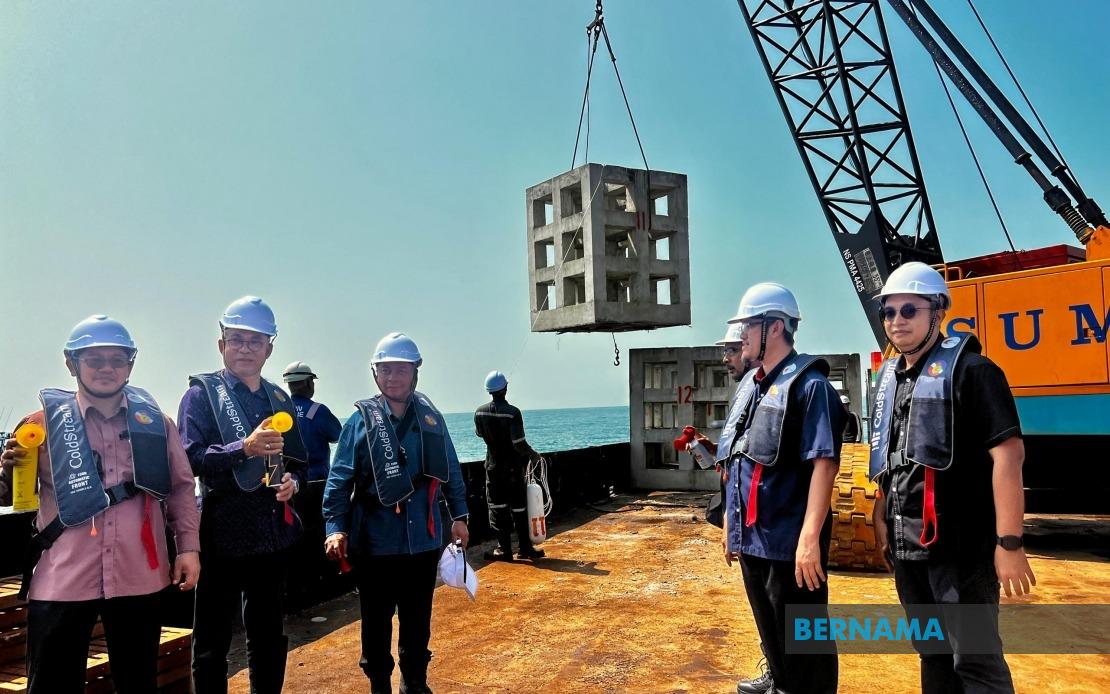
The Kelantan Fisheries Department has placed 30 artificial reefs approximately 4.6 nautical miles off Tok Bali Jetty in a strategic initiative that serves dual purposes: establishing conservation zones for fish reproduction while simultaneously creating physical barriers against industrial-scale fishing encroachment. The deployment, funded through a royal donation by Sultan Muhammad V, marks a significant milestone in the state's marine resource management, representing the first major reef installation financed specifically through the sultanate's fisheries conservation initiative.
Director Ismail Ibrahim explained that the submerged structures function as multi-faceted marine interventions beyond simple habitat creation. When large fishing vessels attempt to operate in these shallow coastal areas, their nets and trawling equipment snag on the reef frameworks, making operations impractical and costly. This natural deterrent effectively protects the traditional fishing grounds historically reserved for small-scale and artisanal fishers, who represent the backbone of Kelantan's fishing community. The mechanical resistance of the structures discourages incursions without requiring constant enforcement patrols, offering a passive but reliable protective mechanism.
The ecological rationale underpinning this initiative addresses a fundamental challenge facing Southeast Asian fisheries: the tension between industrial and small-scale operators. Fish species migrate to shallow reef environments during spawning seasons, naturally concentrating in areas now protected by these artificial structures. By creating designated breeding and nursery zones, the department anticipates significant multiplier effects throughout the broader Kelantan fishery. Juvenile fish population growth within these protected areas should eventually replenish broader waters, benefiting even fishers operating outside the reef zones through natural population dispersal.
Ismail indicated that tangible results from the programme require patience, with meaningful impacts expected only after six months or longer depending on environmental conditions and local ecosystem development. This timeframe acknowledges that artificial reef success depends on complex biological processes including larval settlement, algae colonisation, and the gradual establishment of predator-prey relationships. The Kelantan Fisheries Department's realistic assessment contrasts with oversimplified expectations, recognising that reef deployment represents the beginning rather than the conclusion of a conservation effort.
The scale of Kelantan's reef programme demonstrates sustained governmental commitment to this management strategy. Since 2007, the department has progressively installed approximately 400 artificial reefs across four distinct locations within state waters, establishing a distributed network rather than concentrated zones. The current year alone will see an additional 72 units deployed in stages, suggesting an acceleration of the programme as lessons from earlier installations inform placement decisions and engineering improvements. This incremental approach allows administrators to monitor outcomes and adjust methodologies based on real-world performance data.
Maintenance and monitoring represent critical but often-overlooked components of artificial reef effectiveness. The department conducts regular cleaning operations removing ropes, fishing gear debris, and other fouling materials that accumulate on structures. Without this active stewardship, reefs degrade functionally as ghost nets and detritus prevent normal fish behaviour and recruitment. The commitment to ongoing maintenance distinguishes this programme from abandoned projects elsewhere in the region where structures deteriorate without proper attention.
For Malaysian policymakers and regional observers, the Kelantan initiative offers insights into reconciling competing maritime economic interests. The approach avoids confrontational enforcement, instead creating physical impediments that render industrial fishing economically irrational in protected zones. This contrasts with more adversarial models relying on patrol vessels, confiscation, and legal penalties, which generate resistance and require continuous expenditure. By making incursion physically difficult rather than merely legally prohibited, the reef strategy addresses the practical dimensions of compliance.
The programme's timing coincides with growing regional concern regarding overfishing and ecosystem degradation throughout Southeast Asian waters. Malaysia's exclusive economic zone supports multiple competing user groups, and Kelantan's experience with artificial reefs contributes valuable knowledge to broader maritime governance discussions. If successful, the model could inform similar initiatives along Malaysia's peninsular east coast and perhaps inspire adoption in other ASEAN nations facing comparable fisheries pressures.
Local economic implications extend beyond immediate catch improvements. Protected fishing zones provide stability for small-scale operators reliant on consistent income, supporting coastal communities where alternative employment opportunities remain limited. Enhanced fish landings potentially improve local food security while reducing pressure on marginal fishers to resort to illegal practices. The psychological benefit of dedicated protected access also strengthens social cohesion within fishing communities historically feeling squeezed by industrial competition.
Ismail's statement emphasising plans to expand reef deployments suggests bureaucratic confidence in the programme's merit. Escalating investment in marine infrastructure typically reflects genuine conviction about outcomes, whether from scientific evidence or accumulated observational data from existing installations. The decision to increase deployment rates rather than maintain current levels indicates internal assessments justifying expanded commitment. This trajectory contrasts with tentative pilot programmes or cautious experimental approaches, positioning reef deployment as a cornerstone of Kelantan fisheries policy rather than marginal intervention.
The involvement of royal patronage carries significant symbolic weight within Malaysian governance contexts. Sultan Muhammad V's direct financial contribution elevates the reef programme beyond routine fisheries department initiatives, lending prestigious institutional backing. This royal engagement may facilitate smoother coordination across government agencies, improved stakeholder cooperation, and enhanced public awareness compared to projects lacking such high-level endorsement. The sultanate's investment signals longstanding commitment likely to persist beyond typical political cycles or bureaucratic transitions.
Regional maritime security and enforcement capabilities will ultimately determine whether artificial reefs adequately deter industrial encroachment or merely inconvenience determined operators. Gaps in monitoring remain where surveillance coverage proves insufficient, potentially allowing nocturnal or opportunistic incursions between patrols. The programme's sustainability depends on complementary enforcement efforts ensuring that reefs supplement rather than replace essential policing functions. Success metrics must therefore encompass not merely ecological outcomes but also demonstrable reductions in illegal fishing activity within protected zones.
Looking forward, the Kelantan experience will generate valuable longitudinal data regarding artificial reef effectiveness in tropical Southeast Asian contexts. Performance monitoring will reveal whether fish populations respond as anticipated, whether ecological succession proceeds along predicted trajectories, and whether industrial vessels genuinely avoid protected zones. Results will inform maritime resource management approaches throughout Malaysia and potentially influence regional fisheries governance discussions as other nations confront intensifying pressures on shared stocks.

