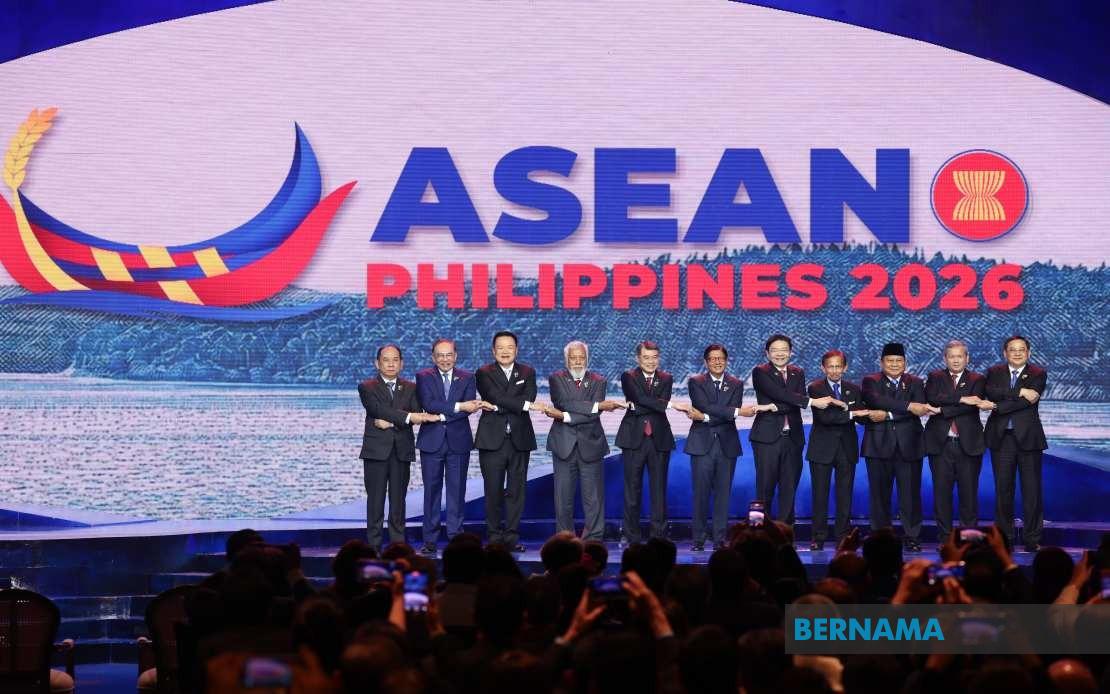
The Association of Southeast Asia Nations marked its 59th anniversary on August 8, 2024, at a moment when the ten-member regional grouping faces unprecedented geopolitical pressures that demand a fundamental shift in how the bloc operationalizes its influence. Established in 1967 by five founding members—Indonesia, Malaysia, the Philippines, Singapore, and Thailand—ASEAN has expanded to eleven nations and now represents a population of 700 million people spanning one of the world's most strategically contested regions. Yet as the bloc navigates an increasingly complex international environment shaped by US-China competition, Middle Eastern conflicts, and transnational challenges, experts contend that ASEAN's survival and relevance no longer hinge on external validation but rather on its capacity to strengthen internal cohesion and translate diplomatic influence into tangible cooperation.
The geopolitical landscape confronting ASEAN has shifted dramatically in recent years. Escalating tensions between the United States and Iran, coupled with broader Middle Eastern instability, have exposed Southeast Asian economies to serious energy security vulnerabilities and disrupted critical global trade and supply chain networks. These external shocks underscore a fundamental reality: ASEAN's 700 million citizens face interconnected threats that transcend national borders and demand coordinated regional responses. For Malaysian readers particularly, these supply chain disruptions carry direct implications for manufacturing competitiveness and export-dependent sectors that form the backbone of the national economy. The bloc's capacity to manage external pressures while pursuing its own developmental agenda has become a defining test of its institutional maturity.
Professor Phar Kim Beng, director of the Institute of International and ASEAN Studies at the International Islamic University Malaysia and a former ASEAN Secretariat official, articulated a critical distinction that underscores contemporary debates within the regional organization. ASEAN's centrality cannot be sustained through external partners' recognition alone; rather, the member states themselves must actively reinforce the bloc's position through demonstrated commitment and institutional performance. This perspective fundamentally reframes ASEAN's challenge from a diplomatic problem—convincing others of its importance—into a functional one: making the organization actually deliver on its promises to member populations. Phar emphasized that elevating ASEAN from rhetorical aspiration to operational reality requires substantial work across multiple domains, particularly labour mobility, digital infrastructure development, and government-to-government coordination mechanisms that remain underdeveloped across much of the region.
The economic integration agenda faces particular urgency given ASEAN's ambitious Community Vision 2045 framework. The single economic community concept remains largely aspirational; significant barriers persist in cross-border commerce, talent movement, and digital interoperability that would unlock the region's considerable potential. For Malaysia, with its relatively advanced digital and financial infrastructure, removal of these barriers could generate substantial economic gains through regional trade intensification and investment flows. However, progress has been halting, reflecting both technical complexity and the divergent development levels across member states ranging from wealthy Singapore to less industrialized economies. Unless member governments prioritize concrete capacity-building and regulatory harmonization rather than issuing repeated declarations of intent, the ASEAN Community vision risks becoming a perpetual aspiration rather than an operational reality.
Dr Rahul Mishra from Jawaharlal Nehru University's Centre for Indo-Pacific Studies identifies a critical gap between ASEAN's normative influence and its practical capacity to address existential regional challenges. The organization has demonstrated considerable skill in conflict management through dialogue-based mechanisms and the establishment of normative frameworks such as the ASEAN Regional Forum and the East Asia Summit. Yet these diplomatic structures have produced mixed results when confronted with acute security crises, most notably the Myanmar civil conflict that has generated refugee flows, regional instability, and humanitarian catastrophe. The organization's consensus-based decision-making processes, while enabling unanimity, have often resulted in lowest-common-denominator outcomes that satisfy no member but offend none, ultimately failing to resolve crises effectively.
The South China Sea dispute represents perhaps the most consequential challenge to ASEAN's strategic centrality. Despite years of dialogue with China and ASEAN claimant states, fundamental disputes over maritime boundaries and resource rights remain unresolved, with Chinese assertiveness increasing rather than diminishing. For Malaysia, which maintains competing territorial claims with China and Vietnam, this ongoing tension directly threatens economic interests and national security. The proposed Code of Conduct negotiations have proceeded at glacial pace, with fundamental disagreements between ASEAN members and Beijing over binding enforcement mechanisms and dispute resolution procedures. ASEAN's inability to present a unified approach has enabled China to pursue bilateral negotiations with individual members, fragmenting regional solidarity and undermining collective leverage.
Cyber-enabled transnational crime represents an emerging security threat that has received insufficient collective attention despite its dramatic expansion across Southeast Asia. Criminal networks operating from Myanmar and other jurisdictions have become sophisticated operators of scam infrastructure, targeting victims globally while using the region as an operational base. The Myanmar crisis itself, now in its fourth year, has created ungoverned spaces where non-state actors flourish and criminal enterprises proliferate. ASEAN's response has been fragmented and insufficient, with member states pursuing national solutions rather than coordinated regional strategies. This represents precisely the type of cross-border challenge that demands collective action, yet the organization's institutional mechanisms have proven inadequate to the task. Without decisive intervention, these problems will metastasize and further undermine regional stability.
ASEAN's external engagement architecture has expanded significantly, with the recent elevation of Turkiye to full dialogue partner status bringing the total number of external partners to twelve nations. Simultaneously, the Treaty of Amity and Cooperation in Southeast Asia, marking its 50th anniversary this year, has welcomed four new High Contracting Parties—Sweden, Poland, Romania, and Lithuania—bringing total signatories to 62. This expanding network reflects growing international interest in ASEAN and validates the bloc's importance as a framework for regional engagement. However, Mishra argues persuasively that dialogue expansion without corresponding deepening of functional cooperation risks becoming merely symbolic rather than substantive. ASEAN must convert its diplomatic convening power into concrete deliverables across security cooperation, infrastructure connectivity, economic integration, and dispute resolution mechanisms that demonstrably benefit member states and their citizens.
The Philippine chairmanship for ASEAN 2026 has adopted the theme "Navigating Our Future Together," signalling recognition that shared challenges demand collective solutions. This formulation acknowledges both the existential uncertainties confronting the region and the necessity of coordinated strategic planning. For Malaysia and other member states, this chairmanship period offers an opportunity to institutionalize reforms that could strengthen ASEAN's operational capacity. Priority areas should include streamlining decision-making procedures to permit more decisive action on time-sensitive issues, establishing dedicated funding mechanisms for priority initiatives rather than relying on voluntary contributions, and creating accountability frameworks that measure implementation progress against stated objectives. Without such institutional evolution, future ASEAN declarations will continue accumulating on shelves while practical challenges metastasize unchecked.
ASEAN's journey from founding by five nations in 1967 to its current composition of eleven members represents a significant achievement in regional diplomacy and institutional building. The sequential admission of Brunei, Vietnam, Laos, Myanmar, and Cambodia reflected both the bloc's attractive power and its capacity to expand geographically while maintaining institutional coherence. Most recently, Timor-Leste's admission during the 47th ASEAN Summit in October 2023 completed the regional grouping geographically, bringing the newest Southeast Asian democracy into the fold. Yet expansion has also increased institutional complexity and diversity of member interests, requiring more sophisticated coordination mechanisms and conflict management procedures. The membership now encompasses nations at vastly different development stages, with divergent security concerns and strategic partnerships, demanding greater institutional dexterity than existed during earlier, more homogeneous periods.
The fundamental tension animating contemporary ASEAN deliberations reflects a broader question about the organization's fundamental purpose and the distribution of power within it. For Malaysia, Singapore, Thailand, and Indonesia—established powers with regional influence and advanced institutional capacities—ASEAN represents a framework for managing relations among regional powers while collectively engaging extraregional actors. For newer or weaker members, ASEAN provides protection against domination by larger neighbours and a mechanism for amplifying their voices in regional councils. Reconciling these distinct interests while maintaining the bloc's cohesion and credibility represents the central challenge of Vision 2045. Success requires not simply repeating rhetorical commitments to community-building but undertaking the hard institutional work of harmonizing regulations, removing trade barriers, investing in cross-border infrastructure, and developing mechanisms for managing inevitable conflicts among member states in ways that strengthen rather than fracture the collective enterprise.
As ASEAN enters its seventh decade, the bloc stands at a genuine inflection point where incremental adjustments to existing structures will prove insufficient to address accelerating challenges. The Myanmar crisis, South China Sea tensions, cyber-threats, and energy security vulnerabilities demand responses that transcend the consensus-based dialogue forums that have characterized ASEAN diplomacy historically. Yet the organization retains genuine assets: its legitimacy as the region's premier institution, established relationships with major powers through multiple dialogue mechanisms, demonstrated capacity to manage conflicts through non-military means, and the underlying interdependencies that bind member states together despite periodic tensions. Whether ASEAN successfully navigates toward Vision 2045 will ultimately depend not on external powers' recognition of its centrality but on whether member governments translate rhetorical commitment into institutional reform and demonstrate that ASEAN remains capable of delivering concrete benefits to its 700 million citizens.

