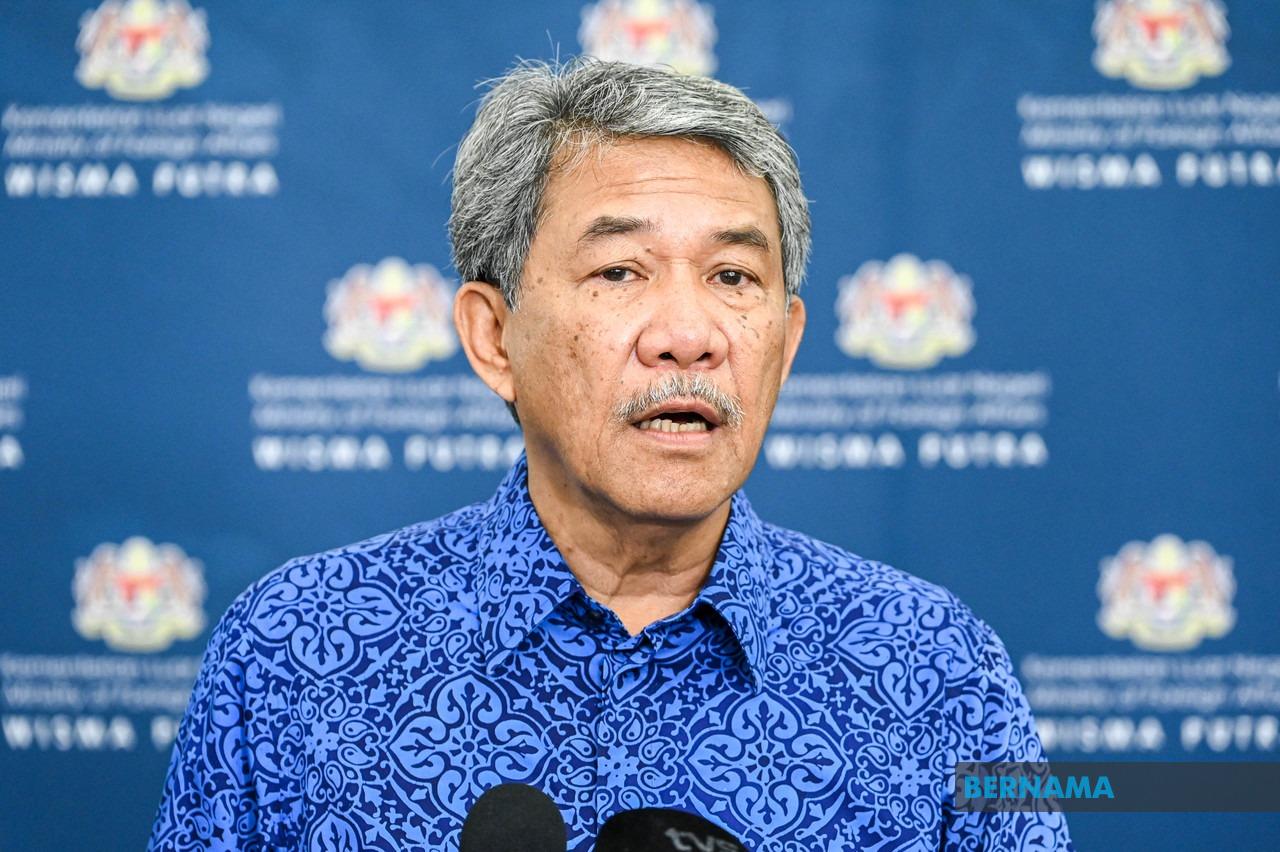
Foreign Minister Datuk Seri Mohamad Hasan has warned that ASEAN's central role in regional affairs has become more critical than ever as the international order splinters under the weight of major power rivalries and economic competition. Speaking at the 59th ASEAN Day celebration in Putrajaya on Monday, Mohamad framed the bloc's autonomy not as a guaranteed right but as a privilege that demands constant vigilance and renewal in the face of mounting pressures from abroad and within.
The deteriorating global environment presents an acute challenge to the ten-member regional grouping. Mohamad characterised the current international landscape as one marked by deep fractures in the post-Cold War consensus, with traditional multilateral institutions struggling to maintain relevance. The multiplication of bilateral strategic partnerships, the rise of rival economic blocs, and the polarisation of geopolitical alignments have created what he described as an increasingly complex, unpredictable world where smaller and medium-sized powers must navigate with precision to protect their interests.
Central to Mohamad's message was a pointed reminder that ASEAN's collective strength depends entirely on maintaining internal cohesion. He cautioned member states against allowing national disputes to undermine the bloc's unified voice in regional and global forums. For Malaysia and other ASEAN capitals, this carries profound implications, as disagreements over maritime boundaries, resource competition, and strategic alignments have occasionally strained the organisation's consensus-based decision-making model. The Foreign Minister's emphasis suggests growing anxiety within government circles about the fragility of ASEAN solidarity under current pressures.
The minister outlined a vision of ASEAN as an agent of change capable of shaping the rules and norms that govern international relations. This positioning reflects a broader strategic aspiration across Southeast Asia to move beyond reactive foreign policy and instead proactively influence the emerging multipolar order. By engaging with diverse partners on equal terms, ASEAN can preserve strategic autonomy while maximising the benefits of great power competition rather than being victimised by it. The language of "punching above its weight" signals a determination to ensure that regional voices are heard in forums historically dominated by larger powers.
Modern economic integration emerged as a critical pillar of ASEAN's future resilience. Mohamad highlighted the digital economy as a transformative opportunity, emphasising the importance of finalising the ASEAN Digital Economy Framework Agreement to unlock new growth corridors. This acknowledgment reflects the bloc's recognition that traditional trade-based development models must evolve to capture gains from technology, e-commerce, and digital services. For Malaysia, which has positioned itself as a digital hub in Southeast Asia, such moves align with broader national economic strategies and investment priorities.
Trade modernisation with major external partners featured prominently in Mohamad's remarks. The ongoing negotiations to upgrade existing agreements with China, India, and the Republic of Korea represent efforts to lock in preferential market access and establish rules that benefit ASEAN members before great power competition hardens regional divisions. These negotiations also serve a strategic purpose, signalling ASEAN's openness to all partners while maintaining equidistance from competing blocs. For Malaysia, balanced engagement with multiple powers remains essential to economic prosperity and political stability.
Sustainability has become embedded in ASEAN's economic discourse, reflecting both genuine environmental concerns and the commercial opportunities associated with the green energy transition. Mohamad's reference to the ASEAN Power Grid initiative signals the bloc's determination to position itself as a leader in regional energy cooperation and renewable energy development. This shift also addresses investor appetite for climate-aligned projects and opens avenues for attracting capital from developed economies committed to net-zero transitions. Southeast Asia's abundant natural resources and strategic location make it an ideal location for green technology investments and renewable energy development.
The Foreign Minister's insistence that "business as usual is no longer an option" represents a call for institutional renewal within ASEAN itself. This language suggests frustration with the slow pace of decision-making and implementation within the bloc, a persistent challenge that has limited ASEAN's ability to respond decisively to regional crises and opportunities. Modernising operating procedures and enhancing coordination mechanisms could strengthen ASEAN's capacity to project power and protect member interests in a rapidly changing strategic environment.
The backdrop to Mohamad's remarks is ASEAN's formal expansion to eleven members following Timor-Leste's admission in October of the previous year. While enlargement enhances the bloc's geographic scope and strategic relevance, it also increases the complexity of achieving consensus, particularly on sensitive issues involving maritime disputes and major power alignments. The inclusion of a new member dependent on Australia and other external powers for strategic support adds another variable to internal ASEAN dynamics.
The 59th ASEAN Day celebration, held under the theme "Navigating Our Future Together," carries particular significance as the Philippines prepares to assume the ASEAN chair in 2026. This thematic choice reflects widespread anxiety about regional stability amid great power competition and geopolitical volatility. For Malaysia and other ASEAN members, the coming years will test the practical resilience of regional centrality as an organising principle in foreign policy. The success of ASEAN's approach ultimately depends on whether member states can maintain sufficient internal discipline while engaging credibly with all external powers seeking influence in Southeast Asia.
Mohamad's remarks underscore a fundamental strategic calculation animating Southeast Asian diplomacy: that regional autonomy and collective action remain the most effective means of preserving national interests amid great power competition. This principle has guided ASEAN since its founding in 1967 and continues to shape Malaysia's approach to regional affairs. Whether this model can withstand mounting pressures from economic interdependence, military modernisation, and ideological competition remains one of the defining questions for Southeast Asia's future.

